Low Water Pressure at Home: How to Find the Cause and Fix It
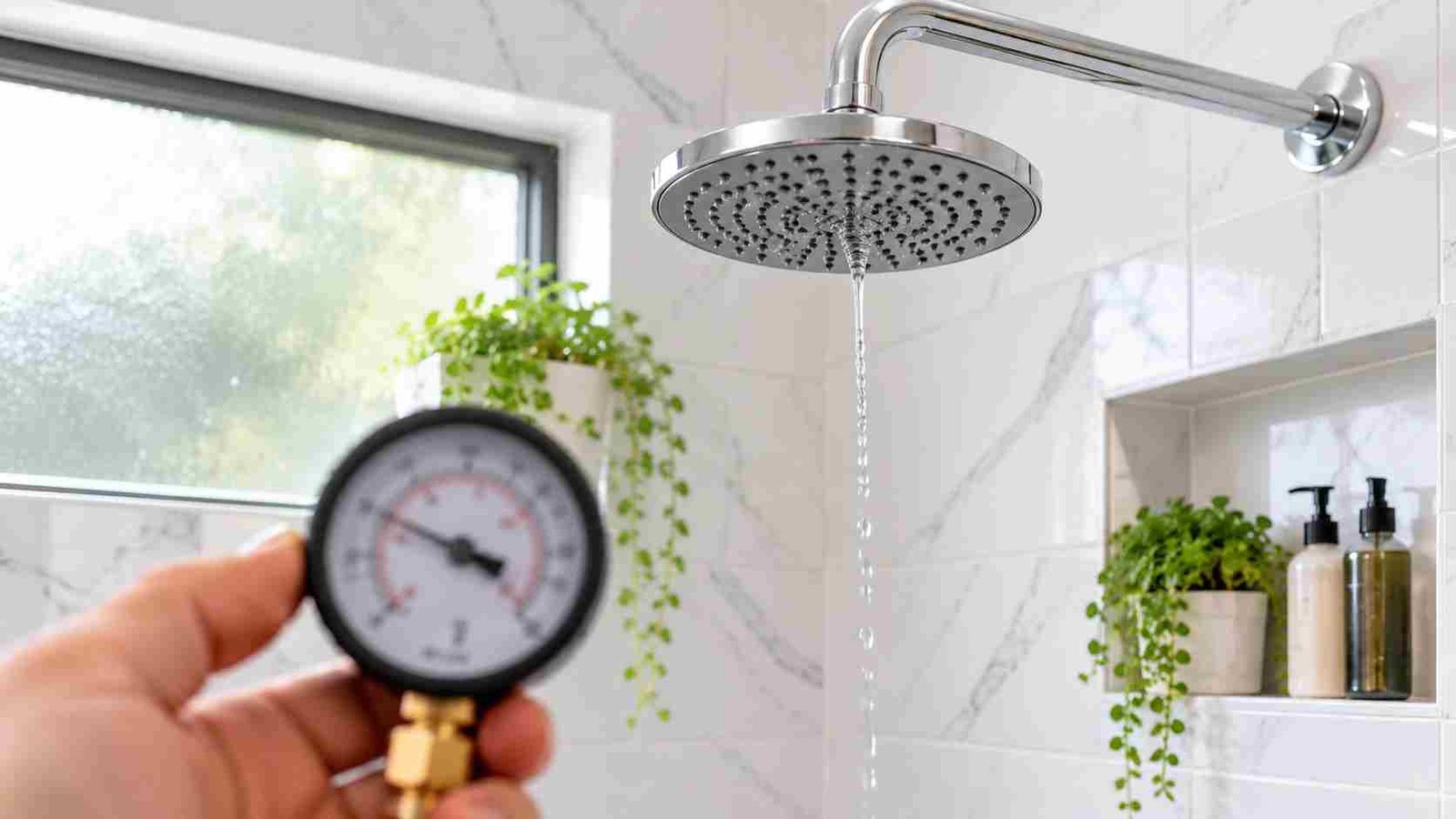
Low water pressure in a house is usually caused by a partly closed valve, a blocked aerator or showerhead, a failing pressure limiting valve, a hidden leak, or old corroded pipes. If only the hot water is weak, the problem is usually in the hot water system or its valves. If every tap dropped at once, check with Sydney Water for supply work in your street first.
A weak shower is annoying. A kitchen tap that takes forever to fill the kettle is worse. And when the water pressure is low in the house suddenly, with no obvious reason, it’s natural to worry about a burst pipe.
The good news is that most pressure problems can be traced with a few simple checks, and many are cheap to fix. This guide shows you how to narrow down the cause yourself, what each cause means, and when it’s time for a plumber.
Water Pressure vs Water Flow: What’s the Difference?
Water pressure is the force pushing water through your pipes. It’s measured in kilopascals (kPa) or metres of head. Water flow is how much water actually comes out of a tap, measured in litres per minute.
You can have good pressure and poor flow. A blocked showerhead, for example, can leave plenty of pressure in the pipe but very little water reaching you. That’s why the first step is working out where the problem is, not just how weak it feels.
For reference, Sydney Water says most Sydney properties receive pressure between 15 and 65 metres of head, which is roughly 150 to 640 kPa. Homes in low-lying streets usually get higher pressure than homes on hilltops.
Why Is My Water Pressure So Low? Start Here
Use this table to match what you’re seeing with the most likely cause.
What you notice
Most likely cause
Where to read more
Every tap in the house is weak
Partly closed main valve, faulty pressure limiting valve, supply problem in the street, or old pipes
Whole-house section below
Pressure dropped suddenly everywhere
Sydney Water works or a main break, a burst or leaking pipe, or a valve knocked after recent work
Sudden drop section below
Only the hot water is weak
Hot water system valve, tempering valve, sediment, or the type of system you have
Hot water section below
Only one tap or shower is weak
Blocked aerator or showerhead, worn cartridge or mixer
Shower section below
Weak pressure upstairs only
Height difference, undersized pipes, or partial blockage
Whole-house section below
Pressure is fine early, weak at peak times
High local demand or a shared or undersized service pipe
Whole-house section below
Low Water Pressure in the House: 6 Common Causes
When every tap and shower is weak, the problem is upstream of your fixtures, somewhere between the street and your pipes.
1. The main stop valve isn’t fully open
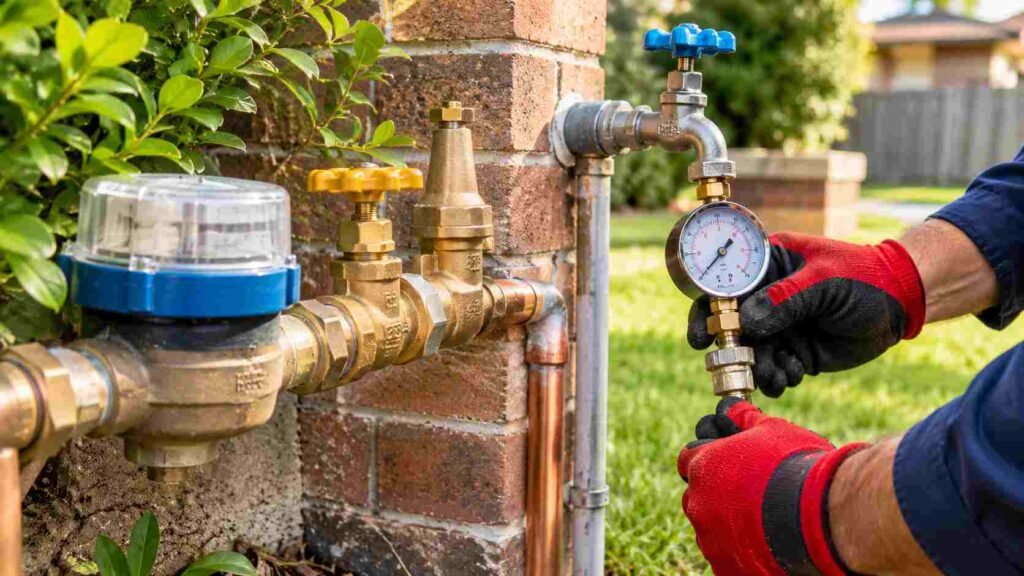
Your water meter has a stop valve (a tap handle) right next to it. If it’s been turned after plumbing work, a meter reading or a leak, it may only be partly open. Turn it anticlockwise as far as it will comfortably go. This is the cheapest fix there is, so check it first.
2. A faulty pressure limiting valve
Many homes have a pressure limiting valve (PLV) near the meter. It’s a brass fitting that caps how hard mains water pushes into your house. Australian plumbing rules require the static pressure at any outlet inside a home to stay at or below 500 kPa, and a PLV is how plumbers keep it there, as the Victorian Building Authority explains.
PLVs wear out. When the internal spring or diaphragm fails, or grit builds up inside, the valve can stick and choke the flow far below where it should be. A plumber can test the pressure before and after the valve and replace it if needed.
3. A hidden leak
Water escaping through a cracked pipe under the slab, in a wall or in the garden is water that never reaches your taps. Signs include a higher water bill, damp patches, a spot in the yard that’s always green, or the sound of running water when everything’s off.
Meter test: turn off every tap and water-using appliance, note the numbers on your water meter, and don’t use any water for 30 minutes. If the reading has moved, water is going somewhere. Our leak detection service can find it without ripping up floors.
4. Old or corroded pipes
Many older Sydney homes still have galvanised steel water pipes. Over the decades they rust and scale up on the inside, so the opening water passes through gets narrower and narrower. Pressure often gets worse slowly over years, and you may notice brown water after the taps have been off for a while. The fix is replacing the affected sections, usually with copper or approved plastic pipe.
5. Your location and the street supply
Pressure depends partly on where you live. Homes at the top of a hill, at the far end of a long supply line, or in a busy street at peak times (early morning and evening) can get less pressure. If neighbours have the same problem, contact Sydney Water.
6. Pipes that are too small for the house
A home that’s been extended, had a second bathroom added, or had its pipework patched over the years can end up with pipes too small for the number of taps they serve. You’ll notice it most when two things run at once, like the shower dropping off when someone uses the kitchen tap. Upstairs bathrooms feel it first.
Plumber testing for low water pressure at a water meter and pressure limiting valve
Water Pressure Low in the House Suddenly? Check These First
If pressure was fine yesterday and weak today, work through this list in order:
Ask the neighbours. If their pressure has dropped too, the cause is almost certainly outside your property.
Check for Sydney Water work. Main breaks and planned maintenance often cause a temporary drop. Sydney Water lists current outages and works on its website, or you can call them.
Look at the main valve. Has anyone been near the meter? Make sure the stop valve is fully open.
Do the meter test above. A sudden drop plus a moving meter suggests a burst or leaking pipe.
Walk the property. Look for water pooling, wet walls or ceilings, or water bubbling up in the yard.
A sudden drop with water appearing where it shouldn’t is an emergency. Turn the water off at the meter and call our 24/7 emergency plumbers. Our guide to fixing burst and leaking pipes explains what to do while you wait.
Who’s responsible: Sydney Water or you?
Sydney Water looks after the water main and the meter. It will also repair problems between its main and the meter, up to one metre inside your property boundary. Everything after that, including the pipes running to your house, your taps and your hot water system, is the property owner’s responsibility. If you rent, contact your landlord or agent, who is responsible for arranging repairs.
H2: Hot Water Pressure Low but Cold Fine? Here’s Why
If the cold water runs strongly but the hot is weak, you can rule out the street supply and most of your pipework. The problem sits somewhere between the cold inlet of your hot water system and the hot side of your taps.
Why is my hot water pressure low?
The most common causes of low hot water pressure are:
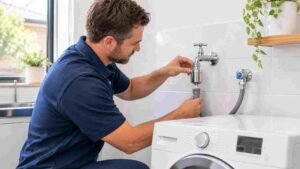
A partly closed isolation valve. Every hot water system has a valve on the cold pipe feeding it. If it’s been knocked or not fully reopened after a service, the hot side starves.
A blocked or failing tempering valve. This valve mixes hot and cold water so bathrooms get water at a safe temperature. It has small strainers that catch grit, and when they clog, hot water pressure to the bathroom drops while the kitchen and laundry may stay fine.
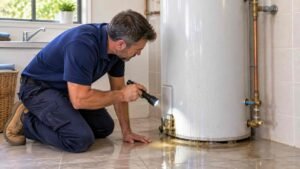
Sediment and scale in the tank. Older storage tanks collect sediment at the bottom and scale in the outlet pipes, which slowly narrows the flow. Rusty or discoloured hot water is a clue.
The type of system you have. Some older systems, including certain roof-mounted and older-style tanks, are designed to run below mains pressure. In those homes, the hot water has always been weaker than the cold.
A continuous flow (instantaneous) unit that’s struggling. These units have an inlet filter that can block, and a heat exchanger that can scale up. They may also limit flow to keep the temperature up when it’s cold outside.
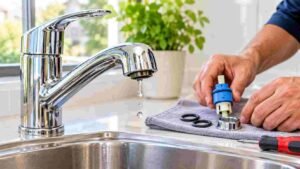
A worn mixer tap cartridge. If only one mixer tap is weak on the hot side, the cartridge inside it may be failing.
Hot water pressure low all of a sudden
A sudden drop on the hot side usually means something changed recently:
Mains work in your street. When Sydney Water repairs a main, grit and debris can be stirred up and caught in your tempering valve strainers or tank inlet.
Recent plumbing work. A valve may have been left partly closed.
A failing component, such as a tempering valve that has seized or a continuous flow unit that has gone into fault mode.
A leak on the hot side. If the hot water system is running more than usual or you notice warm patches on floors, a hot pipe may be leaking.
When only the shower is weak, the cause is almost always at the shower itself.
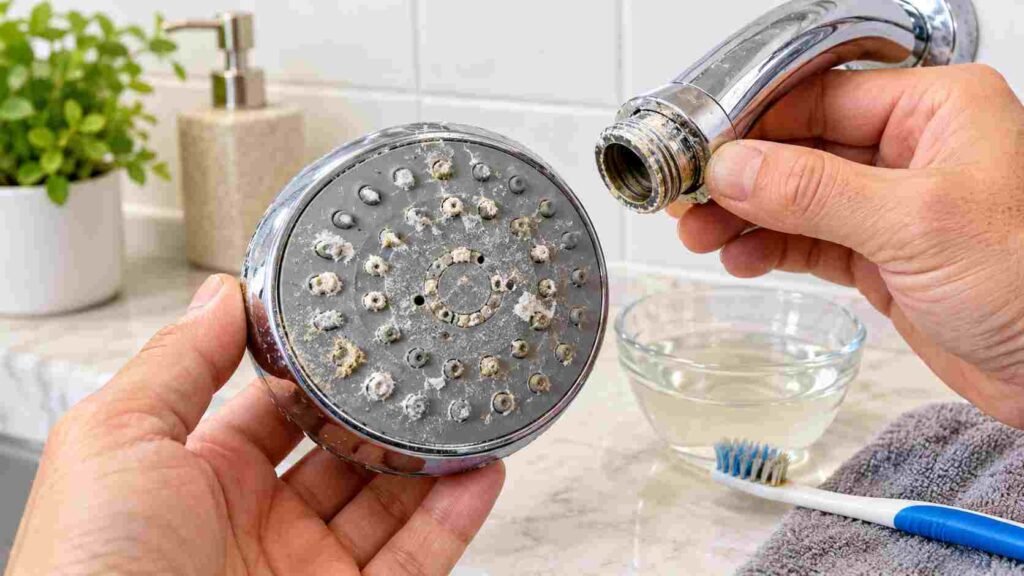
Cleaning a clogged showerhead to fix low water pressure in the shower
Common causes of a weak shower
A clogged showerhead. Mineral scale and fine grit build up in the nozzles over time. Unscrew the head, soak it in white vinegar for a few hours, scrub the nozzles with an old toothbrush, then rinse it and refit it.
A flow-limited showerhead. Water-efficient showerheads are designed to use less water. The NSW Government notes that the plumbing code requires showerheads in new homes to flow at no more than 9 litres per minute, the same as a 3-star rating under the national water rating scheme (NSW Planning Portal). A good efficient showerhead still feels strong. A cheap one can feel weak, especially on a low-pressure system.
A worn mixer cartridge or thermostatic valve. If the shower is weak on both hot and cold, but your other taps are fine, the shower mixer itself may be the problem.
A kinked or blocked hose on a handheld shower.
Someone else using water. If the shower drops off when a toilet flushes or the washing machine fills, your pipes may be too small or partly blocked.
The 10-second bucket test
Hold a bucket with litre markings under your shower for exactly 10 seconds with the tap fully on. Multiply the litres by 6 to get litres per minute. You can check the result against your showerhead’s star rating on the Water Efficiency Labelling and Standards (WELS) scheme website. If the flow is well below what the showerhead is rated for, the problem is in the pipe or mixer, not the showerhead.
If cleaning the showerhead doesn’t help, our shower repair service covers cartridges, mixers and valves. If a kitchen or basin tap is weak too, a blocked aerator or worn cartridge is the likely cause, and our team handles tap repairs and installs.
What You Can Fix Yourself vs When to Call a Plumber
Safe DIY checks
Open the main stop valve at the meter fully
Check the isolation valve on the cold pipe into your hot water system
Clean showerheads and tap aerators (unscrew, soak in vinegar, scrub, rinse)
Straighten or replace a kinked shower hose
Do the meter test for hidden leaks
Ask neighbours and check Sydney Water for works in your area
Measure flow with the 10-second bucket test
Jobs for a licensed plumber
In NSW, work on your water supply pipes, valves and hot water system must be done by a licensed plumber. Call one when:
The pressure limiting valve needs testing or replacing
The tempering valve or hot water system needs servicing
Your meter test shows a hidden leak
Old galvanised pipes need replacing
A mixer cartridge or thermostatic valve needs replacing
You’re considering a pressure boost pump, which needs the right pump, setup and approvals for your property
A good plumber for low water pressure will test the pressure at the meter and inside the house, then show you exactly where it drops before recommending a fix. If you’re planning a renovation, it’s the ideal time to resize old pipework. Our bathroom renovation and kitchen renovation work always includes checking the pipes behind the walls.
Slow-filling toilets are often part of the same story. If your cistern takes ages to refill, it may be a pressure problem or a worn inlet valve, and our toilet repair team can tell you which.
Low Water Pressure FAQs
What is normal water pressure for a house in Sydney?
Sydney Water says most Sydney properties get between 15 and 65 metres of head, roughly 150 to 640 kPa, with the average across its network at 52 metres (about 510 kPa). Inside your home, plumbing rules cap static pressure at outlets at 500 kPa, which is why many homes have a pressure limiting valve.
Is low water pressure a sign of a leak?
It can be, especially if the drop is sudden or your water bill has gone up. Turn off all taps and check whether your water meter keeps moving. If it does, you have a leak somewhere on your property. Our guide to emergency water leak repair explains which leaks need attention straight away.
Will Sydney Water fix my low water pressure?
Only if the problem is in Sydney Water’s network: the main, the meter, or the pipe between them up to one metre inside your boundary. Problems on your side of the meter, like a faulty pressure limiting valve, corroded pipes or a blocked tempering valve, are fixed by a licensed plumber at the owner’s cost.
Why is my hot water pressure low but the cold is fine?
The problem is on the hot side of your plumbing. The most common causes are a partly closed isolation valve, a blocked tempering valve, sediment in the hot water tank, or a hot water system designed to run below mains pressure.
Can I increase my water pressure myself?
You can fix the simple causes yourself: open the main valve fully, clean showerheads and aerators, and check the hot water isolation valve. Adjusting or replacing a pressure limiting valve, replacing pipes or installing a pump is regulated work for a licensed plumber.
How much does it cost to fix low water pressure?
It depends entirely on the cause. Cleaning a showerhead costs nothing, while replacing a valve is a small job and re-piping a house is a bigger one. A plumber should find the cause first and then give you a fixed quote before starting any work.
Need a Plumber for Low Water Pressure in Sydney?
If you’ve tried the simple checks and the pressure is still weak, the cause is usually something a plumber can find quickly with the right gauge and a bit of detective work.
Radiant Plumbing Services diagnoses and fixes low water pressure in homes across Greater Sydney, from failed pressure limiting valves and blocked tempering valves to hidden leaks and tired old pipes. We’ll test your pressure, show you where it’s dropping, and give you a fixed, upfront quote before any work starts.