Banging Pipes? Water Hammer Causes, Fixes & Arrestors
Water hammer is the loud bang or thud you hear in your pipes when a tap or appliance valve shuts off quickly. Moving water stops suddenly and sends a pressure shock back through the pipework. The most common fixes are lowering high water pressure with a pressure limiting valve, securing loose pipes, and fitting a water hammer arrestor near the valve causing the bang.
It’s 7am in Penrith. The washing machine starts filling, then stops, and a heavy thunk echoes through the laundry wall. Or you’re in Sutherland, turning off the kitchen mixer, and the pipes knock hard enough to rattle a glass. Most Sydney homeowners put up with it for years, assuming it’s just old pipes.
Water hammer isn’t just a noise problem. Every bang is a pressure spike travelling through your plumbing, and over time it loosens joints, wears out appliance valves and can lead to leaks inside walls. The good news: it’s one of the most fixable plumbing problems there is, once you know what’s causing it.
What Is Water Hammer?
Water hammer (also called hydraulic shock) is a pressure surge that happens when water flowing through a pipe is forced to stop or change direction suddenly. The moving water has momentum. When a valve slams shut, that momentum has nowhere to go, so it turns into a spike of pressure that travels back along the pipe as a shock wave.
That shock wave is what you hear as a bang and feel as a shudder through the wall. Engineers measure it with a formula known as the Joukowsky equation: the faster the water was moving and the quicker it stopped, the bigger the spike.
Two things make water hammer worse in a home:
Speed of closing. Valves that snap shut in a fraction of a second, like the electric solenoid valves in washing machines and dishwashers, cause the biggest shocks.
Speed and pressure of the water. Higher mains pressure and narrower pipes mean faster-moving water, which carries more momentum.
What Does Water Hammer Sound Like? (And What Else Could It Be?)
Not every pipe noise is water hammer, and the fix depends on getting this right. Use the timing and the type of sound to narrow it down.
What you hear
When it happens
Likely cause
Is it water hammer?
A single loud bang or thud
The moment a tap, toilet or appliance shuts off
Pressure surge from a quick-closing valve
Yes
Repeated knocking that fades after a few seconds
Straight after a valve closes
Water hammer plus loose pipes bouncing against the frame
Yes
Rapid machine-gun rattle or shudder
While a tap is running, often half open
Worn tap washer or jumper valve vibrating
No, but often confused with it
Ticking or creaking
As hot water runs, or as pipes cool
Thermal expansion of pipes rubbing on clips or timber
No
Spluttering, coughing taps
When water is turned back on after work or a shutdown
Air trapped in the pipes
No
Constant humming or whistling
While water flows
High pressure, a partly closed valve or a failing pressure limiting valve
Related, as high pressure also drives water hammer
A handy rule: if the bang happens when water stops, it’s almost always water hammer. If the noise happens while water is flowing, look at tap washers, valves or pressure.
What Causes Water Hammer?
Water hammer usually comes from a combination of a fast-closing valve and something in the system that makes the shock worse. These are the causes we find most often in Sydney homes.
1. Quick-closing valves in appliances
Washing machines, dishwashers and fridges with plumbed-in ice makers or water dispensers use solenoid valves. These are electric valves that snap shut almost instantly. If the bang happens every time the washing machine finishes filling, the solenoid is the trigger. Irrigation systems on timers can do the same thing outside.
2. High water pressure
The Plumbing Code of Australia, through AS/NZS 3500.1, limits static water pressure at outlets inside a home to 500 kPa. Victoria’s plumbing regulator notes that pressures above 500 kPa can result in water hammer, shorten the life of taps and appliances, and cause excess noise. Sydney Water says homes in lower-lying areas generally receive higher mains pressure than homes on higher ground, so pressure can vary a lot from street to street.
3. A failed or missing pressure limiting valve
A pressure limiting valve (PLV) is a brass valve near your water meter that caps the pressure entering your home. Many older homes were built without one. When a PLV wears out, it can let full mains pressure through, and banging that “suddenly started” with no other changes often points here.
4. Loose or poorly supported pipes
Pipes are meant to be clipped to the house frame at regular spacing. When clips are missing, loose or have rusted away, the pipe jumps with each pressure surge and knocks against timber, bricks or other pipes. Loose pipes don’t cause water hammer, but they make it much louder. You’ll often hear a series of knocks rather than one bang.
5. Worn tap washers and jumper valves
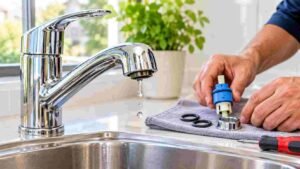
Older-style taps (the ones with separate hot and cold handles that you wind closed) use a rubber washer on a jumper valve. When that jumper wears or comes loose, it can flutter in the water flow and cause a loud rattle, or slam shut and cause a bang. Lever mixer taps can also cause water hammer if they’re flicked off quickly. Our team handles tap repairs and replacements for both.
6. Toilet cistern inlet valves
The inlet valve that refills your toilet cistern shuts off as the float rises. Some older or worn valves close abruptly and cause a thud every time the toilet finishes filling. Replacing the inlet valve is usually a quick toilet repair.
7. Waterlogged air chambers
Many older homes have air chambers: short, capped lengths of pipe standing up near taps and appliances. The trapped air acts as a cushion. Over years, the air dissolves into the water and the chamber fills up, so it stops working and the banging gradually gets worse.
8. Undersized pipes and fast-moving water
When pipes are too small for the number of fixtures they supply, water moves faster through them. Faster water carries more momentum, so the shock is bigger when a valve closes. This is common in homes that have had extensions or extra bathrooms added onto the original pipework.
Is Water Hammer Dangerous? Common Water Hammer Issues
A single bang won’t burst a pipe. But water hammer is repeated stress, often many times a day, and over months and years it can lead to:
Leaking joints and fittings, often hidden inside walls or under floors where they cause damage before you see them
Damage to appliance valves, leading to washing machines and dishwashers that leak or fail early
Burst flexible hoses on taps, toilets and appliances, which can flood a room quickly
Worn tap cartridges and valves that start dripping
Noise complaints in units and townhouses, where the shock travels through shared pipework
If the banging has been joined by damp patches, a rising water bill or the sound of running water when everything’s off, you may already have a leak. Our leak detection service can find it without pulling the place apart. If water is actively escaping, our guide to fixing burst and leaking pipes explains what to do first.
How to Find the Source of Water Hammer: Step-by-Step Troubleshooting
You can narrow down the cause safely in about 20 minutes.
Note when it happens. Does it bang when a tap closes, when an appliance finishes filling, when the toilet refills, or while water is running? Write it down.
Test each fixture one at a time. Turn each tap on fully, then off at a normal speed. Run the washing machine and dishwasher fill cycles. Flush each toilet. Note which ones cause the bang.
Listen for where the sound comes from. A bang in the laundry wall when the washing machine fills points to its solenoid. A knock under the floor or in the ceiling points to loose pipes in that run.
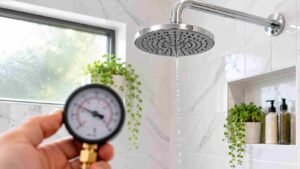
Check your water pressure. Screw an inexpensive pressure gauge from a hardware store onto a garden tap near the meter, with all other taps off. A reading above 500 kPa means your pressure needs to be brought down.
Look for a pressure limiting valve. Check next to your water meter for a brass valve after the meter’s stop tap. If there isn’t one, or it’s old and corroded, note it for your plumber.
Check pipes you can safely reach. Look under sinks and, if you can get there safely, under the house for pipes that move when pushed or aren’t clipped down.
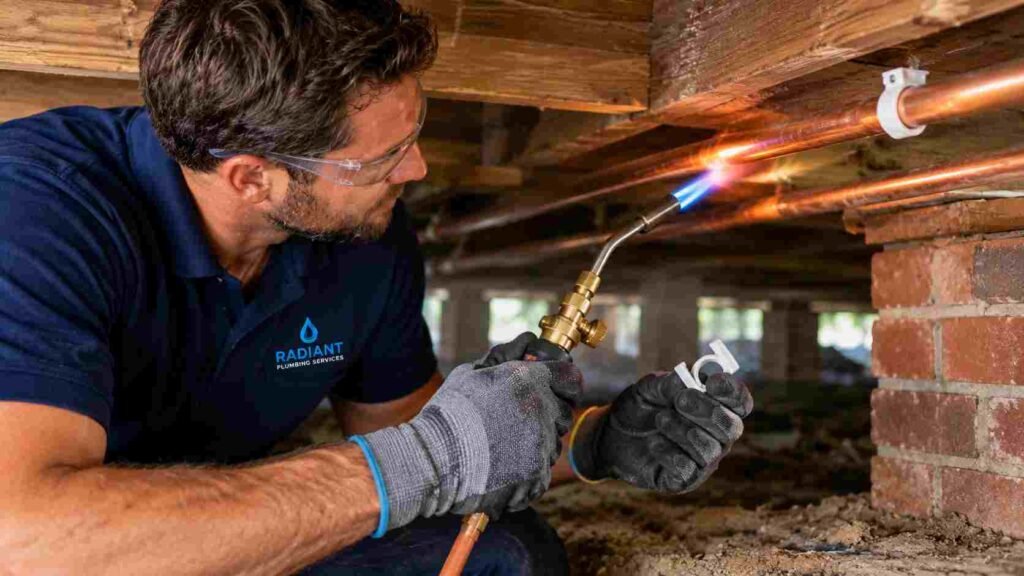
Loose copper water pipe under a Sydney home causing water hammer noise
How to Stop Water Hammer: Fixes That Work
The right fix depends on the cause you found above. Start with the simple, free options, then move to the jobs a plumber needs to do.
DIY fix 1: Close taps more gently
If the bang only happens when someone flicks a lever mixer off, try closing it over a second or two. It sounds too simple, but slowing the closing speed reduces the surge. It’s a useful test, even if it’s not a permanent fix.
DIY fix 2: Recharge old air chambers by draining the pipes
This only helps in older homes that have air chambers. It refills them with air so they can cushion the shock again.
Switch off your hot water system first (power at the switchboard, or the gas control set to off or pilot).
Turn off the water at the stop valve next to your meter.
Open the highest tap in the house (for example, upstairs) and the lowest tap (often a garden tap) and let the pipes drain.
Once the water stops, close the taps.
Turn the main stop valve back on slowly, then run each tap until the spluttering stops and water flows smoothly.
Turn the hot water system back on.
If the banging comes back within weeks, the air chambers are no longer doing their job, and a sealed water hammer arrestor is the better long-term fix.
Plumber fix 1: Bring your water pressure down
If your gauge reads above 500 kPa, a plumber can fit or replace a pressure limiting valve at the meter. This is often the single most effective fix because it reduces the shock at every tap and appliance in the house at once. Lower pressure also takes strain off your hot water system’s relief and expansion valves. If yours has been dripping as well, see our hot water system repairs.
Plumber fix 2: Secure loose pipes
Adding or replacing pipe clips and brackets stops pipes slamming into the frame. Where pipes run through tight spots in timber or brick, a plumber can add cushioned clips or lagging so they can’t knock.
Plumber fix 3: Replace worn tap washers, jumpers and cistern valves
If a tap or toilet is the trigger, replacing the worn part usually stops the noise straight away. In NSW, plumbing work like this must be done by a licensed plumber.
Plumber fix 4: Install a water hammer arrestor
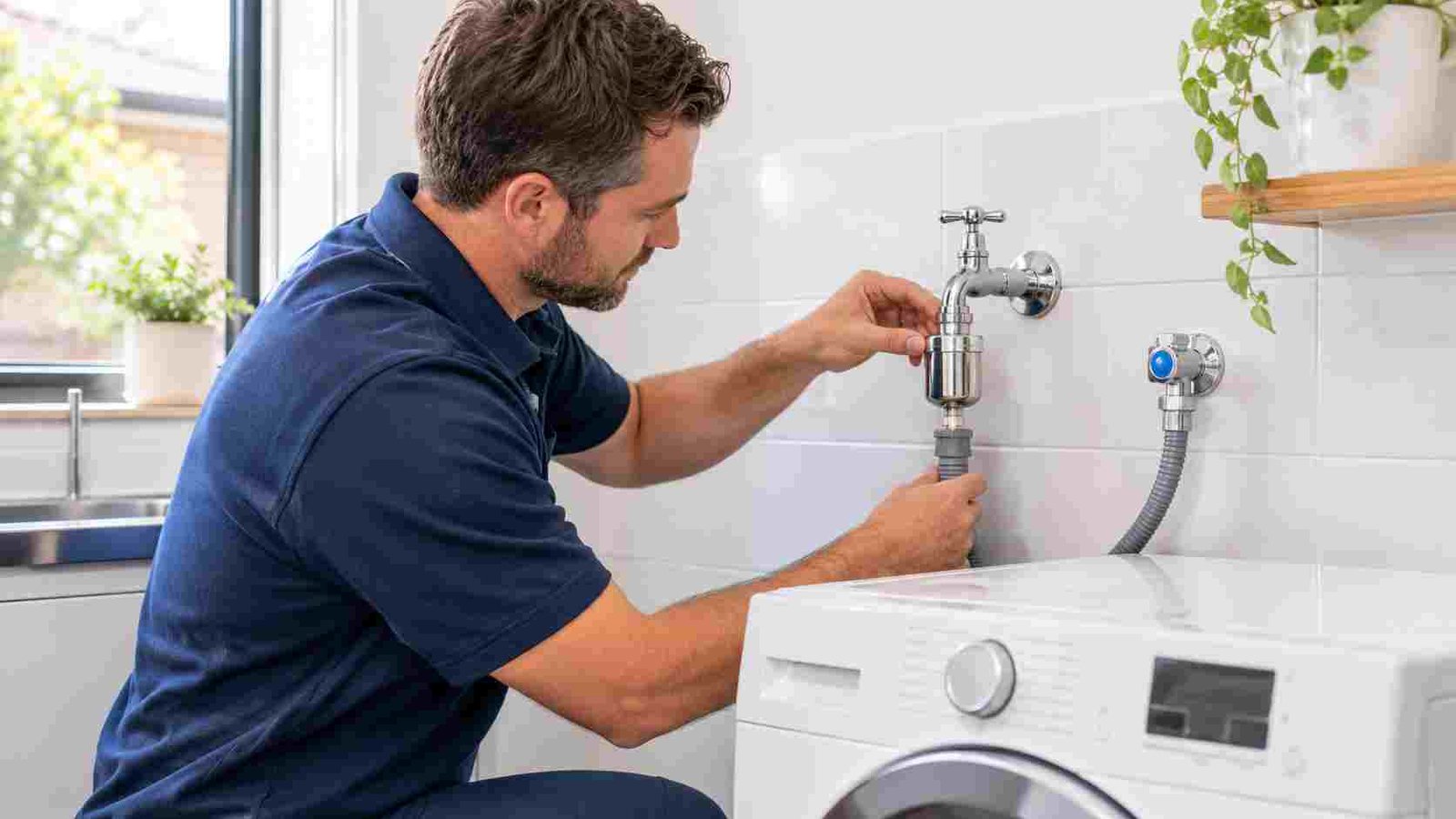
When the trigger is a quick-closing valve you can’t change, like a washing machine or dishwasher solenoid, an arrestor near that valve absorbs the shock before it travels through the house. More on these below.
Water Hammer Arrestors Explained
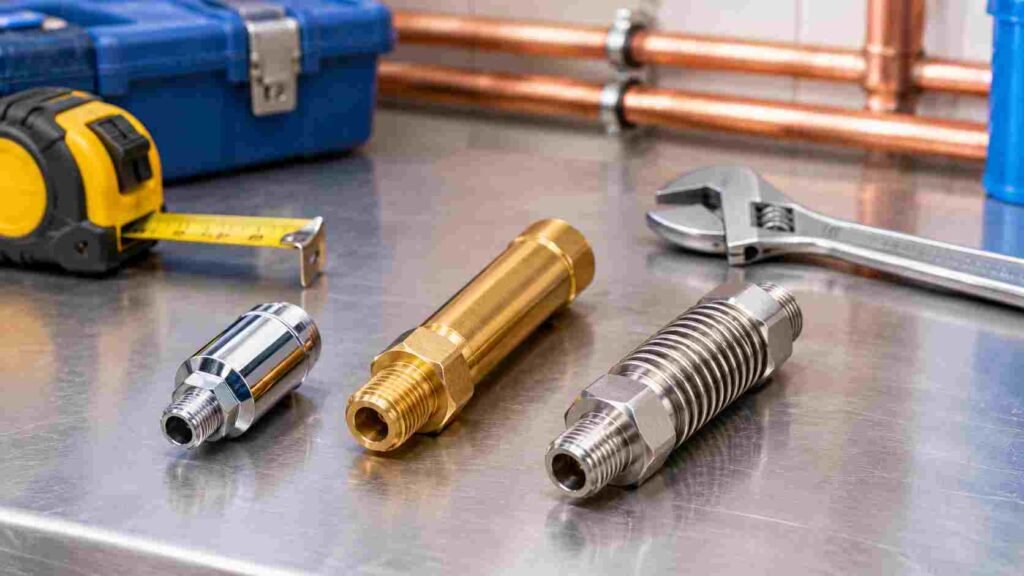
A water hammer arrestor is a small device fitted to the water line near a quick-closing valve. Inside is a cushion of air or gas sealed away from the water by a piston or flexible bellows. When the valve slams shut, the pressure surge pushes against that cushion, which compresses and soaks up the shock instead of letting it bang through your pipes.
Unlike old-style air chambers, an engineered arrestor keeps the air permanently separated from the water, so it doesn’t waterlog over time.
Types of water hammer arrestors used to stop banging pipes
Types of water hammer arrestors
Type
How it works
Where it’s used
Things to know
Mini (tap-mounted) arrestor
Small sealed piston unit that screws between a tap and an appliance hose
Washing machine and dishwasher taps
Quick to fit, ideal when the appliance is the only trigger
Piston arrestor
Sealed air cushion behind a piston with O-ring seals
Inline on pipework near quick-closing valves
Compact; can be fitted in walls during renovations
Bellows arrestor
Sealed gas cushion inside a flexible metal bellows
Inline, often in commercial or high-use systems
No sliding seals; generally a higher-spec option
Air chamber (pipe stub)
Capped pipe holding trapped air in contact with the water
Older homes, near taps and appliances
Waterlogs over time and needs recharging; not an engineered arrestor
Anti-hammer tap jumper
A tap jumper valve designed to stop flutter and slam
Older-style taps
Fixes tap-caused rattle, not appliance-caused water hammer
Where should a water hammer arrestor go?
As close as practical to the valve causing the shock. For a washing machine, that usually means right at the laundry taps. For a dishwasher, it’s on the supply under the kitchen sink. If several fixtures bang along one pipe run, a plumber may fit an inline arrestor on that run instead. Kitchen and bathroom renovations are the ideal time to build arrestors into the walls, which our kitchen renovation work can include.
Do water hammer arrestors work?
Yes, when they’re the right type, the right size and in the right place. They’re designed for shocks from quick-closing valves. They won’t fix banging caused by loose pipes, a worn tap jumper or very high pressure on their own. That’s why a good plumber checks pressure and pipe support first and doesn’t just fit an arrestor and hope.
Buy Water Mark-certified products
In Australia, most plumbing products, including valves and fittings like arrestors, must be certified under the WaterMark Certification Scheme before they can be installed. Some cheap arrestors sold online are made for overseas markets and aren’t certified here. A licensed plumber will only fit products approved for use in Australian plumbing.
Water Hammer Fixes Compared
Fix
Best for
Who does it
Cost level
How long it lasts
Closing taps slowly
Banging from lever mixers
You
Free
Only while you remember
Draining pipes to recharge air chambers
Older homes with air chambers
You
Free
Weeks to months
Replacing tap washers, jumpers or cistern inlet valve
Bangs or rattles from one tap or toilet
Licensed plumber
Low
Long-term
Securing loose pipes
Repeated knocking along a pipe run
Licensed plumber
Low to moderate, depending on access
Long-term
Fitting or replacing a pressure limiting valve
Pressure above 500 kPa, or banging everywhere
Licensed plumber
Moderate
Long-term; valves wear out eventually
Fitting a water hammer arrestor
Washing machines, dishwashers, solenoid valves
Licensed plumber
Low to moderate
Long-term
Re-sizing pipework
Undersized pipes in extended homes
Licensed plumber
Higher
Long-term; best done during a renovation
Water Hammer in Western and Southern Sydney Homes
The homes we work in across Western and Southern Sydney tend to show a few common patterns:
Older homes in established suburbs like Blacktown, St Marys, Fairfield, Bankstown, Hurstville and Kogarah often still have older-style taps with jumper valves, original air chambers that have long since waterlogged, and pipe clips that have loosened over decades. Banging that has slowly got worse over the years is typical here.
New estates in areas like Oran Park, Gregory Hills and Marsden Park have modern pipework, but they’re full of quick-closing valves: front-loader washing machines, dishwashers, fridges with water dispensers and irrigation timers. If the house wasn’t fitted with arrestors where they’re needed, appliance-triggered water hammer is common.
Pressure varies with the land. Sydney Water notes that homes in lower areas get higher pressure than homes on higher ground. A house down near a creek or river flat can sit at a very different pressure from one a few streets up the hill.
Units and townhouses in places like Parramatta, Liverpool, Miranda and Sutherland share pipework. A bang from one unit’s washing machine can travel to others, so if it’s coming from common pipes, it’s a strata matter. Let your strata manager know.
How to Prevent Water Hammer
Keep household water pressure at or below 500 kPa with a working pressure limiting valve
Have arrestors fitted at washing machine and dishwasher connections when you install new appliances
Fix dripping or rattling taps early, before worn jumpers start slamming
Make sure pipework is properly clipped during any renovation. Our bathroom renovations start with the pipes behind the walls
Close lever mixers smoothly rather than flicking them off
Ask about pipe sizing if you’re adding a bathroom, laundry or granny flat
When to Call a Plumber for Water Hammer
Call a licensed plumber if:
The banging is loud, frequent or getting worse
Your pressure gauge reads above 500 kPa
You’ve found loose pipes in walls, ceilings or under the floor
The noise started after other plumbing work or a new appliance install
You can see damp patches, or your water bill has jumped
Water hammer is a pressure surge in your water pipes that happens when flowing water is stopped suddenly, usually by a quick-closing tap or appliance valve. The shock wave causes the bang or thud you hear in the walls.
What causes water hammer in a house?
The most common causes are quick-closing valves in washing machines and dishwashers, water pressure above 500 kPa, a failed pressure limiting valve, loose pipes, worn tap jumpers and waterlogged air chambers.
Is water hammer dangerous?
It’s rarely an emergency, but repeated pressure shocks can loosen joints, damage appliance valves and lead to hidden leaks or burst flexible hoses. It’s worth fixing rather than ignoring.
How do I stop water hammer?
Find the trigger first. Then lower high water pressure with a pressure limiting valve, secure loose pipes, replace worn tap or cistern valves, and fit a water hammer arrestor near quick-closing appliance valves.
Can I fix water hammer myself?
You can close taps more gently, check your pressure with a gauge and recharge old air chambers by draining your pipes. Fitting valves, arrestors or pipe clips is plumbing work that must be done by a licensed plumber in NSW.
Do water hammer arrestors work?
Yes. A correctly sized arrestor fitted close to a quick-closing valve absorbs the pressure surge. It won’t fix noise caused by loose pipes, worn tap jumpers or very high pressure on its own.
Where is a water hammer arrestor installed?
As close as possible to the valve causing the shock, most often at the washing machine taps or on the dishwasher supply under the sink. An inline arrestor can also be fitted on a pipe run that serves several fixtures.
Why do my pipes bang when the washing machine fills?
Washing machines use solenoid valves that shut almost instantly when the drum is full. That sudden stop sends a pressure shock through the pipes. A water hammer arrestor at the laundry taps usually fixes it.
Why did my pipes suddenly start banging?
A sudden start usually means something changed: a pressure limiting valve has failed, a new appliance has been installed, a pipe clip has come loose, or mains pressure in your area has changed.
What water pressure is too high for a house in Australia?
Australian plumbing standards cap static pressure at outlets inside a home at 500 kPa. Above that, water hammer, noisy pipes and early wear on taps and appliances become more likely.
Stop the Banging for Good with Radiant Plumbing
Water hammer is your plumbing telling you something’s out of balance, whether that’s pressure, pipe support or a valve that shuts too fast. Find the cause and you can usually fix it for good, often in a single visit.
Radiant Plumbing Services helps homeowners across Western and Southern Sydney track down and fix water hammer. We’ll test your water pressure, find the trigger, and fix the cause, whether that’s a new pressure limiting valve, secure pipe clips, a replacement tap jumper or a WaterMark-certified water hammer arrestor. You’ll get a fixed, upfront quote before any work starts.