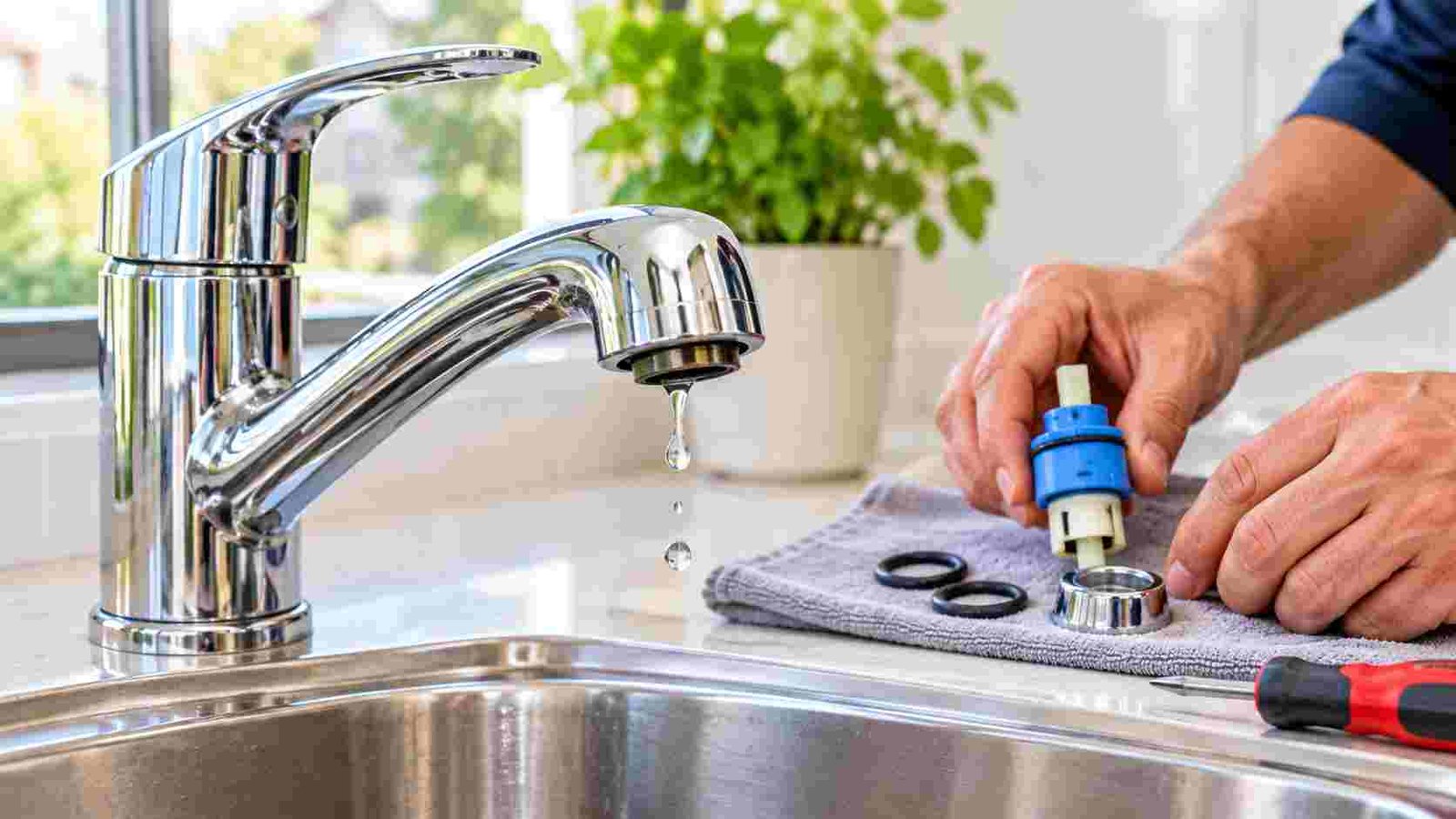
To fix a leaking tap, first work out what type of tap it is and where it’s leaking from. A washer tap that drips from the spout usually needs a new washer, and sometimes a reseated valve seat. A ceramic disc or mixer tap that drips needs a new cartridge. A mixer leaking from the swivel base needs new spout O-rings, and a tap leaking from the handle needs a new spindle O-ring or gland seal. In NSW, these repairs should be done by a licensed plumber.
Drip. Drip. Drip. A leaking tap is one of the most common plumbing problems in any home, and one of the easiest to put off. But that drip adds up. Riverina Water, a NSW water utility, says a dripping tap can waste 30 to 200 litres of water a day, and up to 12,000 litres a year. If it’s the hot tap, you’re also paying to heat the water that goes down the drain.
The good news: most leaking taps are a quick repair, and once you know what’s inside your tap, it’s easy to understand what the fix involves.
Why Do Taps Leak?
Every tap has a part that seals off the water when it’s turned off, and parts that keep water inside the tap body when it’s on. Over time those parts wear out.
- Worn washers. In traditional taps, a rubber washer presses down on a brass seat to stop the flow. Every time you turn the tap off, the washer is squashed a little more, until it hardens, cracks or loses its shape.
- Damaged valve seats. The seat the washer presses against can become pitted or worn. A new washer can’t seal on a rough seat, which is why some taps keep dripping after a washer change.
- Worn ceramic cartridges. Quarter-turn and mixer taps use two ceramic discs instead of a washer. Grit or scale can scratch the discs, and the cartridge’s rubber seals wear out.
- Perished O-rings. O-rings seal around spindles, cartridges and mixer spouts. When they dry out or flatten, water escapes from the handle or swivel base.
- High water pressure. Australian plumbing rules cap water pressure at outlets inside a home at 500 kPa. Pressure above that puts extra strain on washers, cartridges and seals, so they wear out faster.
- Loose parts and connections. A loose gland nut, spout or flexible hose connection can let water escape even when the internal parts are fine.
What Type of Tap Do You Have?
The repair depends on the type of tap, so check this first.
| Tap type | How to recognise it | What stops the water | Common repair |
|---|---|---|---|
| Compression (washer) tap | Separate hot and cold handles that take several turns to close and feel firmer as they close | Rubber washer on a jumper valve pressing on a brass seat | Tap washer replacement, sometimes reseating |
| Quarter-turn ceramic disc tap | Separate handles that go from off to fully on in a quarter or half turn and stop firmly | Two ceramic discs inside a cartridge | Cartridge replacement |
| Mixer tap | One lever controls flow and temperature | A single ceramic cartridge | Cartridge or O-ring replacement |
| Garden or washing machine tap | Outdoor or laundry tap, usually a washer type | Washer and jumper valve | Washer replacement |
Where Is Your Tap Leaking? Find the Cause
| Where the water is | Most likely cause | Typical fix |
|---|---|---|
| Dripping from the spout when off | Worn washer or seat (washer tap) or worn cartridge (ceramic or mixer tap) | New washer and reseat, or new cartridge |
| Leaking from the handle when on | Worn spindle O-ring or loose gland nut (washer tap), or worn cartridge seal | New O-ring or gland seal, or new cartridge |
| Leaking around the mixer swivel base | Worn spout O-rings | Replace spout O-rings |
| Water pooling under the sink or vanity | Loose or failing flexible hose, tap base seal or connection | Tighten or replace hoses and seals |
| Water in the wall, or damp tiles behind shower taps | Leaking in-wall tap body or pipe connection | Shower tap repair and leak detection |
| Tap drips and pipes bang or hum | High water pressure wearing parts out | Repair the tap, then test pressure and fit a pressure limiting valve |
If it’s a dripping hot tap, fix it soon. Every drip is water you’ve already paid to heat. Our tips to cut your hot water bill start with exactly this.
How to Fix a Leaking Tap, Step by Step
Below is exactly how each type of leaking tap is fixed, so you know what’s involved and what your plumber should be doing. One thing first: NSW is stricter than some other states. NSW Fair Trading requires a licence for plumbing work regardless of how small the job is, so opening up a tap connected to your water supply is a job for a licensed plumber here. The safe steps you can do yourself are marked below.
Before any repair: what you can do now
- Turn off the water. Most Sydney kitchens and bathrooms have isolation valves under the sink or vanity (small taps on the hot and cold pipes, often turned with a flat screwdriver). If there aren’t any, turn the water off at the stop valve next to your meter.
- Put the plug in. It stops small parts disappearing down the drain if the handle comes loose.
- Note the tap type and where it leaks, using the tables above. Take a photo of the tap and any brand name. It helps your plumber bring the right washer, cartridge or O-ring.
- Clean the aerator. If the tap sprays sideways or flows weakly, unscrew the little mesh screen on the end of the spout, rinse out any grit and screw it back on. This won’t fix a drip, but it’s often part of the same visit.
- Put a towel or container under a leak below the sink, and keep the cupboard dry until it’s repaired.
Fixing a dripping washer tap (tap washer replacement)
This is the classic leaking tap repair on older separate hot and cold taps:
- The water is isolated and the tap opened to drain the pressure.
- The handle’s cover cap is removed, then the screw and handle.
- The tap’s headwork (spindle assembly) is unscrewed from the body.
- The old jumper valve and washer are removed and a new one is fitted.
- The valve seat inside the tap body is checked. If it’s pitted, it’s reseated with a special tool that grinds it smooth so the new washer can seal.
- The spindle O-ring is checked and replaced if worn, then everything is reassembled and tested.
Why does my tap still drip after a new washer?
The most common reason is a worn or damaged valve seat. Water squeezes through the uneven surface no matter how good the new washer is. Reseating the tap, or fitting a seat insert, usually fixes it. If the tap body itself is worn, replacement is often the better option.
Fixing a leaking ceramic disc or mixer tap
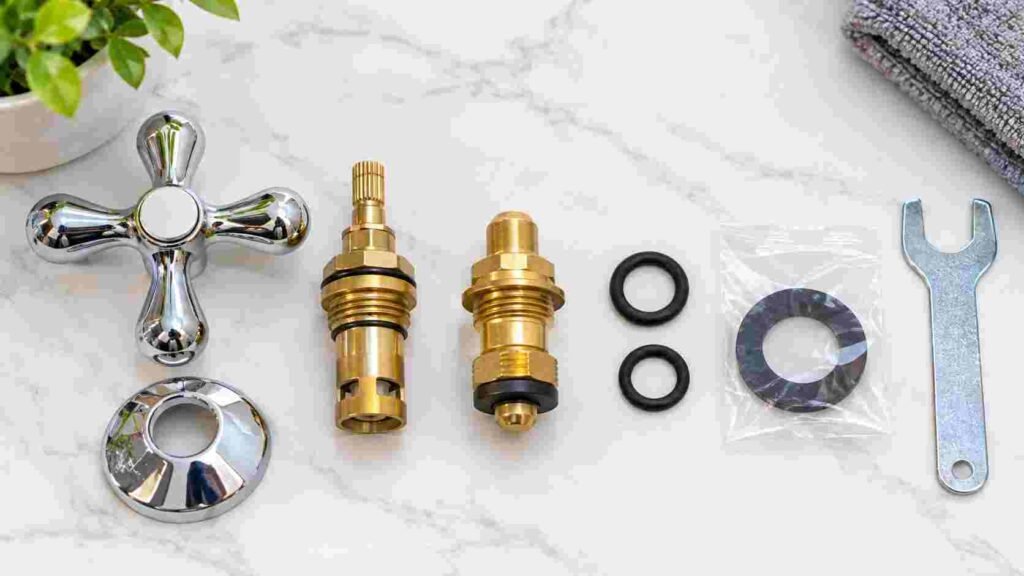
Ceramic taps don’t have washers. When they drip from the spout, the cartridge is usually worn or has grit trapped between the discs.
- The water is isolated.
- The handle or lever is removed, usually via a small grub screw under a cap or at the back of the lever.
- The cartridge’s retaining nut or cover is undone and the cartridge lifted out.
- The tap body is cleaned of grit and scale.
- A new cartridge that matches the brand and size is fitted, with new seals, and the tap is reassembled and tested.
Getting the exact cartridge matters. Mixer cartridges come in different sizes and spline patterns, so a photo of your tap and its brand saves a second trip.
Mixer tap leaking from the swivel base
If water seeps out around the bottom of a kitchen mixer’s spout when you use it, the spout O-rings have worn out. Every time the spout swings from side to side, those rubber rings rub against the tap body, and eventually they flatten or crack.
The fix is to remove the spout (usually held by a grub screw or locking ring), replace the O-rings with the correct size, lubricate them with tap grease that’s safe for drinking water, and refit the spout. If the tap body is scored where the O-rings sit, new O-rings won’t last, and replacing the mixer is better value.
Tap leaking from the handle
Water coming out around the handle when the tap is on means water is getting past the seals around the spindle or cartridge.
- On a washer tap, the spindle O-ring or gland packing has worn, or the gland nut has loosened. Replacing the O-ring, or re-sealing and tightening the gland, fixes it.
- On a ceramic or mixer tap, the cartridge’s outer seals have worn. Replacing the cartridge is usually the fix.
Leaking under the sink
Water under the sink is often not the tap itself but the flexible braided hoses that connect it to the pipes, or the seal where the tap sits on the bench. Look for rust spots, fraying or bulges on the braiding. A damaged flexible hose can burst without warning, so replace it straight away rather than waiting.
Leaking shower and bath taps
Shower and bath taps work the same way as basin taps, but their bodies sit inside the wall. A drip from the shower head after you’ve turned it off usually means a worn washer or cartridge. Damp grout, bubbling paint or a musty smell outside the shower could mean an in-wall leak. That needs our shower repair team and, often, leak detection to find the source without removing tiles unnecessarily.
Can I Fix a Leaking Tap Myself in NSW?
In NSW, plumbing work is regulated under the Plumbing and Drainage Act 2011, and NSW Fair Trading says you need a licence to do plumbing work regardless of the cost of the job. Some states allow homeowners to change a tap washer. NSW doesn’t carve out a clear exception, so the safe and legal approach is to have a licensed plumber repair the tap.
There’s one useful detail in the rules. The Plumbing and Drainage Regulation 2017 lists tapware replacements as minor work, exempt from the notice of work and certificate of compliance paperwork. It still has to be done by a licensed plumber. So a straightforward tap repair or replacement is a quick job without a pile of forms.
Unlicensed plumbing can also cause problems with home insurance and product warranties if something goes wrong.
Leaking Tap Repair or Replacement?
| Situation | Repair or replace? | Why |
|---|---|---|
| Washer tap dripping, tap otherwise in good shape | Repair | A new washer, O-ring and reseat usually fixes it for years |
| Tap still drips after a new washer and reseat | Replace | The tap body is likely worn beyond a reliable repair |
| Ceramic or mixer tap dripping, cartridge still available | Repair | A new cartridge restores it to like-new |
| Cartridge no longer made, or costs close to a new tap | Replace | A new tap is better value |
| Mixer leaking from the swivel base, body not scored | Repair | New spout O-rings fix it |
| Corroded, cracked or very old tap | Replace | Repairs won’t last |
| Renovating, or want a different style | Replace | Good time to upgrade |
Planning a refresh anyway? A new tap fits naturally into kitchen renovations and bathroom renovations.
Choosing a replacement tap: look for the Lead Free WaterMark
Tapware sold for use in Australia needs WaterMark certification. Australia is also moving to lead-free tapware. The Australian Building Codes Board has confirmed that from 1 May 2026, manufacturers can no longer make tapware that isn’t Lead Free WaterMark certified, and from 1 May 2028 only lead-free products can be installed. When buying a new tap, choose one marked with the Lead Free WaterMark, especially for kitchen and drinking water taps. Very cheap taps sold online from overseas often aren’t certified for use here.
Leaking Tap Repair in Sydney: What to Expect
When you book a leaking tap plumber, here’s what a good job looks like:
- Diagnosis. The plumber checks the tap type, where it’s leaking from and why, including whether high water pressure is wearing parts out.
- A fixed quote before work starts, covering parts and labour.
- The repair. Washer, seat, O-ring or cartridge, or a new tap if repair isn’t worth it.
- Testing. Running the tap hot and cold, checking for drips at the spout, handle, base and under the sink.
- Looking at the rest. It’s worth checking other taps while the plumber is there. If one tap’s washers have worn out, others of the same age often aren’t far behind. A running toilet is another common hidden waster, and our toilet repairs team can fix that on the same visit.
In units and townhouses, a tap inside your unit is usually your responsibility, but leaks from shared pipes or in common walls may be a strata matter. Check your by-laws or ask your strata manager.
When a Leaking Tap Becomes an Emergency
Most dripping taps can wait for a booked visit. Call straight away if:
- A tap won’t turn off at all
- A flexible hose under the sink has burst or is spraying
- Water is coming through a wall, ceiling or floor
- The hot tap is running continuously and you can’t stop it
Turn the water off at the meter and call our 24/7 emergency plumbers. Our guide to emergency water leak repair explains which leaks can’t wait.
Leaking Tap FAQs
How do you fix a leaking tap?
Find the tap type and where it’s leaking. Washer taps that drip need a new washer and sometimes a reseated valve seat. Ceramic and mixer taps need a new cartridge. Leaks from the handle need new O-rings or seals, and a mixer leaking at the swivel base needs new spout O-rings.
Why is my tap dripping when it’s turned off?
The part that seals the water off has worn. In a washer tap it’s the washer or the valve seat, and in a ceramic or mixer tap it’s the cartridge.
Why is my mixer tap leaking from the swivel base?
The O-rings that seal the spout to the tap body have worn from years of the spout swinging back and forth. Replacing them, and greasing them with tap grease that’s safe for drinking water, usually stops the leak.
Why is my tap leaking from the handle?
Water is getting past the seals around the spindle or cartridge. On washer taps it’s usually a worn spindle O-ring or a loose gland nut. On ceramic and mixer taps it’s usually the cartridge seals.
H3: Why does my tap still drip after replacing the washer?
The valve seat is probably worn or pitted, so the new washer can’t seal. Reseating the tap usually fixes it. If it doesn’t, the tap body may need replacing.
Can I replace a tap washer myself in NSW?
NSW requires a licence for plumbing work regardless of the size of the job, and there’s no clear exception for tap washers. The safe and legal option is to use a licensed plumber.
How much water does a dripping tap waste?
A NSW water utility estimates a dripping tap can waste 30 to 200 litres a day, and up to 12,000 litres a year. A dripping hot tap also wastes the energy used to heat that water.
Should I repair or replace my leaking tap?
Repair it if the tap is in good condition and parts are available. Replace it if it keeps leaking after a washer and reseat, if the cartridge is no longer made, or if the tap is corroded or cracked.
How long does a leaking tap repair take?
Most washer, O-ring and cartridge repairs are quick jobs once the plumber has the right part. Concealed shower taps, seized parts or hard-to-find cartridges can take longer.
Can high water pressure cause a leaking tap?
Yes. Pressure above the 500 kPa limit puts more force on washers, cartridges and seals, so they wear out faster. If you have several leaking taps or banging pipes, ask your plumber to test your pressure.
Get Your Leaking Tap Fixed by Radiant Plumbing
A dripping tap rarely fixes itself, and it only gets worse. The sooner it’s repaired, the more likely it’s a simple washer or cartridge job rather than a new tap.
Radiant Plumbing Services handles leaking tap repairs and new tap installs across Greater Sydney. Our licensed plumbers will find out why it’s leaking, give you a fixed price before starting, and fix it properly with the right parts. If your hot tap has been dripping or your hot water is playing up, we can look at your hot water system on the same visit.
- $0 call-out fee
- Upfront, fixed quotes with no hidden fees
- Licensed and insured plumbers
- Available 24/7 for burst hoses and taps that won’t turn off
Call (02) 8866 1322 or book a plumber online. You can also explore our full range of plumbing services across Sydney.