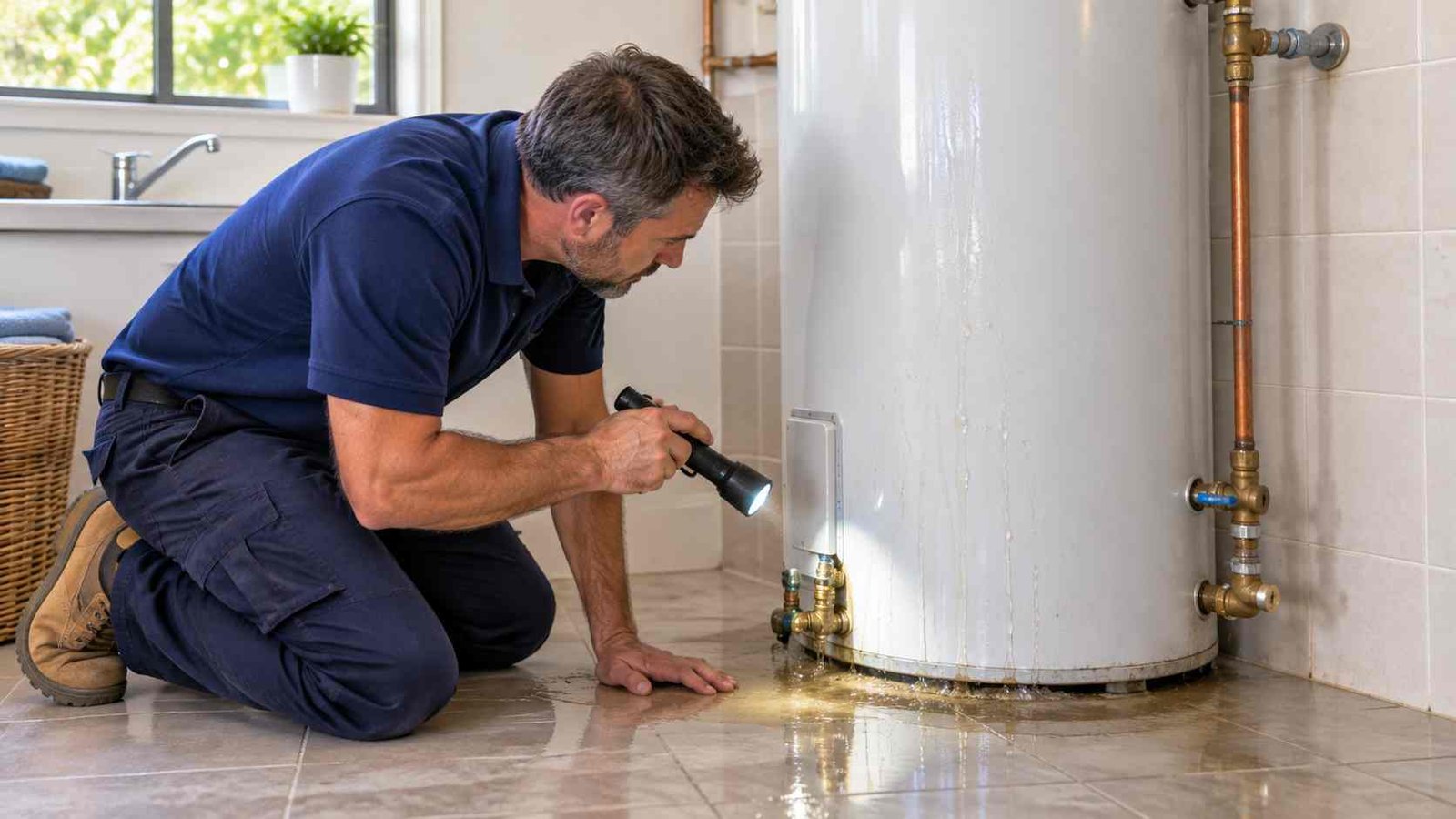
You walk into the laundry and your socks get wet. Or you notice a puddle beside the tank down the side of the house, a drip from a copper pipe that wasn’t there last week, or a brown stain spreading across the ceiling under your solar tank. A leaking hot water system is one of the most common calls Sydney plumbers get, and the good news is that many leaks come from a valve or fitting that can be fixed in one visit.
The bad news? Some leaks mean the tank itself has failed, and that won’t fix itself. This guide shows you how to work out where the water is coming from, what it means, what you can safely do yourself, and when it’s time to get a licensed plumber out.
What to Do in the First 10 Minutes
Before you start working out why, stop the damage and make the system safe.
- Check it’s really a leak. Wipe the tank and pipes dry with a towel, then watch for a few minutes. Gas storage units can form a little condensation when they fire up from cold, and a cold pipe in a humid laundry can sweat. Real leaks keep coming back in the same spot.
- Turn off the energy supply. For an electric unit, switch off the hot water circuit at your switchboard (it’s often labelled “HWS” or “Hot Water”). For a gas unit, turn the gas control knob to “Off” or “Pilot” as shown on the label on the unit.
- Close the cold water isolation valve. This is the tap on the cold pipe going into the system, usually near the bottom of a storage tank. Closing it stops new water flowing into the tank.
- If water is pouring out of the tank body, turn off the water at the meter. In most Sydney homes the Sydney Water meter sits near the front boundary or in a box in the footpath. In apartments it may be in a meter cupboard on your floor.
- Never cap, plug or block a relief valve pipe. It might stop the drip, but it removes the safety device that stops the tank building up dangerous pressure.
- Take photos and find the data plate. The sticker on the side of the tank shows the brand, model, serial number and manufacture date. You’ll need it for any warranty claim, and it helps your plumber bring the right parts.
If water is spreading fast, you smell gas, or hot water is spraying from a valve, treat it as an emergency. Our 24/7 emergency plumbers cover all of Greater Sydney, and if there’s water already through the walls or floor, our guide on what to do in a water leak emergency walks you through protecting your home while you wait.
Why Is My Hot Water System Leaking? Start With Where the Water Is
The location of the leak tells you most of the story. Here’s a quick guide before we go through each one in detail.
| Where you see water | Most likely cause | How urgent |
| Pooling under the tank, no drips from above | Corroded tank, drain valve or cold inlet fitting | High: if it’s the tank, it needs replacing |
| Dripping from fittings on top | Loose or worn hot outlet connection, valve thread or tempering valve | Medium: usually a repair |
| Water coming out of the small valve with a lever | Temperature and pressure relief (TPR) valve releasing or worn | Depends on how much is coming out |
| Water running from a copper pipe outside or into a drain | Relief or expansion valve discharging through its drain line | Medium to high |
| Water stains on the ceiling or water on the roof | Solar tank, collector panel, frost valve or roof fitting | High: water may be inside your ceiling |
| Water around a continuous flow (tankless) unit | Internal heat exchanger or connection fault | Medium to high |
Hot Water System Leaking From the Bottom
Water at the base of the unit is the leak that worries plumbers most, because it can mean the inner tank has rusted through.
Tank corrosion
Most storage tanks are steel lined with a glass-like coating (vitreous enamel). Inside sits a sacrificial anode, a metal rod that corrodes on purpose so the tank doesn’t. Once the anode is used up, the water starts eating into the tank wall instead. Eventually a small pinhole forms, usually low down where sediment collects.
Signs the tank is the problem:
- Water appears from under the outer jacket, not from a fitting
- The leak gets steadily worse over days
- Rust streaks or flaking around the base
- Rusty or brown-tinged hot water at the taps
- The unit is around 10 years old or more
A leaking tank can’t be patched. Welding or sealing the inner cylinder isn’t a safe or lasting repair, so the answer is a replacement. Many hot water systems last around 8 to 12 years, so if yours is in that range, a leak from the bottom is often the end of the road.
Fittings and valves near the base
Before you assume the worst, check these. They’re cheaper to fix:
- The cold water inlet connection. A weeping joint here drips down the outside of the tank and pools at the bottom, which looks a lot like a tank leak.
- The drain valve. Some tanks have a drain cock near the base. If it’s been bumped or the washer has perished, it can drip.
- The expansion control valve (ECV). Fitted on the cold inlet line in many Sydney installs, it can leak at its body or threads.
Dry everything with a towel, then run your hand (carefully, the pipes may be hot) along each fitting. If you find the drip starting at a joint above the base, you’re likely looking at a repair, not a new system. If the leak is behind a wall or under the slab, our leak detection service can trace it without pulling the place apart.
Hot Water System Leaking From the Top
Leaks at the top are usually from connections rather than the tank itself. Common culprits are:
- The hot water outlet connection, where the hot pipe leaves the tank. Heating and cooling makes fittings expand and contract every day, and over the years they can loosen or the seal can fail.
- The TPR valve thread, where the valve screws into the tank. Water seeping around the base of the valve (rather than out of its drain pipe) points to a thread or seal problem.
- The tempering valve. This valve mixes hot and cold water so bathrooms get water at a safe temperature. In NSW, new and replacement hot water installations generally need hot water to bathrooms delivered at no more than 50°C, so most homes have one. Worn seals inside cause drips and also odd temperature swings at the shower.
- The anode access cap on some models.
- Gas units: the flue area. Water dripping down from the flue on a gas storage unit can be condensation on a cold start, or rain coming in through a damaged flue cowl on an outdoor unit.
Most top leaks are fixed by re-making the joint or replacing the valve. Because these are connections on a pressurised hot water service, in NSW this is work for a licensed plumber.
Hot Water System Leaking From the Release Valve
The temperature and pressure relief valve is the brass valve near the top of a storage tank, with a small lever and a copper drain pipe running from it. It’s the most important safety device on the system. If the water gets too hot or the pressure gets too high, it opens and lets water out so the tank can’t fail.
So when people search for a hot water system leaking from the release valve, the real question is whether the valve is doing its job or has stopped working properly.
Is some dripping normal?
Water expands when it heats. On a system without an expansion control valve, it’s normal for the TPR valve to release a small amount of water while the unit is heating, then stop once it’s done. On off-peak electric systems, which heat overnight on a controlled-load tariff, you might only ever see the evidence as a damp patch under the drain pipe in the morning.
What’s not normal:
- A steady trickle or flow that doesn’t stop
- Dripping when the system isn’t heating
- Hot water or steam spurting out
- A valve that won’t release any water when you lift the lever
Common causes of a leaking pressure relief valve
High mains water pressure. Australian plumbing rules generally limit water pressure at outlets inside a home to 500 kPa. Some Sydney streets, especially at the bottom of hills or near pumping stations, have mains pressure higher than that. If your home doesn’t have a working pressure limiting valve, that extra pressure pushes on the relief valve and it lets go. Signs include banging pipes and taps that blast water. A plumber can test your pressure in a few minutes and fit or replace a pressure limiting valve.
Overheating. If a thermostat or gas control fails, the water can get too hot and the valve releases hot water or steam. This one is dangerous. Turn the system off at the switchboard or gas control and call a plumber straight away.
A worn or dirty valve. Over time, scale and grit from the water settle on the valve seat, so it never quite seals. Valves also simply wear out. Several manufacturers recommend replacing the TPR valve about every five years; check your owner’s manual for your model.
A faulty expansion control valve. In systems with an ECV, that valve is meant to handle everyday expansion. If the ECV isn’t working, the TPR valve ends up doing the job instead.
How to ease the relief valve
Many Australian manufacturers recommend gently operating the relief valve lever every six months to flush out grit and stop it seizing. It’s also the first thing to try if the valve has started dripping.
- Make sure the drain pipe runs somewhere safe, away from feet and hands. The water will be very hot.
- Lift the lever slowly and let water run for a few seconds.
- Lower the lever gently so it doesn’t snap shut.
- Watch the drain pipe over the next hour or so.
If the drip stops, grit was probably the issue. If it keeps leaking, or no water came out at all when you lifted the lever, the valve needs replacing. A relief valve that won’t open is a safety risk, so don’t leave it.
Hot Water System Leaking From the Overflow Pipe
What most people call the overflow pipe is actually a drain line from one of two valves:
- The TPR valve drain, which comes from the top of the tank and carries hot water.
- The ECV drain, which comes from the valve on the cold inlet, near the bottom of the tank, and carries cold water.
Follow each pipe back to its valve to see which one is running. Then feel the water (carefully).
Cold water from the ECV drain. An ECV releases a small amount of cold water while the tank heats. That’s its job, and it saves hot water and energy compared with the TPR valve doing it. A constant flow, or dripping when the unit isn’t heating, means the ECV is worn or your mains pressure is too high.
Hot water from the TPR drain. If your system has an ECV and the TPR valve is still discharging, something is wrong. Either the TPR valve has failed or the ECV isn’t taking the load.
On outdoor units, these drain lines often end just above the ground or over a gully, so a leak can run for weeks without anyone noticing. A quick check is to look at your water meter with all taps off. If the dial is moving, water is going somewhere. Our guide on emergency water leak repair explains which leaks can wait a day and which can’t.
Solar Hot Water System Leaking on the Roof
Solar systems leak in different ways because part of the system lives on the roof, out of sight. There are two main setups:
- Close-coupled (roof-mounted) systems, where the tank sits horizontally on the roof above the collector panels.
- Split systems, where the tank sits on the ground and pipes run up to panels on the roof.
Common causes
Frost valves. In frost-prone parts of Sydney, like the Hawkesbury, Penrith and the Blue Mountains, collector panels are often fitted with frost valves. On cold nights these open and let a little warm water through the panel so it doesn’t freeze. When they wear out, they can stick open and dribble water all day. One of the first signs is a jump in your water bill.
Cracked collector panels. If a panel without proper frost protection freezes, the water inside expands and can split the tubes. Hail damage can do the same on older panels.
Relief valve discharge. Solar tanks have relief valves too, and they release more often in summer when the sun heats the water hard. That discharge should be piped down to the ground or a gutter-safe point, not left to run over the roof. Hot water dripping onto roof sheeting or tiles regularly can cause staining and corrosion.
Tank corrosion. Roof-mounted tanks age just like ground tanks. Leaks from the tank body usually mean replacement.
Perished fittings and insulation. Years of Sydney sun break down rubber seals, pipe lagging and plastic fittings on the roof.
Signs your solar system is leaking
- Water marks or bubbling paint on the ceiling under the tank or panels
- Water running from the gutter or down the wall on a dry day
- Hot water running out sooner than usual
- A higher water bill with no change in how you use water
Please don’t climb onto the roof to check. A full roof-mounted tank is very heavy, roofs are slippery, and some of the pipes carry very hot water. A plumber can isolate the solar side and keep your booster running while the repair is sorted. If you’re weighing up whether to repair or move away from solar, our article comparing solar vs gas hot water for Sydney homes lays out the trade-offs.
Dux Hot Water System Leaking
Dux is one of the most common Australian hot water brands in Sydney homes, with gas, electric, heat pump and solar models. A Dux hot water system leaking usually has the same causes as any other brand: a worn relief valve, a tired ECV, high mains pressure, a loose fitting or, on older units, a corroded tank.
A few things are worth doing before you call anyone:
- Read the data plate. Note the model, serial number and manufacture date. This tells you how old the unit is and whether it may still be under warranty.
- Check your warranty paperwork. Manufacturers often cover the tank cylinder for longer than other parts, and conditions apply. If the unit is fairly new, contact the manufacturer or your installer first, because unauthorised work can affect a claim.
- Note the exact leak point. “Dripping from the lever valve at the top” and “water coming from under the cover at the bottom” lead to very different outcomes.
Our plumbers work on Dux and the other major brands found in Sydney homes. If the tank is out of warranty and leaking from the body, we’ll give you a fixed quote on a like-for-like replacement or an upgrade.
How to Fix a Leaking Hot Water System: DIY vs Plumber
It’s natural to want to sort it yourself, and there are some useful checks you can do. But in NSW, work on the water, gas and pressure-control parts of a hot water system has to be done by a licensed plumber or gasfitter, and electrical work by a licensed electrician. It’s not just a rule on paper: these systems hold scalding water under pressure.
What you can safely do
- Isolate the power or gas and the cold water supply
- Dry the unit and pinpoint the leak
- Ease the relief valve as described above
- Put a bucket under a dripping drain line (never block it)
- Check the water meter for hidden leaks
- Gently close a drain valve that’s been knocked open
- Read the data plate and check your warranty
What a plumber will do
- Replace a worn TPR valve or ECV
- Test your mains pressure and fit or replace a pressure limiting valve
- Re-make leaking outlet, inlet or tempering valve connections
- Replace a faulty tempering valve
- Inspect the anode and the condition of the tank
- Repair solar frost valves, fittings and drain lines
- Replace the whole unit when the tank has failed
If you also smell gas near a gas unit, turn it off at the meter, open the windows, don’t use switches or naked flames, and call for gas leak detection and repair straight away. Gas and water problems sometimes show up together on older units.
When you’re ready, book a hot water repair and tell us what you’ve found. The more detail you give us, the more likely we can fix it in one trip.
Repair or Replace?
Here’s how we’d tell you straight:
Usually worth repairing:
- A leaking or worn relief valve or ECV
- A loose or corroded fitting
- A failed tempering valve
- Pressure-related leaks fixed by a pressure limiting valve
- A leaking frost valve on a solar panel
Usually time to replace:
- Water leaking from the tank body or under the jacket
- Rusty water and a leak together
- A unit that’s past 10 years and needing repeated repairs
- A cracked solar collector on an old system, where repair costs are close to a new unit
If you do need a new system, a leak is a chance to rethink what suits your home. A household that’s grown might need a bigger tank. A couple who’ve just become empty nesters might be paying to heat water they don’t use. Heat pumps, solar, gas continuous flow and electric storage all have their place. Our Sydney guide to choosing a hot water system compares them, and if running costs are on your mind, these plumber-tested ways to cut your hot water bill are worth a read.
For critical failures, we can often do a same-day replacement so you’re not stuck with cold showers.
What Happens If You Ignore a Leak
A slow drip seems harmless, but the costs add up quietly:
- Water damage. Laundry floors, cabinetry, timber framing and plaster soak water up. Units in internal cupboards can damage skirting boards and floor coverings before you see a puddle.
- Apartments and strata. In units, hot water systems are often in a cupboard or on a balcony. A leak can find its way into the unit below. Tell your strata manager early, as responsibility for the unit and for any resulting damage depends on your by-laws and where the system sits.
- Mould. Damp, warm spaces like a laundry cupboard are ideal for mould.
- Your water and energy bills. You pay to heat water that ends up down the drain.
- Sudden failure. A tank that’s weeping from corrosion can let go all at once, dumping its full contents.
How to Prevent Hot Water Leaks
You can’t make a tank last forever, but you can stop most avoidable leaks:
- Ease the relief valve every six months (or as your manual says).
- Book a hot water service every few years, including an anode check. Replacing a worn anode before it’s used up can help the tank last longer.
- Get your water pressure checked, especially if you have banging pipes or very forceful taps.
- Keep the area around the unit clear, so you can spot drips early and the unit can breathe.
- Glance at the base and the drain pipes when you’re in the laundry or out the side of the house.
- Watch for early warning signs, like rusty water, rumbling or popping noises, or hot water running out sooner.
Our list of common water heater problems and how to fix them covers other warning signs, and if your leak has come with a loss of hot water, see why your water heater isn’t producing hot water.
Leaking Hot Water System FAQs
Is a leaking hot water system dangerous?
It can be. A small drip from a fitting is mostly a water-damage risk. Hot water or steam coming from the relief valve, a valve that won’t release at all, or a leak near electrical wiring or a gas burner are safety risks. Turn the system off and call a plumber.
Can I still use my hot water system if it’s leaking?
If it’s a slow drip from a fitting or a drain line, you can usually keep using it for a short time until a plumber arrives, with a bucket in place. If the tank body is leaking, the leak is getting worse, or anything is spurting, turn it off and isolate the water.
Why does my hot water system only leak at night?
Most likely because it heats at night. Many Sydney electric storage systems are on an off-peak controlled-load tariff, so they heat overnight. As the water heats, it expands and the ECV or TPR valve releases a little. A small amount is normal. A puddle that’s growing each morning is not.
How long does a hot water replacement take?
A like-for-like swap of a storage unit is usually done within a few hours. Changing system type, moving the location, or roof work for solar can take longer. We’ll give you a time frame with your quote.
Will home insurance cover a leaking hot water system?
It depends on your policy. Many policies treat the worn-out unit differently from sudden damage it causes to your home. Take photos, keep the old parts if you can, and check with your insurer before work starts.
I’m renting. Who fixes a leaking hot water system?
In NSW, a failure or breakdown of the hot water service counts as an urgent repair under the residential tenancy rules. Tell your landlord or agent straight away, in writing. If you can’t reach them, NSW Fair Trading explains when tenants can arrange urgent repairs themselves and how much they can be reimbursed for.
Leaking Hot Water System in Sydney? Call Radiant Plumbing
If your hot water system is leaking, the sooner it’s looked at, the more likely it’s a simple valve or fitting rather than a new tank and a ruined laundry floor.
Radiant Plumbing Services has licensed and insured plumbers on call 24/7 across Greater Sydney, from the Eastern Suburbs and Inner West to the Hills District, the Northern Beaches and Western Sydney. We repair and replace gas, electric, solar and heat pump systems, and we’ll tell you straight whether a repair is worth it.
- $0 call-out fee
- Upfront, fixed quotes with no hidden fees
- Same-day replacement for critical failures
- Workmanship guarantee on our repairs
Call us on (02) 8866 1322 or send us your details online and we’ll get a plumber to you.