
Choosing the best hot water system is a decision you’ll live with for 10 to 20 years. The right one gives your household reliable hot water at a sensible running cost. The wrong one either runs out mid-shower or quietly adds hundreds of dollars a year to your energy bills.
This guide explains how to choose a hot water system for a Sydney home. It covers the types of hot water systems, how to size one in litres, gas vs electric, storage vs continuous flow, efficiency ratings, NSW rebates and brands. It’s written by Radiant Plumbing, a licensed Sydney plumbing team that installs gas, electric, heat pump and solar systems every week.
Not sure which system suits your home? Radiant Plumbing will assess your household, energy supply and space, then recommend the right system with a fixed upfront price. Call (02) 8866 1322 or see our hot water system services.
Which Hot Water System Is Best for Your Home?
There’s no single best water heater for every home. The best choice balances four things: how much hot water you use at peak times, which energy you have (mains gas, LPG, electricity, solar panels), the space available, and whether you’d rather pay less now or less every year.
The table below compares the five main options for a typical Sydney family home.
| System type | Upfront cost | Running cost | Typical lifespan | Best for |
| Electric storage | Lowest | High (lower on off-peak) | 8–12 years | Tight budgets, no gas, small households |
| Gas storage | Low to medium | Medium | 8–12 years | Homes with mains gas and high demand |
| Continuous flow (instant) gas | Medium | Medium | 15–20 years | Endless hot water, limited space |
| Heat pump | Medium to high | Lowest electric option | 10–15 years | Lowest running cost, homes with solar panels |
| Solar (with booster) | Highest | Very low | 15–20 years | Sunny, north-facing roofs, long-term owners |
For installed prices by type, see our guide to the cost to replace a hot water system in Sydney.
Types of Hot Water Systems
All hot water systems in Australia fall into two groups: storage systems that keep a tank of hot water ready, and continuous flow systems that heat water only as you use it. Within those groups, the energy source is what sets running costs.
Electric Storage Hot Water System
An electric hot water system suits households that want the lowest upfront cost and have no gas connection. A heating element warms water in an insulated tank, usually 125 to 400 litres. Electric storage is simple to install and reliable, but it’s one of the most expensive types to run. Connecting it to an off-peak or controlled-load tariff reduces that cost, but the tank must be larger because it only reheats at set times.
Gas Storage Hot Water System
A gas hot water system with a tank suits homes with mains gas and several people showering in a row. Gas storage units heat water quickly, so they recover faster than electric tanks of the same size. Most Sydney installations are outdoor models, which avoid the need for an internal flue. Running costs sit in the middle and depend on gas prices.
Continuous Flow (Instantaneous) Hot Water System
A continuous flow hot water system suits households that never want to run out of hot water. Also called an instantaneous hot water system, it heats water only when a tap opens, so there’s no tank and no standby heat loss. Gas models are the most common in Sydney. They’re sized by flow rate in litres per minute (L/min) and may need a larger gas pipe or meter. Whole-house electric instantaneous units need a heavy electrical supply, sometimes three-phase, so they’re less common.
Heat Pump Hot Water System
A heat pump hot water system suits households that want the lowest running cost from electricity. It works like a reverse air conditioner, drawing heat from the surrounding air to warm the water. Heat pumps use up to 75% less electricity than a standard electric tank, and Sydney’s mild climate suits them well. They pair especially well with rooftop solar panels by running during the day. Our guide to heat pump hot water pros, cons and running costs covers noise, placement and payback in detail.
Solar Hot Water System
A solar hot water system suits owners planning to stay in the home long term and with a sunny, north-facing roof. Collectors on the roof heat water stored in a tank, with a gas or electric booster for cloudy days. Solar has the highest upfront cost but very low running costs. For a side-by-side comparison, read our guide to solar vs gas water heaters.
Storage vs Continuous Flow Hot Water
Storage systems hold a ready supply and handle several outlets at once, but they lose some heat while the water sits in the tank and can run out. Continuous flow systems never run out and waste no standby heat, but they have a limit on how many outlets they can supply at the same moment.
Choose storage if your household often runs two showers and the washing machine together, or you want to use off-peak electricity, a heat pump or solar. Choose continuous flow if you have mains gas, limited space and want unlimited hot water for back-to-back showers. In both cases, the system must be sized correctly, which is where most problems start.
What Size Hot Water System Do I Need?
The right hot water system size depends on how many people live in the home and how many outlets run at once. Too small, and the last person in the shower gets cold water. Too large, and you pay to buy and heat water you never use.
Storage Tank Sizes by Household
As a general guide for storage systems in a Sydney home:
| Household size | Electric storage (off-peak) | Gas storage | Heat pump | Solar |
| 1–2 people | 125–160 litres | 90–135 litres | 160–270 litres | 160–220 litres |
| 3–4 people | 250–315 litres | 135–170 litres | 270 litres | 300 litres |
| 5+ people | 315–400 litres | 170 litres or more | 270–340 litres | 300–440 litres |
The best hot water system for a family of 4 is usually a 250 to 315 litre electric or heat pump tank, a 135 to 170 litre gas tank, or a continuous flow unit of about 26 L/min. Electric off-peak tanks are larger because they only reheat once a day.
Continuous Flow Sizes by Bathrooms
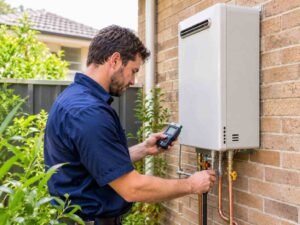
Continuous flow systems are sized by flow rate rather than hot water tank size. A small apartment with one bathroom typically needs about 16 to 20 L/min. A family home with two bathrooms needs about 26 L/min, and three or more bathrooms need about 32 L/min. A hot water system for a small house or unit can often be a compact continuous flow model mounted on an outside wall.
Gas vs Electric Hot Water System
The gas vs electric hot water system decision usually comes down to what’s already connected. If your home has mains gas, gas continuous flow or gas storage is often the simplest like-for-like choice. If you have no gas, or you’re moving away from gas, a heat pump is usually the better electric option than a standard electric tank.
LPG (bottled gas) is generally the most expensive way to heat water, so homes without mains gas usually do better with a heat pump. If you’re replacing a gas system, it must be disconnected or installed by a licensed gasfitter. If you ever smell gas near your current unit, read the signs of a gas leak at home and get it checked straight away.
Running Costs and Energy Efficiency
The cheapest hot water system to buy is rarely the cheapest to own. Over 10 to 15 years, running costs can add up to several times the purchase price, so efficiency matters as much as the sticker price.
Which Is the Most Energy Efficient Hot Water System?
The most energy efficient hot water system for most Sydney homes is a heat pump, followed by solar. Both use free heat from the air or sun and rely on electricity or gas only to top up. Standard electric storage is the least efficient, because every degree of heat comes from the element.
Hot Water System Star Ratings
Gas water heaters carry the Gas Energy Rating Label, which uses stars: more stars means less gas for the same hot water. When comparing two gas models, a higher hot water system star rating usually pays back its extra cost within a few years. For heat pumps and solar, compare the rated energy savings and the number of STCs a model earns, which reflects how efficient it is.
For ways to cut the running cost of the system you already have, see our guide on how to reduce water heater costs.
Are There Hot Water Rebates in NSW?
Yes. NSW households replacing an existing electric or gas system with an eligible heat pump can receive an upfront discount through the NSW Government’s Energy Savings Scheme. The incentive is up to $640 when replacing an electric water heater and up to $330 when replacing a gas water heater, applied by an approved installer. Source: NSW Climate and Energy Action.
Eligible heat pump and solar systems also earn federal Small-scale Technology Certificates (STCs), usually applied as a further discount on the price. Rebate amounts and eligibility change, so confirm current figures with your installer before you buy.
Space, Installation and Water Quality
Where the system goes can rule some options out before price comes into it.
Space and Placement
Storage tanks need floor space and clearances for servicing, while continuous flow units mount on an outside wall. Heat pumps need good airflow and are best kept away from bedroom windows because of fan noise. Solar needs enough unshaded north-facing roof for the collectors.
Installation Requirements
Switching system type often means more work than a like-for-like swap.
Gas Upgrades
Continuous flow gas units burn more gas at once than a storage unit, so older homes sometimes need a larger gas pipe or meter.
Electrical Work
A heat pump or new electric unit may need a new circuit or isolator, installed by a licensed electrician.
Safety Valves
New installations need a tempering valve so bathroom outlets don’t exceed safe temperatures, plus a working pressure and temperature relief valve on storage tanks.
Water Quality and Lifespan
Sydney’s mains water is relatively soft, so scale build-up is less of an issue than in some regional areas. Storage tanks still rely on a sacrificial anode to slow corrosion, so have it checked every few years. A regular home plumbing inspection can check your system’s condition and help you plan a replacement before it fails.
Best Hot Water System Brands in Australia
Brand matters less than system type and size, but it affects warranty, service and parts. The best hot water system brands in Australia that Sydney plumbers install most often include Rheem, Rinnai, Dux, Bosch and Thermann, with Stiebel Eltron and Reclaim strong in heat pumps.
When comparing brands, look at the tank and parts warranty, the star rating or energy savings, noise levels for heat pumps, and local service availability. A model with a longer warranty and lower running costs often works out cheaper over its life.
Repair or Replace Your Current System?
If your current system is under eight years old and one part has failed, a repair is usually better value. If it’s over ten to twelve years old, keeps breaking down, or the tank is leaking or rusting, it’s time to choose a new one. If you’re not sure what’s wrong, our guide on why your hot water system is not working explains common faults.
A leaking tank can’t be repaired. Turn off the cold water inlet and the power or gas, then follow our guide to emergency water leak repair. For general call-out fees and rates, see our guide to plumber cost in Sydney.
How To Choose a Hot Water System: Checklist
- Count the people in your home and the bathrooms that run at once.
- Check your energy supply: mains gas, LPG, electricity tariff and solar panels.
- Measure the space and note where the current unit sits.
- Compare upfront cost against 10 to 15 years of running costs.
- Check NSW and federal rebates for heat pumps and solar.
- Get a fixed, written quote from a licensed plumber that includes valves, removal of the old unit and any rebates.
Ready to choose? Radiant Plumbing supplies and installs all major system types across Sydney with a $0 call-out fee and fixed upfront pricing, often on the same day. Call (02) 8866 1322 or request a quote online.
Hot Water System FAQs
What size hot water system do I need for a family of 4?
A family of four typically needs a 250 to 315 litre electric storage or heat pump tank, a 135 to 170 litre gas storage tank, or a continuous flow unit of about 26 L/min.
What is the most energy efficient hot water system?
A heat pump is the most energy efficient option for most Sydney homes, using up to 75% less electricity than a standard electric tank. Solar is also very efficient on a sunny roof.
Should I choose a gas or electric hot water system?
If you have mains gas, gas continuous flow or storage is a simple choice. Without gas, a heat pump is usually better value over time than a standard electric tank.
Is a continuous flow hot water system worth it?
For homes with mains gas and back-to-back showers, yes. It never runs out, wastes no standby heat and usually lasts 15 to 20 years.
How long does a hot water system last?
Storage tanks typically last 8 to 12 years, heat pumps 10 to 15 years, and continuous flow and solar systems 15 to 20 years with regular servicing.
Can I install a hot water system myself?
No. In NSW, water connections must be made by a licensed plumber, gas connections by a licensed gasfitter, and electrical work by a licensed electrician. If a gas system ever smells of gas, leave the area and call Jemena on 131 909, then book our gas leak detection and repair service.
Choose the Right Hot Water System With Radiant Plumbing
The best hot water system for your home is the one sized for your household, matched to your energy supply and affordable to run for the next 15 years. For most Sydney families that means a heat pump or gas continuous flow, with electric storage for tight budgets and solar for long-term owners.
Radiant Plumbing is a licensed Sydney plumbing team that helps you choose the best hot water system in Sydney and installs it, from Rheem, Rinnai, Dux, Bosch and Thermann. We service the CBD, Eastern Suburbs, Inner West, North Shore, Northern Beaches, Hills District, Western Sydney and St George, with a $0 call-out fee and fixed upfront pricing. For urgent breakdowns, our emergency plumbing team is available 24/7.
Need a new system? Call Radiant Plumbing on (02) 8866 1322 for a fixed-price quote, or learn more about our hot water system replacement service.