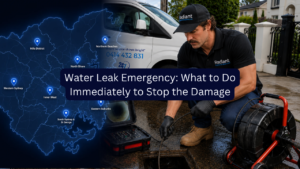
Dealing with a sudden emergency pipe repair can be extremely stressful, especially when a pipe burst in house situations leads to gallons of water gushing onto your floors and walls. When you experience a pipe burst, every single minute counts to minimize structural damage, ruined drywall, and warped flooring. Knowing the immediate steps to take can save you thousands of dollars in restoration costs. Whether the issue is localized to a water pipe burst in bathroom or an unexpected burst pipe in wall, reacting quickly is vital to protecting your home and belongings.
As soon as you notice the sound of rushing water or visible pooling, your absolute priority for an emergency pipe repair is locating and shutting off your home’s main water supply valve. Following that, turn off your electricity if water is near outlets, and open faucets to drain the remaining lines. Homeowners frequently search for a burst water pipe fix or try to figure out how can you tell if a pipe burst, noticing low water pressure, damp drywall, or unusual banging noises. Acting swiftly with a reliable burst pipe fix prevents mold growth and electrical hazards, ensuring your property stays safe while you arrange for professional plumbing assistance.
1. Immediate Actions When You Need an Emergency Pipe Repair
When facing a catastrophic pipe burst, taking immediate action is critical for minimizing water damage and controlling the disaster before professional emergency pipe repair services arrive. A sudden pipe burst in house can flood living spaces within minutes, making quick thinking your best defense.
The first step in any emergency pipe repair protocol is shutting off your home’s main water valve to stop the relentless flow of water feeding the break. Once the water is off, cut off the electricity to affected areas if water is near switches or outlets, then open all lower-level faucets to drain remaining water from the plumbing system. Homeowners often panic when dealing with a burst pipe, but staying calm and acting decisively helps prevent total structural saturation. Whether you are dealing with a water pipe burst or a minor leak, executing these quick containment measures ensures the situation does not escalate further.
Emergency Water Shut-Off Strategies
- Locate your main water shut-off valve immediately to halt the flow for your emergency pipe repair.
- Test the valve prior to emergencies so you never waste precious seconds during a pipe burst.
- Label your shut-off valve clearly so family members can assist with emergency pipe repair tasks.
- Contact a licensed professional for emergency pipe repair once the main supply is safely closed.
- Keep emergency contact numbers handy for any sudden burst water pipe fix or plumber dispatch.
Electrical Safety Around Leaks
- Turn off your circuit breaker immediately if water from a burst water pipe approaches electrical outlets.
- Never step in standing water while operating switches during an active emergency pipe repair.
- Inspect nearby light fixtures for leaks if you suspect a burst pipe in wall or ceiling leak.
- Use battery-powered lighting to navigate safely during your emergency pipe repair checklist.
- Wait for an electrician to clear wiring before resuming power after a major water pipe burst.
Draining Remaining Lines
- Open all faucets in your home to drain residual water after a pipe burst.
- Flush toilets once to empty the tank and reduce pressure during an emergency pipe repair.
- Catch dripping water from a burst pipe using buckets and heavy-duty plastic bins.
- Monitor lower-level drains to ensure wastewater from a water pipe burst clears properly.
- Keep drain valves accessible to help speed up your temporary burst water pipe fix.
Temporary Patching Techniques
- Wrap rubber sheeting tightly around a minor split during an interim emergency pipe repair.
- Apply specialized waterproof repair tape over a busted pipe fix area for temporary relief.
- Use a pipe clamp kit designed for a burst pipe repair to secure cracked sections.
- Avoid using high heat or unapproved glues for a burst water pipe fix under high pressure.
- Remember that temporary patches are only stopgap measures before permanent emergency pipe repair work.
2. Locating and Diagnosing Hidden Pipe Bursts
Hidden plumbing failures, such as a pipe burst in wall or a broken pipe inside wall, can cause extensive structural damage before they are ever visually detected. Spotting the subtle signs of a burst pipe early allows you to initiate emergency pipe repair before mold sets in or drywall collapses.
Property owners often wonder how can you tell if a pipe burst behind finished surfaces where water is entirely concealed from direct view. Common indicators include unexplained spikes in your water bill, damp or warm patches on drywall, and musty odors suggesting a broken pipe in bathroom or utility room. Identifying whether you have a burst pipe in wall or a busted pipe in wall requires careful inspection of wall surfaces, listening for hissing sounds, and checking for buckling flooring or peeling paint.
Spotting Water Stains and Discoloration
- Look for yellowish or brown water rings on drywall indicating a burst pipe in wall.
- Inspect ceilings beneath bathrooms for damp spots from a water pipe burst in bathroom.
- Check baseboards for warping caused by a hidden broken pipe inside wall leak.
- Document all discoloration with photos for your burst pipe water damage insurance claim.
- Call an expert for emergency pipe repair immediately upon noticing persistent wall stains.
Listening for Hissing or Dripping Sounds
- Place your ear against drywall to listen for pressurized leaks during a pipe burst.
- Hear for faint running water behind tiles when a broken bathroom pipe fails.
- Investigate unusual dampness sounds near fixtures during a suspected water pipe burst.
- Distinguish normal plumbing noises from a high-pressure burst pipe leak sound.
- Record audio notes of running sounds to help technicians during your emergency pipe repair.
Investigating Unexplained Water Bills
- Review monthly utility statements for sudden spikes indicating a hidden water pipe burst.
- Check your water meter dials when all faucets are closed to verify a burst pipe.
- Track historical consumption averages to catch a slow burst water pipe leak early.
- Perform meter drop tests if you suspect a hidden broken plumbing pipe underground.
- Factor utility cost surges into your overall burst pipe repair budget assessment.
Identifying Musty Odors and Mold
- Smell for damp, earthy odors indicating hidden mold from a burst pipe.
- Inspect dark corners for mold growth caused by a broken water pipe in house.
- Check behind bathroom vanities for mildew resulting from a bathroom pipe burst.
- Wear protective masks when inspecting moldy areas during your emergency pipe repair.
- Schedule professional mold remediation alongside your main emergency pipe repair service.
3. Dealing with Bathroom Pipe Bursts and Specific Fixtures
Bathrooms are high-risk zones where a water pipe burst in bathroom or a broken pipe in bathroom can flood your home rapidly due to dense concentrations of supply lines. Managing a bathroom pipe burst requires quick access to local shut-off valves beneath sinks and behind toilets.
When a broken bathroom pipe gives way, water can seep into subfloors and lower ceilings, turning a simple fix into a major restoration project. Homeowners facing a burst pipe in bathroom must act fast to shut off fixture valves, clear out wet vanity items, and call for emergency pipe repair before structural rot takes hold of wooden framing elements.
Shutting Off Fixture Valves
- Locate the isolation valves under sinks to stop a water pipe burst in bathroom.
- Turn the toilet supply valve clockwise to halt a sudden broken pipe in bathroom leak.
- Test sink shut-off valves annually to ensure they work during a bathroom pipe burst.
- Use pliers gently if a stuck valve resists your emergency pipe repair attempt.
- Avoid forcing old valves to prevent snapping them during a burst pipe emergency.
Managing Vanity and Cabinet Water Damage
- Empty wet cabinets immediately after a water pipe burst in bathroom to prevent warping.
- Remove swollen particle board shelves affected by a broken bathroom pipe leak.
- Wipe down standing water inside vanities during your quick emergency pipe repair.
- Leave cabinet doors wide open to air out moisture from a burst pipe.
- Discard ruined cardboard storage boxes soaked by a severe bathroom pipe burst.
Protecting Bathroom Subfloors
- Pull up saturated bath mats and rugs after a water pipe burst in bathroom.
- Check vinyl or tile flooring for lifting caused by a broken pipe in bathroom.
- Use wet-dry vacuums to extract pooling water during your emergency pipe repair.
- Set up heavy-duty floor fans to dry out subfloors after a burst pipe.
- Consult flooring specialists if a bathroom pipe burst warps hardwood subfloors.
Coordinating Professional Plumbing Help
- Call a certified plumber specializing in emergency pipe repair for fast dispatch.
- Describe the exact fixture involved in your water pipe burst in bathroom clearly.
- Ask the dispatcher about estimated arrival times for your burst pipe emergency.
- Verify plumber licensing before authorizing major emergency pipe repair work.
- Keep emergency repair invoices for your upcoming burst pipe water damage claim.
4. Understanding Costs, Insurance, and Professional Services
Navigating the financial and logistical aftermath of a burst pipe repair involves understanding repair costs, insurance claims, and knowing who to call. Homeowners frequently ask how much does it cost to fix a burst pipe and whether are burst pipes covered by homeowners insurance.
Knowing who to call for burst water pipe emergencies ensures you get reliable help without getting scammed by predatory contractors. Typical expenses for repairing burst water pipe systems vary based on location, accessibility inside walls, and the extent of burst pipe water damage sustained throughout the property.
Estimating Repair and Restoration Expenses
- Research average market rates to answer how much does it cost to fix a burst pipe.
- Factor in drywall patching costs alongside your basic burst pipe repair bill.
- Get multiple contractor quotes for extensive emergency pipe repair projects.
- Account for emergency after-hours dispatch fees when scheduling a burst water pipe fix.
- Balance upfront costs against long-term savings of professional emergency pipe repair.
Navigating Insurance Claims Successfully
- Review your policy to confirm are broken pipes covered by homeowners insurance.
- Document all affected belongings meticulously for your burst pipe water damage claim.
- File your insurance paperwork quickly following any major emergency pipe repair event.
- Keep detailed receipts for emergency lodging if a water pipe burst forces evacuation.
- Work closely with insurance adjusters during your burst pipe insurance claim tips review.
Selecting Qualified Emergency Plumbers
- Identify reliable professionals to answer who to call for burst water pipe emergencies.
- Verify 24/7 availability before hiring a contractor for emergency pipe repair.
- Check online reviews and ratings for local plumber burst pipe specialists.
- Ask for written guarantees on all completed burst pipe repair workmanship.
- Confirm that your chosen emergency pipe repair provider handles permitting if needed.
Understanding Repair Timelines
- Inquire how long to fix burst water pipe issues during initial consultations.
- Expect standard repairs to take anywhere from a few hours to several days.
- Plan for temporary water shut-offs during complex emergency pipe repair phases.
- Factor drywall drying time into your overall burst pipe repair schedule.
- Maintain clear communication with technicians throughout the emergency pipe repair process.
5. Preventing Future Bursts and Winterization Strategies
Proactive maintenance and winterization are your best defenses against future plumbing failures and expensive emergency pipe repair bills. Learning how to prevent frozen pipes and how to protect pipes from freezing stops disasters before they start.
Extreme cold snaps often trigger burst frozen pipes, leading to severe winter burst pipes emergencies across residential neighborhoods. Knowing how to prevent burst pipes by insulating exposed lines, sealing drafts, and maintaining adequate indoor heat protects your plumbing infrastructure year-round.
Insulating Exposed Plumbing Lines
- Wrap exposed basement pipes in foam insulation to prevent burst frozen pipes.
- Secure insulation sleeves with zip ties for durability during winter burst pipes threats.
- Focus on unheated crawlspaces when planning how to protect pipes from freezing.
- Check outdoor spigots regularly to avoid seasonal burst pipe incidents.
- Inspect attic plumbing lines as part of your emergency pipe repair prevention plan.
Sealing Drafts and Vent Leaks
- Block cold air drafts entering crawlspaces to stop winter burst pipes before freezing.
- Seal wall cracks near exterior plumbing runs to prevent a pipe burst in house.
- Install weatherproof vent covers to protect vulnerable broken water pipe outside house lines.
- Check garage walls for gaps that could freeze a burst frozen pipes system.
- Maintain consistent indoor heating to support your how to prevent burst pipes strategy.
Managing Faucets During Freezing Weather
- Let faucets drip slightly during severe freezes to prevent burst frozen pipes.
- Open cabinet doors beneath sinks to circulate warm air during winter burst pipes.
- Disconnect garden hoses before winter to safeguard outdoor burst water pipe systems.
- Drain exterior irrigation lines to protect against underground broken pipe underground damage.
- Follow expert guidelines on how to stop pipes from bursting during deep freezes.
Routine Plumbing Inspections
- Hire a professional plumber to evaluate aging pipes and prevent emergency pipe repair.
- Check water pressure regulators to avoid over-pressurizing your burst water pipe system.
- Inspect flexible supply lines beneath sinks for signs of burst flexi pipe wear.
- Test main shut-off valves annually to ensure readiness for any pipe burst.
- Keep emergency plumber contacts saved on your phone for fast emergency pipe repair.
FAQs:
What should I do first when a pipe bursts?
Turn off your main water valve immediately to stop the flow of water, shut off nearby electrical circuits, and call a professional for emergency pipe repair.
Are burst pipes covered by homeowners insurance?
Yes, most standard policies cover sudden burst pipe water damage, but gradual leaks or neglect are typically excluded from your homeowners insurance payout.
How can I temporarily fix a burst pipe?
Apply a temporary rubber patch and secure it with a pipe clamp or heavy-duty waterproof tape to stop the leak until professional emergency pipe repair arrives.
What causes water pipes to burst?
Freezing temperatures cause trapped water to expand inside the lines, while high water pressure, aging materials, and heavy corrosion also trigger unexpected plumbing ruptures.
How much does it cost to fix a burst pipe?
Fixing a burst pipe typically costs between $150 and $600, depending on accessibility, wall damage, and whether professional drywall restoration is required afterwards.
Who should I call during a pipe burst emergency?
Call a licensed 24/7 emergency plumber immediately to shut off specialized lines, perform permanent repairs, and mitigate further structural water damage to your home.
Built on Trust. Powered by Quality. Radiant Plumbing.