Tap replacement is worth it when a tap keeps leaking after repairs, the body is cracked or corroded, the handle is loose or stiff, or you simply want a better-looking, more water-efficient mixer. Many mixer taps can be repaired by replacing the cartridge, O-rings or aerator, but an old, worn or discontinued tap is usually better replaced. In NSW, connecting a new tap to the water supply is plumbing work for a licensed plumber. The cost depends on the type of tap, whether it’s like-for-like, the condition of the hoses and isolation valves, and access under the sink, so ask for a fixed quote that includes parts and labour.
A dripping kitchen mixer, a stiff bathroom tap or a handle that spins without doing anything is one of the most common plumbing complaints we hear. Sometimes a quick repair does the trick. Other times, the tap has simply had its day, and replacing it is the smarter, longer-lasting fix.
This guide walks you through everything you need to know about tap replacement in a Sydney home. We’ll help you decide whether to repair or replace, explain how kitchen and bathroom taps are swapped over, cover the parts that commonly wear out, and break down what affects the cost. We’ve written it in plain English, based on the jobs our team handles every week.
Repair or Replace? How to Decide
Not every leaking tap needs to go. Plenty of problems can be fixed with a small part, and a good plumber will tell you honestly when a repair makes more sense. The trick is knowing what’s going on inside.
Older-style taps with separate hot and cold handles usually use a rubber washer and a jumper valve to shut off the water. When that washer wears, the tap drips. Replacing the washer, and sometimes reseating the brass seat underneath it, often fixes the problem for a fraction of the cost of a new tap.
Modern mixer taps work differently. Instead of a washer, they use a ceramic cartridge that controls both the flow and the temperature with a single lever. When the cartridge wears out or gets damaged by grit, the mixer can drip from the spout, leak around the handle, become stiff, or stop mixing hot and cold properly. In many cases, a new cartridge brings the tap back to life.
So when does tap replacement make more sense? Here are the situations where we usually recommend a new tap. The tap body is cracked, corroded or pitted. The tap keeps leaking even after the washer or cartridge has been replaced. Parts are no longer available because the model is discontinued. The tap is wobbly because the base or mounting is worn. The chrome is peeling or the finish is badly damaged. Or you’re renovating and want a more modern, water-efficient design.
Age matters too. If you’re spending money on a repair every year or two, those costs add up quickly. At that point, a quality new tap with a warranty is usually better value. Our tap repairs team can assess your tap and give you both options so you can decide.
Who Can Replace a Tap in NSW?
Replacing a tap looks like a simple job, and it can be when everything goes to plan. But in NSW, connecting a new tap to your water supply is plumbing work, and plumbing work must be carried out by a licensed plumber. That’s not just red tape. A poorly connected tap or flexible hose can leak slowly inside a cupboard for weeks, or burst while you’re out, causing serious water damage.
There’s also good news on paperwork. NSW Fair Trading lists replacing tapware as one of the “minor works” where your plumber doesn’t need to lodge a Notice of Work beforehand. That keeps a straightforward tap swap quick and simple.
Your home insurance may also expect plumbing work to be done by a licensed professional, so keep the invoice. Before anyone starts, you can confirm their licence in a minute using the Service NSW licence check. A reliable tap replacement plumber will be happy for you to check.
Choosing the Right Replacement Tap
The tap you choose affects how easy the replacement is, how long it lasts and how much water you use. Before you buy, check a few important things.
Look for the WaterMark
In Australia, most plumbing products, including tapware, must be WaterMark certified before they can be installed. The Australian Building Codes Board’s guidance on buying tapware is simple: look for the WaterMark, which you’ll find on the product. A licensed plumber can’t install a tap that requires certification but doesn’t have it.
This matters when you’re shopping online. Cheap imported taps without certification may look the same as a quality tap, but they haven’t been tested to Australian standards. Many newer taps also carry lead-free certification, which is worth asking about for kitchen taps where you draw drinking water.
Check the WELS Star Rating
Taps sold in Australia must carry a WELS water rating label showing their star rating and flow in litres per minute. More stars mean less water used. The Your Home guide notes that the plumbing code’s minimum standard for taps installed by a licensed plumber is equivalent to a WELS 3-star rating.
Every bit of flow you save adds up. The WELS water rating site estimates that every 1 litre per minute difference can save a household nearly 2,000 litres of water a year. A water-efficient tap doesn’t have to feel weak, because many use aerators that mix air into the stream.
Match the Tap to Your Sink or Basin
Count the tap holes in your sink, basin or benchtop. A single-hole mixer suits one hole. If you have two or three holes from an old tap set, you’ll either need a matching tap set, a cover plate, or a new sink or benchtop. Check the spout height and reach as well. A tall gooseneck can splash in a shallow basin, while a short spout might not reach the middle of a big kitchen sink.
Kitchen Tap Replacement
Kitchen tap replacement is one of the most common jobs we do. The kitchen tap works harder than any other in the house, turning on and off dozens of times a day, often with wet or greasy hands. It’s no surprise that kitchen mixers wear out first.
Types of Kitchen Mixer Taps
The most popular choice in Sydney homes is a single-lever sink mixer mounted on the sink or benchtop. Within that, you’ll find standard mixers, tall gooseneck mixers that make it easy to fill big pots, and pull-out or pull-down mixers with a spray head on a hose. Wall-mounted mixers are another option, but they’re plumbed into the wall, so switching to or from one usually means bigger work, often as part of a renovation.
If you’re upgrading to a pull-out mixer, make sure there’s enough room under the sink for the hose and counterweight to move freely. Bins, water filters and drawers can get in the way.
What Kitchen Sink Mixer Tap Installation Involves
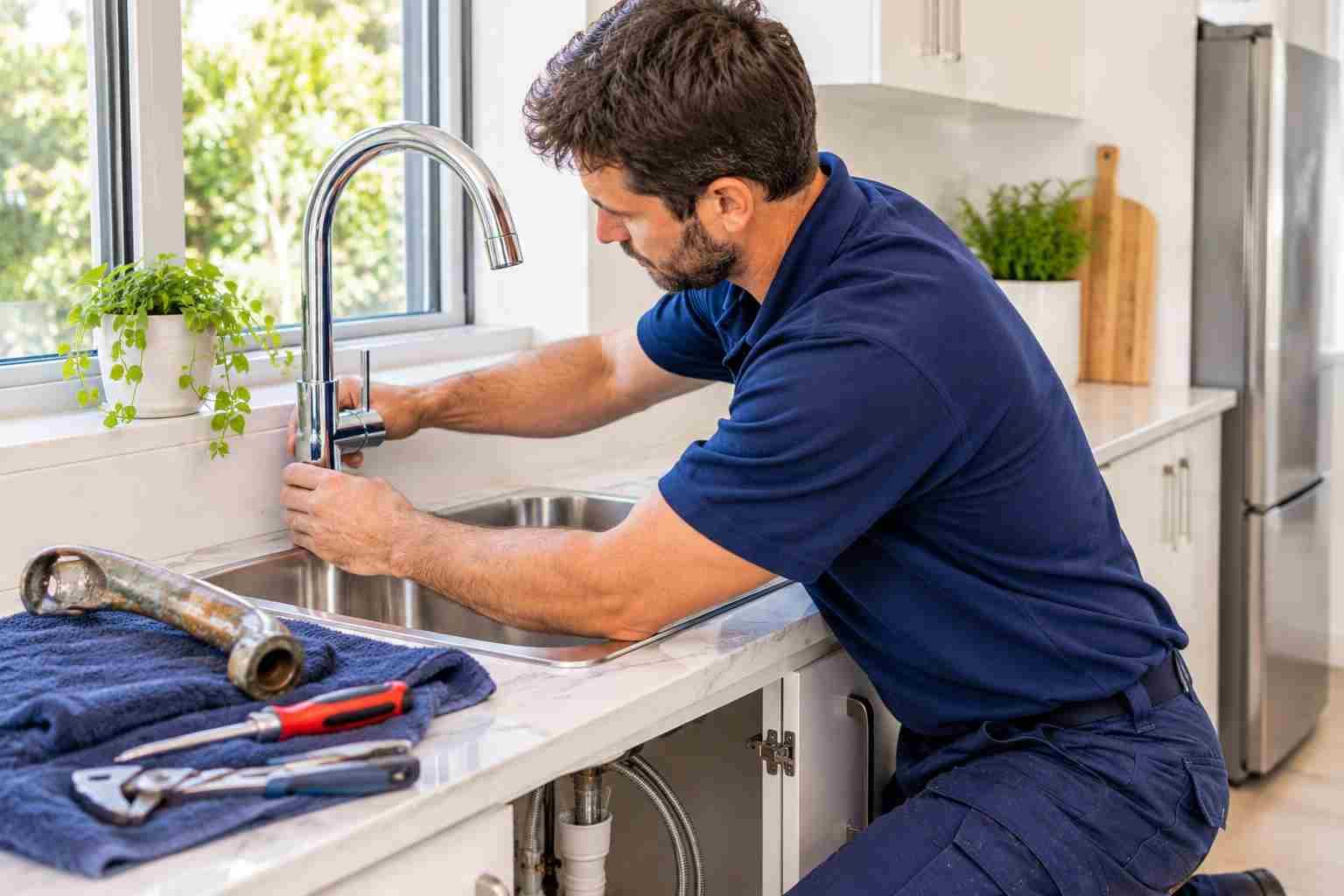
For a typical kitchen sink tap replacement, the plumber first turns off the water at the isolation valves under the sink, or at the mains if there aren’t any. They disconnect the flexible hoses, undo the mounting nut holding the old tap in place, and lift it out. This is often the slowest part of the job, because old nuts can be corroded and hard to reach behind the sink bowl.
The sink surface is then cleaned so the new tap sits flat and seals properly. The new tap is fitted with its seal, tightened in place, and connected using new flexible hoses. After the water is turned back on, the plumber flushes the lines to clear any debris, checks every connection for leaks and tests the hot and cold water.
A good kitchen sink mixer tap installation also includes checking the isolation valves. If they’re old, stiff or leaking, it’s the perfect time to replace them, so you can shut off water to the tap in future without turning off the whole house.
Why the Flexible Hoses Should Be Replaced Too
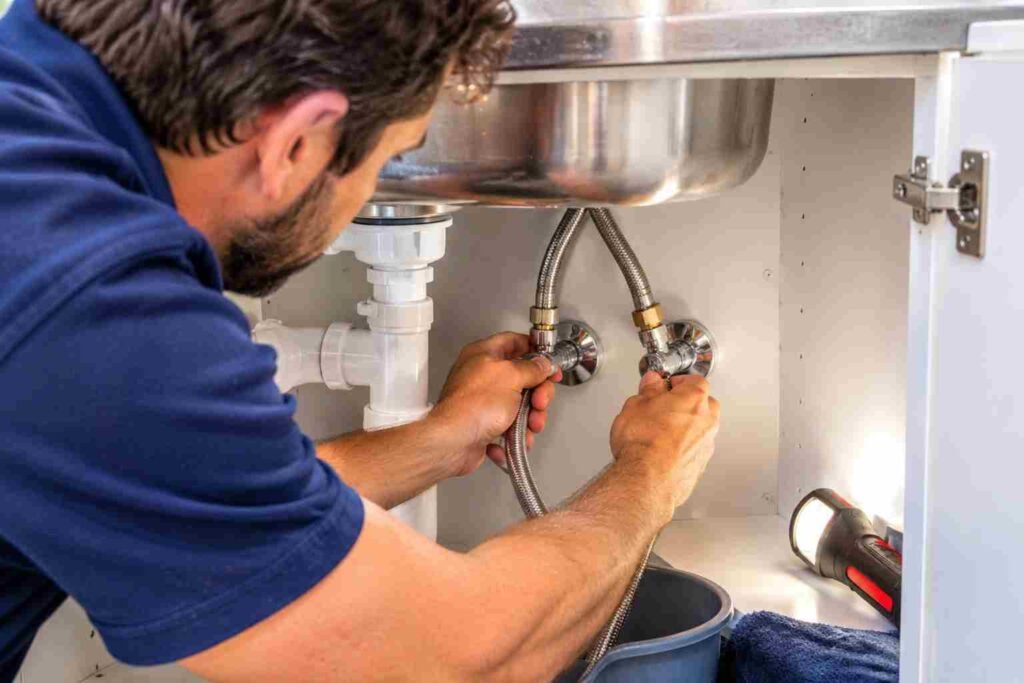
Most mixer taps connect to the water supply with braided flexible hoses. These hoses are under constant pressure, and over time the inner rubber can perish and the outer braid can rust, especially in a damp cupboard. A failed hose is one of the most common causes of water damage in kitchens and bathrooms.
When you’re doing a kitchen mixer tap replacement, always fit new hoses rather than reusing the old ones. Most new mixers come with hoses supplied, and the extra cost is small compared with the damage a burst hose can cause. If your hoses look rusty, bulging or kinked, get them checked even if you’re not replacing the tap.
Bathroom Tap Replacement
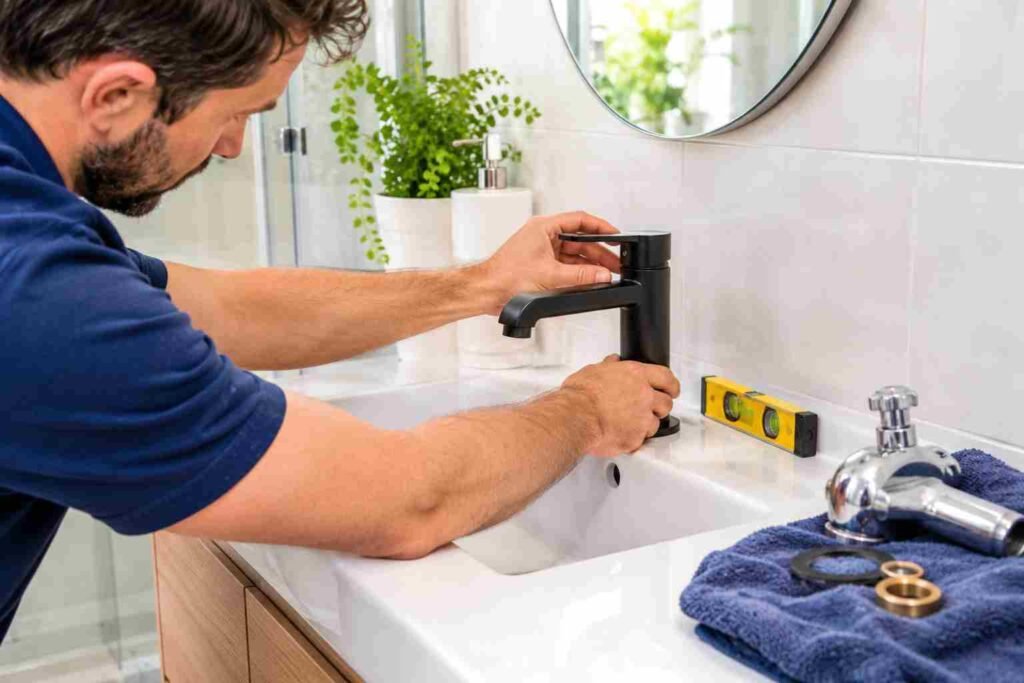
Bathroom tap replacement covers basin mixers, basin tap sets, bath taps and shower mixers. Basin taps are usually the simplest to replace, because they’re mounted on the basin or vanity with flexible hoses underneath, much like a kitchen mixer.
Wall-mounted taps are a different story. Wall basin sets, bath mixers and shower mixers connect to pipes inside the wall, and the tap body sits behind the tiles. Replacing the visible handle and trim is often straightforward, but changing the body itself can mean opening up the wall. If the new tap doesn’t line up with the existing holes, tiles may need to be cut or replaced, and the waterproofing has to be protected.
That’s why it pays to check whether you can get a compatible replacement first. Many brands sell refit kits or matching cartridges that let you update a wall tap without breaking tiles. If the shower mixer is leaking inside the wall, the job becomes more urgent, because hidden leaks can cause rot and mould. Our shower repairs team handles these jobs, and our leak detection service can confirm if water is escaping behind the tiles.
If you’re planning a bigger update, replacing wall taps is best done as part of bathroom renovations, when walls are open and new taps can be positioned exactly where you want them.
Mixer Tap Replacement Parts
Before replacing the whole tap, it’s worth knowing which mixer tap replacement parts commonly wear out. Many of these are available for good-quality brands, which can extend the life of a tap you like.
| Part | What it does | Signs it needs replacing |
|---|---|---|
| Ceramic cartridge | Controls water flow and temperature in a mixer | Dripping spout, stiff lever, poor hot and cold mixing |
| O-rings and seals | Stop water escaping around the spout and body | Water pooling around the base or swivel spout |
| Aerator | Shapes the stream and reduces splashing | Spraying, weak flow, or a sideways stream |
| Flexible hoses | Connect the tap to the water supply | Rust, bulging, kinks or leaks under the sink |
| Washer and jumper valve | Shuts off water in older two-handle taps | Constant drip from the spout |
| Handle | Lets you turn the tap on and off | Loose, cracked or spinning handle |
Caroma Mixer Tap Cartridge Replacement
Caroma is one of the most common tapware brands in Australian homes, so Caroma mixer tap cartridge replacement is a job we see often. The process is similar for most brands. The water is turned off, the decorative cap on the handle is removed to reach the screw holding it on, and the handle comes off. The cartridge is held in by a retaining nut or cover, which is unscrewed so the old cartridge can be lifted out. The new cartridge is fitted in the same position, and everything is reassembled and tested.
The most important step is getting the right cartridge. Cartridges come in different sizes and designs, and they’re often specific to a model or range. Look for the model number on the tap, the original packaging or your warranty paperwork, or take the old cartridge to a plumbing supplier to match it. Genuine replacement parts are the safest choice, because a poor fit can leak or fail quickly, and may affect any warranty on the tap.
If your tap is still under warranty, check with the manufacturer before replacing parts. Some faults are covered, and fitting non-genuine parts could void that cover.
Replacement Tap Handles
Sometimes the tap works perfectly but the handle is broken, cracked or just looks tired. Replacement tap handles can be a simple, low-cost fix. For older two-handle taps, handles connect to a splined spindle, and the new handle needs to match the spindle size and spline count. For mixers, the handle is usually specific to the model, so you’ll need the brand and model number.
If you’re updating handles to give a bathroom or laundry a fresh look, make sure the new handles suit the tap body. Mixing styles can look odd, and some designer handles won’t fit standard spindles. If you can’t find a match, replacing the whole tap may give a better result.
The Tap Replacement Process Step by Step
Here’s what you can expect when you book a professional tap replacement service. Knowing the process helps you prepare and makes the job go faster.
First, the plumber checks the existing setup. They look at the type of tap, the number of holes, the isolation valves, the hoses, the condition of the sink or basin, and the space underneath. If you’ve bought your own tap, they’ll check that it’s WaterMark certified and will fit. If not, they can recommend a suitable model.
Next, the water is turned off and the old tap is removed. The area is cleaned, and the new tap is fitted and secured. New hoses are connected, and isolation valves are replaced if needed.
Then comes testing. The water is turned back on slowly, the lines are flushed, and every connection is checked for leaks. The plumber tests the flow, temperature range and lever action, and makes sure the tap sits firmly. Finally, they clean up and show you any care instructions for your new tap.
Before the plumber arrives, clear out the cupboard under the sink so they can reach the connections. It saves time and protects your belongings.
How Much Does Tap Replacement Cost?
The total cost of a tap replacement is made up of two parts: the tap itself and the labour to install it. Taps range from budget options to designer models, so the tap you choose can make a big difference. We don’t believe in quoting a single figure before seeing the job, but here’s what affects the price.
| Cost factor | Why it matters |
|---|---|
| Type of tap | Pull-out, gooseneck and designer mixers usually cost more than standard mixers |
| Brand and finish | Premium brands and finishes like brushed brass or matte black cost more |
| Like-for-like or change | Swapping to a different number of tap holes may need extra parts or work |
| Hoses and isolation valves | Replacing old hoses and valves adds parts and a little labour |
| Access | Tight cupboards, undermount sinks and corroded nuts take longer |
| Wall-mounted taps | Taps inside the wall may need tiling or wall work |
| Supplying the tap | Using a plumber-supplied tap often includes better warranty support |
| Urgency | After-hours or same-day jobs may cost more |
To get the best value, ask whether your quote includes new hoses, isolation valves if needed, removal of the old tap and testing. If you’re replacing more than one tap, have them done in the same visit to save on labour.
At Radiant Plumbing Services, you’ll get an upfront, fixed quote before any work starts, with no call-out fee. You’ll know exactly what’s included before we begin. You can learn more about our team and how we work.
Caring for Your New Tap
A quality tap should give you many years of good service, especially with a little care. Clean it with warm, soapy water and a soft cloth rather than harsh chemicals or scourers, which can damage chrome, black and brushed finishes. Don’t force the lever past its stop or hang things off a pull-out spray head.
Every few months, unscrew and clean the aerator, especially after mains work in your street, because sediment can build up and reduce flow. Keep an eye on the hoses and connections under the sink, and if you notice dampness, rust or a musty smell, get it checked straight away.
If water pressure in your home is very high, it can shorten the life of tap cartridges and hoses. A plumber can test your pressure and fit a pressure limiting valve if needed. If a tap or hose ever bursts, turn off the water at the isolation valve or mains and call our 24/7 emergency plumbing team. Our guide to a water leaking emergency explains what to do while you wait.
If you’re replacing taps as part of a larger kitchen update, our kitchen renovation plumbing service can handle the sink, tapware and appliances in one go.
Need a Tap Replacement in Sydney?
Whether it’s a dripping kitchen mixer, a stiff bathroom tap or a full tapware upgrade, Radiant Plumbing Services can help. Our licensed and insured plumbers work across Greater Sydney. We’ll tell you honestly whether a repair or replacement makes more sense, help you choose a certified, water-efficient tap, and install it properly with new hoses and a leak test.
Call us on (02) 8866 1322 or book a plumber online. You can also explore our full range of plumbing services.
Frequently Asked Questions
How long does a tap replacement take?
A straightforward like-for-like swap of a kitchen or basin mixer is usually a short job. It can take longer if the old tap is corroded, access under the sink is tight, isolation valves need replacing, or the new tap needs a different number of holes.
Can I replace a kitchen tap myself in NSW?
Connecting a tap to the water supply is plumbing work, and in NSW all plumbing work must be done by a licensed plumber. Using a licensed plumber also helps protect your home insurance and makes sure the tap is installed and tested properly.
Should I repair or replace a leaking mixer tap?
If the tap is in good condition and parts are available, replacing the cartridge or seals is often enough. If it’s old, corroded, discontinued or keeps leaking after repairs, replacement is usually better value.
Do I need to replace the flexible hoses with a new tap?
Yes, we recommend it. Old hoses can perish and rust over time, and a burst hose can cause serious water damage. New mixers usually come with hoses, so it’s an easy upgrade at the same time.
Why does my new mixer tap have low flow?
The aerator may be blocked with debris from the pipes, the isolation valves may not be fully open, or the tap may have a low-flow design. A plumber can check the aerator, valves and water pressure to find the cause.