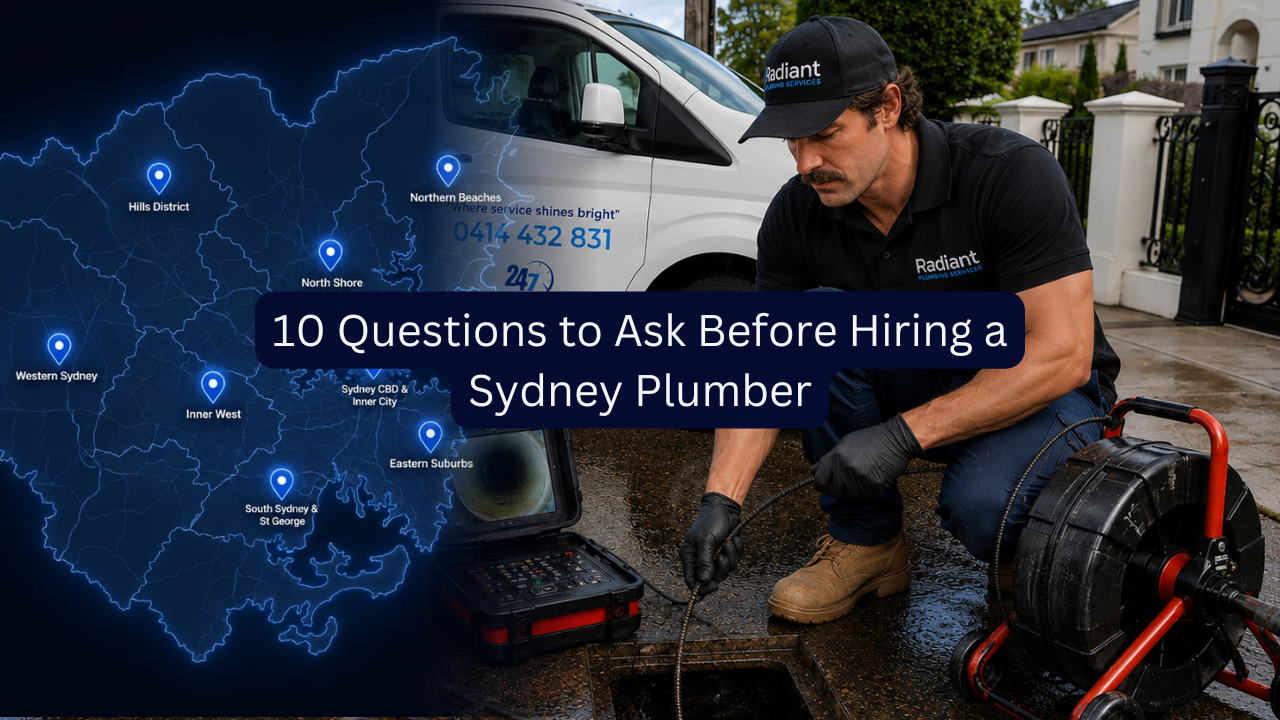
The best way to choose a Sydney plumber is to ask 10 simple questions before any work starts: whether they’re licensed for the job, insured, clear on price, willing to put it in writing, and ready to give you the right paperwork and a warranty at the end. A good plumber answers all of them without hesitating. A dodgy one gets vague fast.
Most of these questions take a few seconds on the phone, and some you can check yourself online in under a minute. Together, they protect you from the problems we see most often: unlicensed work, surprise invoices, jobs that need redoing and missing paperwork when you sell the house.
What should I ask a plumber before hiring them?
Before hiring a plumber, ask about their licence, insurance, pricing, written quotes, how they’ll diagnose the problem, your options, the parts they’ll use, the paperwork you’ll get, the warranty and after-hours availability. Here’s the whole checklist on one screen, with what a good answer sounds like and the red flag to listen for.
| # | Question to ask | A good answer sounds like | Red flag |
| 1 | Are you licensed for this kind of work? | “Yes, here’s my licence number,” with the right class for the job | No number, or a different name on the licence |
| 2 | Are you insured? | Public liability cover, plus HBC insurance for big jobs | “Don’t worry about that” |
| 3 | How do you charge? | Clear hourly or fixed price, call-out explained | No price at all until the job’s done |
| 4 | Can I get that in writing? | Written quote; a contract for jobs over $5,000 | Cash only, no paperwork |
| 5 | How will you find the cause? | Inspection, camera or leak detection before quoting big work | A big quote without looking |
| 6 | What are my options? | Repair vs replace, with pros and cons | Only one option, always the most expensive |
| 7 | What parts will you use? | Named brands, WaterMark-certified, WELS-rated | “Whatever’s in the van” for a major part |
| 8 | Will I get a Certificate of Compliance? | “Yes, when the job’s finished” | “You don’t need one” |
| 9 | What’s your warranty? | Clear warranty on labour and parts | No warranty, or nothing in writing |
| 10 | What happens if it’s after hours? | Honest after-hours rates and advice on whether it can wait | Pressure to book an emergency call-out tonight |
Each question is explained below, along with the NSW rules that sit behind it.
1. Are you licensed for this kind of work?
Ask for the plumber’s licence number first, because in NSW plumbing, drainage and gasfitting are specialist work that needs a licence no matter how small the job is, according to the NSW Government. You can check the number for free on the Service NSW licence check in about 30 seconds.
The check shows the licence holder’s name, the licence classes, the expiry date and any conditions, warnings or penalties. Make sure the name matches the person or business doing the work, and that the licence covers the job. A plumber who’s licensed for water supply plumbing isn’t automatically licensed for drainage or gas. For example, a gas cooktop connection or gas leak repair needs a licensed gasfitter.
Licensed plumbers are used to being asked. If someone gets defensive, that tells you plenty.
2. Are you insured?
Ask whether the plumber has public liability insurance, because it covers damage or injury caused while they work at your place. A cracked tile, a flooded floor or a damaged neighbour’s fence can be expensive, and you don’t want that landing on your own home insurance.
For bigger jobs, there’s a second type of insurance. Under NSW home building law, residential work worth more than $20,000 needs Home Building Compensation (HBC) insurance. The contractor must give you the insurance certificate before asking for a deposit. That usually only comes up for jobs like a full bathroom renovation, but it’s worth knowing before you sign.
3. How do you charge, and what will it cost?
Ask how the plumber charges, whether by the hour or a fixed price, and whether there’s a call-out fee. Most Sydney plumbers charge about $90 to $230 an hour in business hours, with about $140 typical, and a call-out of around $70 to $170 that covers travel and the first 15 to 30 minutes.
Fixed prices are common for standard jobs like clearing a blocked drain or replacing a tap. Hourly rates are more common for jobs where the cause isn’t clear yet, like a hidden leak. Either is fine, as long as you know which one you’re getting. The question that cuts through most confusion is: “What will this job cost me all in, including GST and the call-out?”
Standard plumber rates in Sydney vary with the job, the suburb and the time of day. A price that’s far below everyone else’s is worth a second look, because the difference usually turns up later.
4. Can I get the quote in writing?
Always ask for the quote in writing, so you know exactly what you’re paying for and can compare plumbers fairly. A written quote should list the work, the parts, the price, GST and anything not included.
For bigger jobs, NSW law sets clear rules. A written contract is required when residential building work is worth more than $5,000, including GST. Work between $5,000 and $20,000 needs a small jobs contract, and work over $20,000 needs a full home building contract with a cooling-off period of five clear business days. The maximum deposit you can be asked to pay is 10%. The NSW Government’s rules on contracts for residential building work set all of this out.
Most everyday plumbing jobs, like a blocked toilet or a dripping tap, cost far less than $5,000. A clear written quote or an itemised invoice is enough for those.
5. How will you find the cause of the problem?
Ask how the plumber will find the cause before quoting a big job, because guessing is how people end up paying for the wrong fix. A good plumber will look, test and explain what they found before recommending anything expensive.
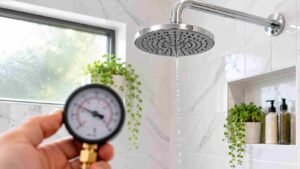
For drains and sewers, that usually means a drain camera. A CCTV drain inspection shows exactly where a blockage, crack or tree root is, and many plumbers will give you the footage. For hidden water leaks, it means pressure testing, acoustic listening or thermal imaging. For hot water, it means testing the thermostat, element or gas controls before suggesting a new unit.
If a plumber quotes thousands of dollars without looking inside the pipe, ask them how they know.
6. What are my options?
Ask what your options are, because most plumbing problems can be fixed more than one way. A good plumber will explain the trade-offs between a quick repair and a longer-lasting fix, and let you decide.
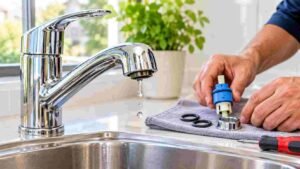
A tree-root blockage in an old clay sewer is a good example. You can clear it now and expect it to come back, or fix the pipe for good. Digging and replacing the pipe works, but pipe relining can repair it from the inside without ripping up your driveway or garden. A dripping tap can be fixed with a new washer or cartridge, or the whole tap can be replaced. Neither choice is wrong. You just need the facts to choose.
Be wary of a plumber who only ever offers one option, and it’s always the most expensive one.
7. What parts and products will you use?
Ask what parts and products the plumber will use, because cheap parts are a common reason a repair fails early. Plumbing products used in Australia should be WaterMark certified, which shows they meet Australian standards for plumbing and drainage. Taps, showerheads and toilets also carry a WELS rating that shows how water-efficient they are.
For bigger items like a hot water system, ask for the brand and model, the warranty and why it suits your household. The best water heater for your home depends on how many people live there, what fuel you have and how much roof or yard space you’ve got, so a good plumber will ask you questions too.
8. Will I get a Certificate of Compliance?
Ask whether you’ll get a Certificate of Compliance, because NSW rules say one is needed at the completion of plumbing and drainage work. The plumber must give a copy to the person who arranged the work, whether that’s you or your builder. For drainage work, a sewer service diagram showing where the new pipes run is also required.
Keep these documents. They show the work was done by a licensed plumber to the right standards, and they matter when you sell the house, make an insurance claim or have more work done later. The NSW Government’s page on plumbing inspection documents explains what plumbers have to lodge and when.
Some small jobs, like replacing tapware or an existing hot water system, don’t need a Notice of Work before they start. A Certificate of Compliance is still due at the end.
9. What warranty do you give?
Ask what warranty the plumber gives on their labour and on the parts, and get it in writing. A reputable plumber stands behind their work and will tell you how long the warranty lasts and what it covers.
Separately from any warranty, the Australian Consumer Law gives you consumer guarantees. Services must be provided with due care and skill, and products must be of acceptable quality. Manufacturers’ warranties on things like hot water systems sit on top of that. Keep your invoice, because you’ll need it to make a claim.
10. What happens if I need you after hours?
Ask what happens if you need the plumber after hours, because rates and availability change once business hours end. Most Sydney plumbers charge 1.5 to 2 times their standard rate at night, on weekends and on public holidays.
A good plumber will also tell you honestly whether your problem needs someone tonight or can wait till morning. If you’re not sure, the test for whether you need an emergency plumber tonight is simple. Can you make it safe by turning off the water, and can you live with it until morning? If yes, waiting usually saves you money.
What are the red flags when hiring a plumber?
The biggest red flags when hiring a plumber are no licence number, no written price, pressure to decide on the spot and a request for a large payment upfront. Any one of these is a reason to slow down and get another quote.
Watch out for:
- Door-knockers offering cheap repairs, especially after storms
- No licence number, or a licence in a different name
- “Cash only, no paperwork” deals
- Quotes that change once the work has started, without a clear reason
- A deposit above 10%, or any deposit for a big job without an HBC certificate
- No Certificate of Compliance at the end of the job
Price surprises are among the most common complaints, especially at night. Understanding how emergency plumber costs are worked out before you need one makes it much easier to spot a bill that doesn’t add up.
What should I have ready before I call a plumber?
Have a short description of the problem, a few photos and the basic details of your home ready before you call a plumber. It helps them give you a more accurate price on the phone and bring the right parts, which often means the job is finished in one visit.
| Have ready | Why it helps |
| Photos or a short video of the problem | The plumber can often tell what it is before they arrive |
| When it started and whether it’s getting worse | Helps separate a slow leak from a sudden failure |
| The age and brand of the hot water system | Lets them bring the right valve, element or thermostat |
| Where your water main tap is | Saves time on arrival, and you can turn it off in an emergency |
| Your recent water bill, if usage has jumped | A rising bill can point to a hidden leak |
| Strata or landlord details, if you have them | Common property and rental repairs may be someone else’s to pay |
A water bill that’s jumped for no reason is one of the most useful clues you can give a plumber, so mention it even if it doesn’t seem related. If you rent, tell the plumber who the agent is, because they may need to approve the work.
Should I get more than one quote?
Getting more than one quote is a good idea for any job likely to cost more than a few hundred dollars, and the NSW Government suggests getting more than one written quote before choosing a contractor. For a simple, urgent job like a blocked toilet at night, one honest phone price is usually enough.
When you compare quotes, compare like with like. Check that each one includes the same work, the same quality of parts, GST, the call-out, the removal of old parts and the paperwork at the end. A quote that looks $300 cheaper can end up costing more if it leaves out half the job.
Which questions matter most for common plumbing jobs?
The questions that matter most depend on the job. Here are the extra ones worth asking for the jobs Sydney homeowners book most often.
Blocked drains
For a blocked drain, ask how the plumber will clear it, whether they’ll check it with a camera if it keeps coming back and whether the price is fixed. Typical drain cleaning costs in Sydney depend on whether it’s a single sink or the main sewer line, so ask which one they think it is before they start.
Hot water
For hot water, ask whether the system can be repaired before talking about a new one, what the new unit’s warranty is, and whether removing the old one is included. A good plumber will check the thermostat, element, valves or gas controls before recommending hot water system replacement.
Leaks
For a leak, ask how they’ll find it without ripping up walls or floors, and whether finding it and fixing it are priced separately. Leak detection costs in Sydney depend mostly on where the leak is hiding, so ask for a price for the first hour.
Toilets
For a blocked or running toilet, ask whether they’ll clear it with a plunger, auger or drain machine rather than chemicals, and what they’ll check if it keeps happening. Most homeowners can unblock a toilet themselves the first time, so a plumber is usually needed when it keeps coming back.
Buying a house
When buying a house, ask whether the plumber can check the water pressure, hot water system, taps, toilets and visible pipes, and whether they’ll camera the sewer line. A home plumbing inspection before you buy can turn up problems that are cheaper to negotiate on than to fix after settlement.
How do we answer these questions at Radiant Plumbing?
We answer every one of these questions before we start work, because that’s what we’d want from a tradie at our own place. No dramas, no surprises.
- Licence: we give you our licence number on the phone and on every invoice.
- Price: we tell you our rates and a ballpark figure before we come out, and confirm the price on site before we start.
- In writing: you get a written quote for bigger jobs and an itemised invoice for every job.
- Diagnosis: we find the cause first, with a camera or leak detection where it’s needed.
- Options: we explain your choices and let you decide.
- Paperwork: you get a Certificate of Compliance where the work needs one, plus photos if you need them for insurance.
The licensed team at Radiant Plumbing works on homes right across Sydney, from Inner West terraces and North Shore family homes to new builds in the Hills and units in the Eastern Suburbs.
Looking for a licensed Sydney plumber who’ll answer all 10? Call Radiant Plumbing on (02) 8866 1322, or send us the details of your job and we’ll get back to you with a clear price.
Frequently asked questions about hiring a plumber in Sydney
How do I check if a plumber is licensed in NSW?
Ask for their licence number and enter it on the free Service NSW licence check. It shows the licence holder’s name, licence classes, expiry date and any conditions or warnings. Make sure the name matches the business doing the work and that the licence covers plumbing, drainage or gasfitting as needed.
How much does a plumber cost per hour in Sydney?
Most Sydney plumbers charge about $90 to $230 an hour in business hours, with about $140 typical, plus a call-out of around $70 to $170. After-hours rates usually run 1.5 to 2 times the standard rate. Many standard jobs, like clearing a drain, are priced as a fixed fee instead.
Do I need a written contract with a plumber in NSW?
Under NSW home building law, a written contract is required for residential work worth more than $5,000, including GST. Work from $5,000 to $20,000 needs a small jobs contract, and work over $20,000 needs a full contract. Smaller jobs should still have a written quote or itemised invoice.
How much deposit can a plumber ask for in NSW?
The maximum deposit you can be asked to pay under NSW home building law is 10% of the contract price. For work over $20,000, the contractor must also give you a Home Building Compensation insurance certificate before asking for any deposit. Most small plumbing jobs are simply paid on completion.
What is a plumbing Certificate of Compliance?
A Certificate of Compliance is a document a licensed plumber must provide at the completion of plumbing and drainage work in NSW. It confirms the work meets the required standards. The plumber gives a copy to the person who arranged the work. Keep it for insurance, future work or selling the house.
Should I always choose the cheapest plumber?
Not always. The cheapest quote can leave out parts, the call-out fee or the paperwork, or use lower-quality products that fail sooner. Compare quotes on the full price including GST, the parts, the warranty and whether you’ll get a Certificate of Compliance. A clear, complete quote is usually better value.
Is a plumber’s warranty required by law?
There’s no single fixed warranty period for plumbing labour, but under the Australian Consumer Law, services must be provided with due care and skill, and products must be of acceptable quality. Many plumbers also give their own written warranty on labour. Ask what it covers and keep your invoice.
What questions should I ask a plumber before buying a house?
Ask whether they’ll check the water pressure, hot water system, taps, toilets, visible pipes and drains, and whether they’ll inspect the sewer line with a camera. Ask for a written report with photos. Problems found before settlement are often easier to negotiate on than to fix afterwards.