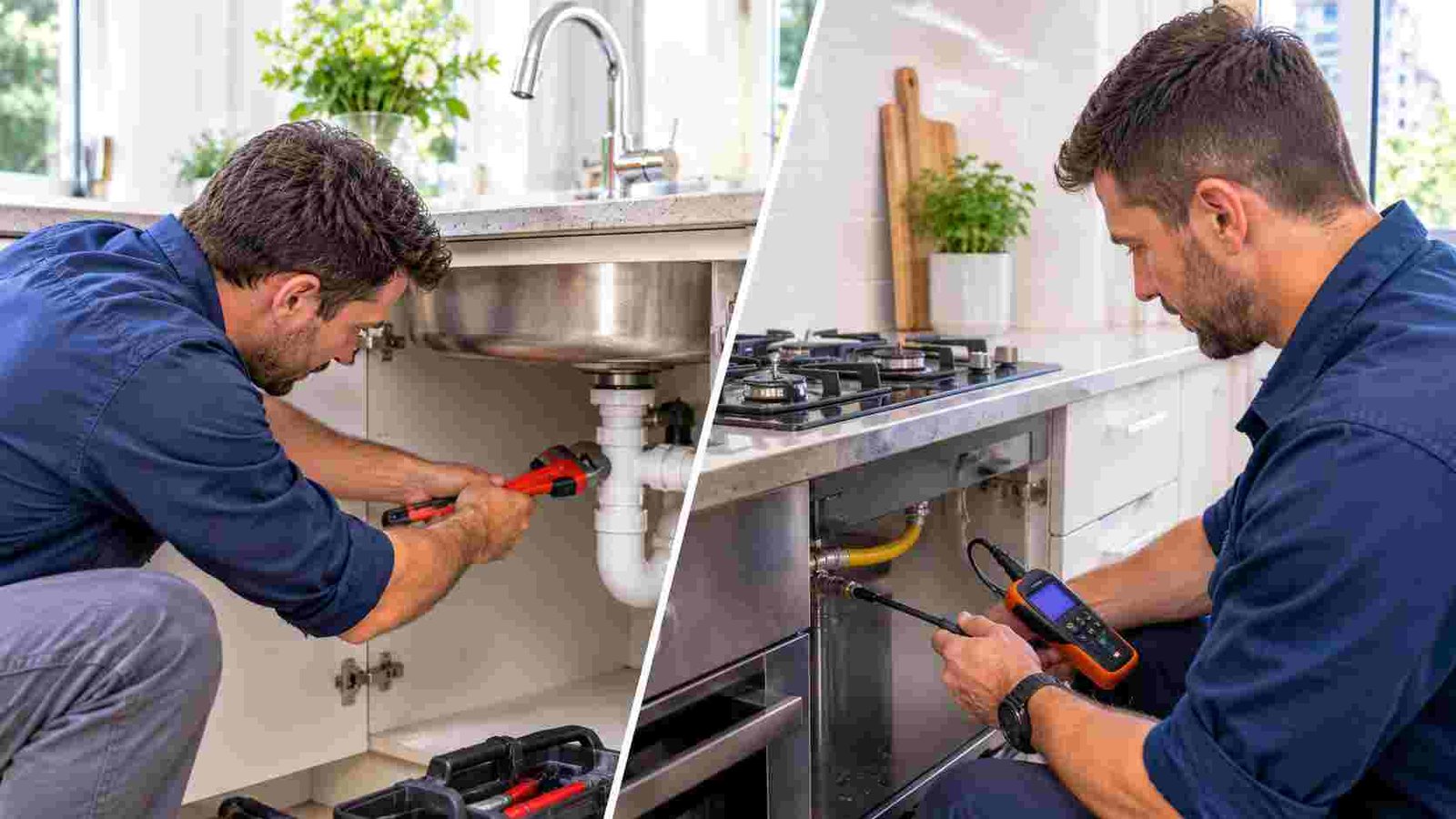
In NSW, any work on gas pipes, gas appliances or gas connections must be done by a licensed gas fitter. A plumber can only do gas work if their NSW licence includes the gasfitter class. Many plumbers hold both licences, which is why you’ll often see the terms “plumber gas fitter” or “gas plumber”. Before anyone starts gas work at your home, ask for their licence number and check that it shows gasfitting. When the job is finished, they must give you a certificate of compliance for mains gas or a certificate of inspection for bottled gas.
Maybe you need a new gas cooktop, or your gas hot water has stopped working. Can any plumber do the job, or do you need a gas fitter? It’s a fair question, because the two trades overlap.
Some plumbers are also licensed gas fitters. Others aren’t, and legally can’t touch your gas lines no matter how experienced they are with water. Getting this wrong isn’t just a paperwork problem. Gas work done by an unlicensed person can be dangerous, may not be covered by your home insurance, and won’t come with the compliance certificate you’ll need later.
This guide explains who can legally do gas work in NSW, how to check a licence, what certificates to expect and what to do if you smell gas.
Plumber vs Gas Fitter: What’s the Difference?
In NSW, plumbing and gasfitting are separate categories of licensed work. A tradesperson’s licence lists each class of work they’re qualified to do, such as plumber, drainer, gasfitter and LP gasfitter. The NSW Government’s guide to plumbing, draining and gasfitting licences confirms you need a licence or certificate before doing any of this work, including LP gasfitting.
That means a plumber who isn’t licensed for gasfitting can’t legally do gas work. Years of working around gas appliances don’t change that. The licence class is what counts.
| Plumber (water and drainage only) | Licensed gas fitter | |
|---|---|---|
| Licence class needed in NSW | Plumber (and drainer for drainage work) | Gasfitter (and LP gasfitter for bottled gas) |
| Typical work | Water pipes, taps, toilets, showers, leaks, drains, the water side of hot water | Gas pipes, appliance installs, gas leak repairs, gas hot water, cooktops, heaters, BBQ points |
| Can work on gas lines? | No | Yes, within their licence class |
| Paperwork after gas work | Not applicable | Certificate of compliance (mains gas) or certificate of inspection (bottled gas) |
| Typical job examples | Fixing a leaking tap, clearing a blocked drain | Installing a gas cooktop, repairing a gas leak |
A gas fitter plumber, sometimes called a plumber gas fitter, is simply a tradesperson who holds both plumbing and gasfitting licences. That’s the most convenient option for jobs that involve water and gas together, such as replacing a gas hot water system. One person can do the whole job legally.
Common Sydney jobs: who should you call?
If a job below needs a licensed gas fitter, don’t book a plumber unless their licence covers gas.
| Job | Who you need |
|---|---|
| Leaking kitchen tap | Plumber |
| Blocked shower drain | Plumber |
| New gas cooktop in a kitchen renovation | Licensed gas fitter, plus a plumber for the sink and tap |
| Gas continuous flow hot water unit not firing | Licensed gas fitter |
| Electric storage hot water replacement | Plumber, with a licensed electrician for the wiring |
| Moving a gas heater bayonet to another wall | Licensed gas fitter |
| Faint gas smell near the meter | Gas emergency line first, then a licensed gas fitter |
| Converting a BBQ from bottled gas to natural gas | Licensed gas fitter, using a manufacturer-approved conversion kit |
| Removing a gas cooktop and capping the line for induction | Licensed gas fitter, plus an electrician for the induction circuit |
For everyday water jobs like a leaking tap, blocked drains or toilet repairs, any licensed plumber can help. The simplest approach for most homeowners, though, is to book a business whose plumbers also hold gasfitting licences. Whoever turns up can then deal with both sides of the job, and you won’t need a second trade if a water job turns into a gas problem.
Not sure if you need a plumber or a gas fitter?
Our plumbers are also licensed gas fitters, so one visit covers water and gas.
Call (02) 8866 1322 · Email info@radiantplumbing.au
Can a Plumber Do Gas Work in NSW?
Only if their licence covers gasfitting. The NSW Government is clear that a licence is needed for any plumbing, draining or gasfitting work, regardless of the cost of the work or whether the property is residential, commercial or industrial. There’s no exemption for small or quick jobs.
So moving a gas bayonet a few centimetres, swapping an old gas cooktop for a new one, or reconnecting a gas heater after painting a room all need a licensed gas fitter. Even a small mistake with a gas fitting can cause a leak that goes unnoticed until it becomes dangerous.
Why the licences are separate
Gas work carries very different risks from water work. A small water leak causes damage that’s annoying and sometimes costly. A small gas leak can cause a fire, an explosion or carbon monoxide poisoning. That difference is why gasfitting has its own training, its own licence class and its own certification process.
A licensed gas fitter is trained to size and install gas pipework correctly for the appliances it supplies. They test installations for leaks under pressure, check that appliances burn safely with the right gas pressure, and make sure rooms have adequate ventilation. They also install flues so combustion gases are carried safely outside, and they work to the Australian gas installation standards and NSW gas safety laws.
What Work Needs a Licensed Gas Fitter?
You need a licensed gas fitter for any work on the gas side of your home. The NSW Government’s advice on using a gasfitter states that only licensed gasfitters can carry out repairs or renovations involving gas. The most common jobs fall into a few groups.
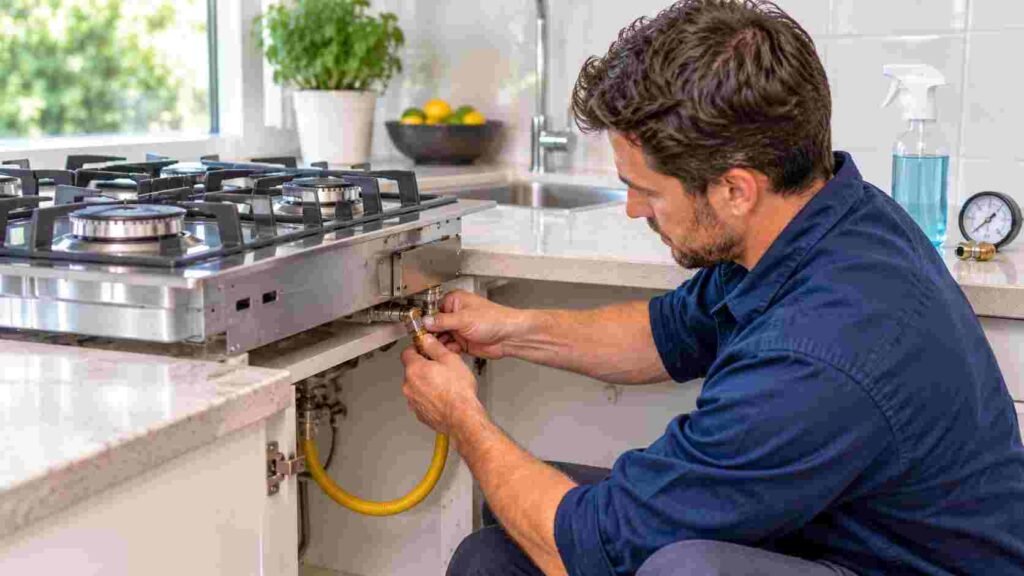
Installing, replacing, disconnecting or moving a gas cooktop or oven is all gasfitting work. So is installing, servicing or repairing a gas hot water system. Gas heaters and gas log fires also need a licensed gas fitter to install, service or relocate them, and so does adding or moving a bayonet point for a portable heater or outdoor BBQ.
Leaks and new pipework are the other big group. Finding and repairing gas leaks in pipes, fittings and appliances is specialist work, and our gas leak detection and repair team uses pressure testing and leak detection equipment to find the source. Running gas to a new kitchen, outdoor area or extension needs a gas fitter, as does safely capping off a gas line when you remove an appliance or renovate.
Bottled gas has its own requirements. Installing LPG cylinders, regulators and pipework needs an LP gasfitting licence. Converting an appliance between natural gas and LPG also needs a licensed gas fitter, and should only be done where the manufacturer allows it and supplies an approved conversion kit.
Jobs where you need both a plumber and a gas fitter
Some jobs involve both water and gas, and these are where a gas fitting plumber with both licences saves you time. Replacing a gas hot water system is the classic example. It involves the cold and hot water connections, a tempering valve, the gas connection and usually a flue. Our hot water systems team handles all of it in one visit, and can also help you compare gas with heat pump and solar options if you’re thinking of switching.
Renovations are the other common case. A kitchen renovation usually means new sink, tap and dishwasher plumbing alongside gas cooktop and oven connections. A bathroom renovation might include moving a gas hot water unit or changing its capacity. Outdoor kitchens often need water to a sink and gas to a built-in BBQ. In each case, one tradesperson with both licences keeps the job simple.
Jobs a plumber can do without a gas licence
A plumber without a gas licence can still handle all your water and drainage work. That includes fixing leaking taps and toilets, repairing burst or leaking water pipes, clearing blocked drains, and fixing showers and mixers through our shower repairs service. They can also install electric hot water systems, with the electrical connection done by a licensed electrician. If you suspect a hidden water leak rather than a gas leak, our water leak detection service is the right place to start.
Need gas work done the legal way?
Licensed gas fitters, a compliance certificate on every job and a $0 call-out fee.
Call (02) 8866 1322 · Email info@radiantplumbing.au
Natural Gas vs LPG: Do You Need a Different Gas Fitter?
There are two main types of gas in Sydney homes, and the difference matters when you hire a gas fitter. Natural gas, or mains gas, is supplied through underground pipes to a meter at your property. Most gas-connected homes across Sydney use natural gas. LPG, also called liquefied petroleum gas or bottled gas, is supplied in cylinders kept outside the home. It’s common in areas without mains gas and for outdoor BBQs and patio heaters.
| Natural gas (mains) | LPG (bottled gas) | |
|---|---|---|
| How it’s supplied | Underground network to a meter | Cylinders outside the home |
| Common in Sydney | Most gas-connected suburbs | Areas without mains gas, outdoor BBQs |
| Licence class needed | Gasfitter | LP gasfitter |
| Certificate after work | Certificate of compliance | Certificate of inspection |
In NSW, LP gasfitting is its own licence class. When you check a gas fitter’s licence, make sure it covers the type of gas you actually have. Many gas fitters hold both.
Gas Compliance Certificates: What You Should Receive
After any gas work, your gas fitter must give you paperwork. According to the NSW Government, once work involving gas is complete, the licensed gasfitter must provide a certificate of compliance for network gas or a certificate of inspection for bottled gas. The gas fitter also submits the certificate to Building Commission NSW, the regulator, so there’s an official record of the work.
The certificate matters for more than compliance. It confirms the work was tested and meets the required standards, which is your main reassurance that the installation is safe. If you ever make a gas-related insurance claim, your insurer may ask for proof that the work was done by a licensed gas fitter. Buyers, agents and property managers may also ask for gas certificates when you sell or lease a property. For new installations, your gas supply can depend on the work being properly certified.
If a tradesperson offers to do gas work “without the paperwork”, or for cash with no certificate, don’t go ahead. It usually means they aren’t licensed, and you’d have no record if something went wrong.
How to Check a Gas Fitter’s Licence
Checking a licence takes about a minute and is the single best way to protect yourself. Start by asking for the licence number. A licensed gas fitter will give it to you without hesitation, and it should also appear on their quote, invoice and certificates.
Next, search the number using the Service NSW builder or tradesperson licence check. You can search by licence number, licensee name or licence type. When the result comes up, look at the licence classes listed. It should show gasfitter, and LP gasfitter as well if you use bottled gas. A licence that only shows plumber or drainer doesn’t cover gas work.
Finally, check that the licence is current by looking at the expiry date and any conditions. Make sure the name on the licence matches the person or business doing the work.
Some tradespeople working in NSW hold a licence from another state. Under automatic mutual recognition, interstate plumbing, draining and gasfitting licensees must notify Building Commission NSW before they start working here. If you hire an interstate gas fitter, ask them to confirm they’ve done this.
Want a gas fitter you can check?
Our licence numbers are on every quote and invoice. Ask us for a fixed quote.
Call (02) 8866 1322 · Email info@radiantplumbing.au
Smell Gas? What to Do Right Now
Gas leaks are dangerous, and the NSW Government’s gas safety advice says you should always treat any gas leak as a potential lethal risk. Natural gas and LPG have no smell of their own. A chemical is added so leaks smell a bit like rotten eggs. If you notice that smell inside your home, act straight away:
- Don’t create sparks. Don’t switch lights or appliances on or off, use a lighter or matches, or smoke.
- Get everyone out of the building, including pets.
- From outside, call 000 and ask for Fire and Rescue NSW if the smell is strong or anyone feels unwell. For gas leaks in Sydney, you can also call the Jemena gas emergency line on 131 909, which runs 24 hours.
- Turn off the gas at the meter or cylinder only if it’s safe to do so.
- Once the area is safe, call a licensed gas fitter to find and repair the leak.
For urgent help after emergency services have made the area safe, our 24/7 emergency plumbers can attend.
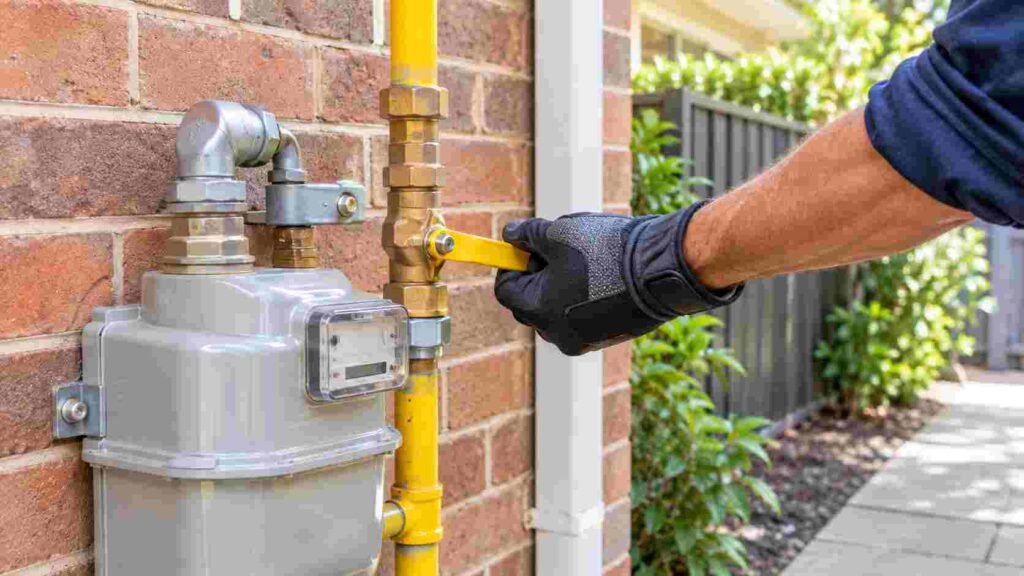
Signs you need a gas fitter, even without a strong smell
Not every gas problem announces itself with a strong smell. A faint gas odour near appliances, the meter or outside pipes is worth investigating, as is a hissing sound near a gas line. Look at your burners too. A healthy gas flame is crisp and blue, so a lazy yellow or orange flame suggests the appliance isn’t burning properly.
Soot or scorch marks around a gas heater, cooktop or hot water flue are another warning sign. So is a pilot light that keeps going out, or a gas hot water system that won’t light or keeps shutting off. A gas bill that jumps without any change in how you use gas can point to a hidden leak. If anyone gets headaches, dizziness or nausea while a gas appliance is running, and the symptoms ease when they leave the house, turn the appliance off, get fresh air and seek medical advice before calling a gas fitter.
What Happens During a Gas Safety Check?
A gas safety check is a good idea when you buy an older home, before you rent out a property, or when an appliance hasn’t been serviced for years. A licensed gas fitter starts by inspecting the meter, regulator and visible pipework for damage, corrosion and signs of leaks. They then leak test the installation, often by isolating the gas and checking whether the pressure holds over a set period.
Next, they check each appliance. That includes the flame colour, the condition of the burners, the ignition and the safety devices that cut the gas if the flame goes out. They check ventilation and flues so combustion gases can escape safely, which is especially important for heaters and indoor hot water units. They also compare appliance pressures against the manufacturer’s specifications. At the end, they report any defects and explain what needs fixing, in order of urgency.
If a defect is serious, the gas fitter may need to isolate the appliance or the gas supply until it’s repaired. That can be inconvenient, but it shows they’re doing the job properly.
Book a gas safety check
Bought an older home or renting one out? We’ll test your gas lines and appliances.
Call (02) 8866 1322 · Email info@radiantplumbing.au
Finding a Gas Fitter Near You in Sydney
When you search for a gas fitter near me or a licensed gas fitter near me, you’ll find plumbing companies, sole traders and lead-generation sites. The most important thing to look for is a licence that shows gasfitting, checked on the NSW register. After that, local coverage matters, because a nearby team can reach you quickly in an emergency.
Look for clear, written quotes before work starts, and ask whether the business has done your type of job before, whether that’s cooktops, gas hot water, heaters or leak repairs. Make sure they provide certificates of compliance after every job. If your job also involves water, choose a business whose tradespeople hold both plumbing and gas licences. You can read more about our team and our licences before you book.
Gas fitter in Burwood and the Inner West
Many homes across Burwood, Strathfield, Croydon, Ashfield and the wider Inner West have been connected to mains gas for decades. Many also have older gas appliances and pipework that have been extended or modified over the years. That makes gas safety checks, appliance servicing and leak testing especially worthwhile when you buy an older home or start a renovation. If you need a gas fitter in Burwood, look for someone who works in the area regularly and knows the local housing stock.
Planning a renovation?
If you’re renovating, book your gas fitter early. Gas lines need to be capped, moved or extended before cabinets, walls and tiles go in, and late changes are far more expensive. Our kitchen renovations and bathroom renovations plumbing covers both water and gas, so you don’t need to coordinate separate trades.
What Affects the Cost of a Gas Fitter in Sydney?
We don’t publish a single price for gas work, because every job is different. The table below shows the main factors that push the cost of a gas job up or down.
| Factor | Lower cost | Higher cost |
|---|---|---|
| Type of job | Replacing a like-for-like cooktop | Running a new gas line to a new location |
| Access | Gas point already in place and easy to reach | Pipework under floors, in walls or ceilings |
| Gas type | Existing natural gas connection | New LPG installation with cylinders and regulator |
| Leak repairs | Leak found quickly at an appliance fitting | Leak hidden in old underground or in-wall pipework |
| Appliance | Simple bayonet heater connection | Gas hot water system with flue and water work |
| Timing | Booked in advance | After-hours emergency |
Always ask for a written, fixed quote that covers the work, testing and certification. A licensed gas fitter will include the compliance certificate as part of the job rather than charging for it separately.
Questions to ask before you hire a gas fitter
Before you book, confirm the licence includes gasfitting, ask which certificate you’ll receive, and check the quote is fixed. It’s also worth asking about public liability insurance and what happens if they find a problem with your existing gas lines.
Get a fixed quote for your gas job
Send us a few details or photos and we’ll quote the work, testing and certificate.
Call (02) 8866 1322 · Email info@radiantplumbing.au
Gas Fitter FAQs
What is the difference between a plumber and a gas fitter?
A plumber works on water and drainage. A gas fitter works on gas pipes, appliances and connections. In NSW these are separate licence classes, and a plumber can only do gas work if their licence includes gasfitting.
Can a plumber install a gas cooktop?
Only if they’re also a licensed gas fitter. Connecting, disconnecting or moving a gas cooktop is gasfitting work in NSW.
Do I need a licensed gas fitter for a small gas job?
Yes. In NSW you need a licence to do any gasfitting work, regardless of the cost of the job.
What certificate should I get after gas work?
You should receive a certificate of compliance for mains gas or a certificate of inspection for bottled gas. It should include the gas fitter’s name and licence number.
Can I install a gas appliance myself?
No. In NSW, gas appliances must be installed, connected and disconnected by a licensed gas fitter.
Who regulates gas fitters in NSW?
Building Commission NSW regulates plumbing, draining and gasfitting licences and receives gas compliance certificates. If you have concerns about gas work done at your home, you can raise them with the regulator.
Need a Licensed Gas Fitter in Sydney? Call Radiant Plumbing
Whether it’s a new cooktop, a gas hot water replacement, a heater that won’t light or a smell you’re worried about, gas work needs the right licence, the right testing and the right paperwork. Radiant Plumbing Services provides plumbing and gas fitting across Greater Sydney, including Burwood and the Inner West. We’ll explain what your job needs, give you a fixed, upfront quote and provide the right compliance certificate when the work is done.
We charge a $0 call-out fee and give upfront, fixed quotes with no hidden fees. Our team is licensed and insured, and we’re available 24/7 for urgent gas and plumbing problems.
Call (02) 8866 1322, email info@radiantplumbing.au or contact us online. You can also explore our full range of plumbing services or read more plumbing guides on our blog.