

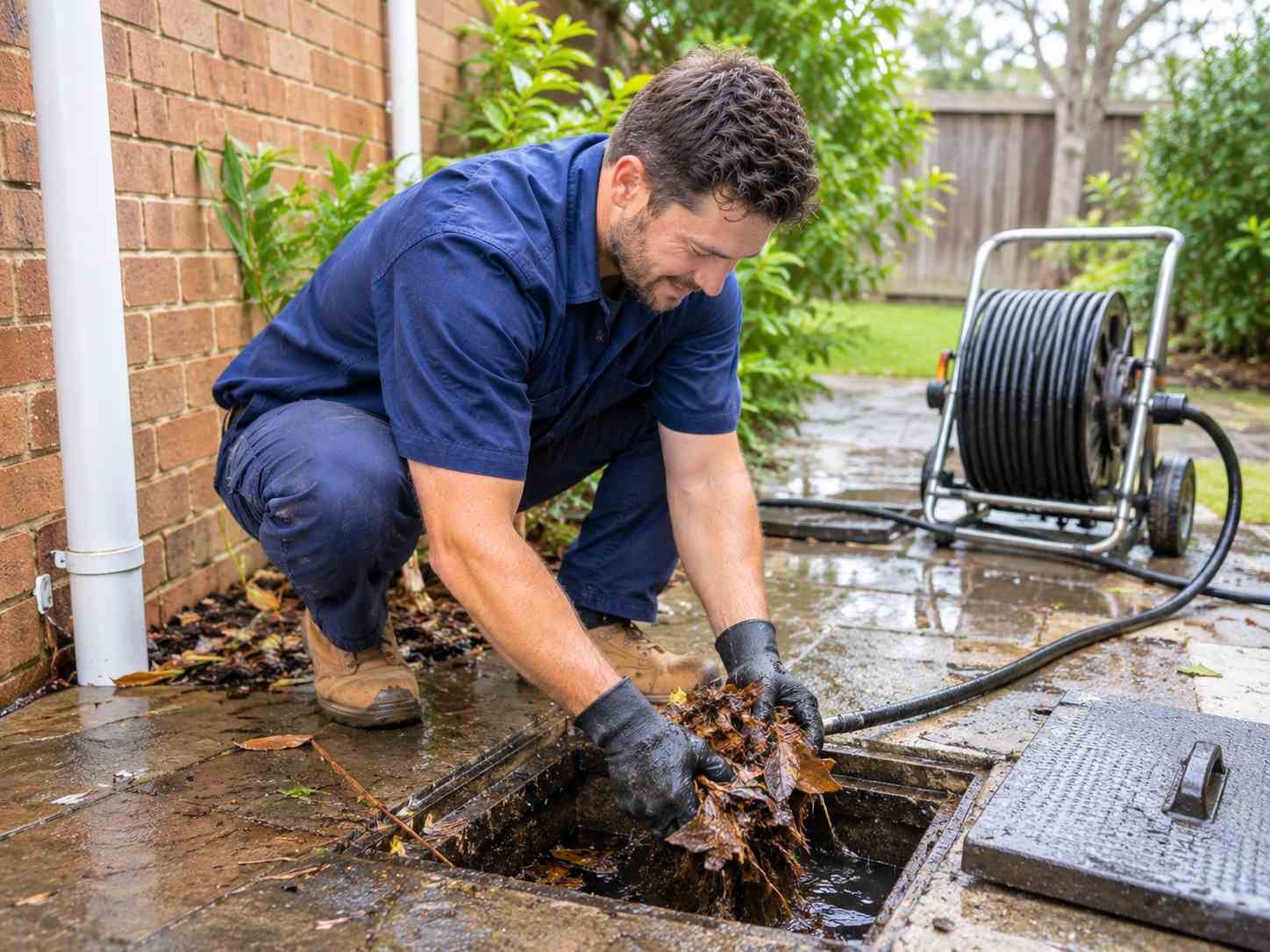
A blocked stormwater drain is usually caused by leaves, silt, tree roots or a cracked or collapsed pipe. You can often clear a shallow blockage yourself by cleaning out the grate and pit, then flushing the pipe with a garden hose. If water keeps pooling, the downpipes overflow, or the blockage comes back, call a licensed plumber. They can find the cause with a CCTV camera, clear it with a drain snake or high-pressure water jetter, and repair or reline damaged pipes without digging up your whole yard.
Sydney storms don’t muck around. One heavy downpour can turn a slightly slow drain into a backyard pond, water pouring over the gutters, and a puddle creeping towards your back door. Nine times out of ten, the culprit is a blocked stormwater drain that has been quietly filling with leaves, dirt and roots for months.
The good news is that some blockages are easy to fix yourself. Others need proper equipment, and a few point to a damaged pipe that needs repair. This guide explains how your stormwater system works, how to spot a blockage early, what you can safely do yourself, and what a plumber does when the problem runs deeper. We’ve written it in plain English, based on the jobs our team sees across Sydney every week.
How a Stormwater Drain Works
A stormwater drain carries rainwater away from your home. Water lands on your roof, runs into the gutters, drops down the downpipes and flows into underground pipes. Surface water from paths, driveways and lawns is collected by grated pits. All of it travels through those pipes to a legal point of discharge, which in most Sydney suburbs is the kerb outlet in the street gutter. In some areas it goes to a council pit, an inter-allotment drain running through neighbouring backyards, or a rainwater tank and absorption system.
Your stormwater system is completely separate from your sewer. The sewer takes water from your toilet, shower, kitchen and laundry to a treatment plant. Stormwater isn’t treated at all. It flows straight into creeks, rivers, the harbour and the ocean. That separation matters for two reasons we’ll come back to later. You must never connect stormwater to the sewer, and you must never pour chemicals into a stormwater drain.
Because stormwater pipes only carry rain, they can sit dry for weeks. Leaves and dirt settle inside between storms, and roots find their way in through tiny cracks while nobody is watching. Then the next big storm arrives and the pipe simply can’t cope.
Signs Your Stormwater Drain Is Blocked
A stormwater drain blocked with debris rarely fails without warning. Most give a few clues before the real flooding starts, and catching them early can save you a much bigger repair bill.
The most obvious sign is water pooling around a pit or grate that should be draining. If the pit fills up and stays full long after the rain has stopped, the pipe leading away from it is likely blocked. Another common sign is gutters or downpipes overflowing even though the gutters themselves are clean. When the underground pipe is blocked, water backs up the downpipe and spills out of the gutter or bursts out of the joint at the bottom.
Look at the kerb outlet in the street during rain, too. If very little water is coming out even though it’s bucketing down, something is holding the water back further up the line. You might also notice gurgling sounds, soggy patches in the lawn, a musty smell, mosquitoes breeding in standing water, or soil sinking near the path of the pipe. Sunken ground and small holes can be a sign of a broken pipe washing soil away underneath.
Inside the home, keep an eye out for damp walls, water stains near the base of external walls, or water seeping under doors during heavy rain. Left alone, constant moisture against the house can cause rising damp, mould and even damage to footings.
What Causes a Blocked Stormwater Drain?
Knowing the cause helps you choose the right fix. A pit full of leaves is a five-minute job, while roots or a collapsed pipe call for a completely different approach.
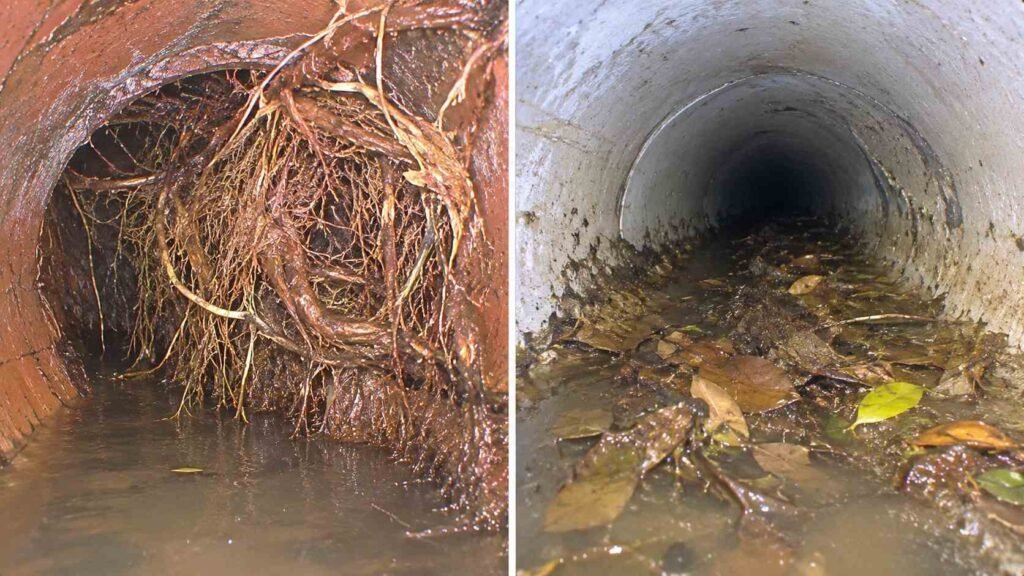
Leaves and garden debris are the most common cause, especially in leafy suburbs like the Hills, the North Shore and the Inner West. Gutter guards help, but leaves still blow straight into surface pits. Over time they break down into a thick sludge that sticks to the inside of the pipe.
Silt, soil and sand wash into pits from garden beds, lawns and driveways. Building and landscaping work make it much worse, because loose dirt, cement slurry and gravel can end up in the pipes. Once silt settles in a pipe with a shallow fall, it builds up layer after layer.
Tree roots are the big one in older Sydney homes. Roots are drawn to moisture, and they can squeeze through the smallest crack or loose joint. Once inside, they grow into a thick mat that catches everything flowing past. Older clay (terracotta) pipes with many joints are especially at risk.
Broken, cracked or collapsed pipes cause blockages that keep coming back. Ground movement, heavy vehicles driving over shallow pipes, and decades of tree growth can crack or crush the line. A section can also sag, creating a low spot where water and debris sit.
Poor installation is another cause we see a lot. Pipes laid without enough fall, joints that weren’t sealed properly, or too many tight bends all slow the water down and let debris settle. Finally, there are the odd surprises: tennis balls, kids’ toys, rubbish, and even rags stuffed down a pit.
How to Unblock a Stormwater Drain Yourself
If you’re wondering how to unblock a stormwater drain without calling anyone, there are a few safe steps you can try for simple, shallow blockages. Start with the easy stuff, and stop if you find signs of roots or a broken pipe.
Step 1: Clear the Grate and Pit
Put on gloves and lift the grate off the pit. Scoop out the leaves, mud and rubbish sitting in the bottom, and pop it in your green bin rather than washing it down the drain. Many pits have a silt trap or basket designed to catch debris, so empty and rinse it. Plenty of “blocked” drains turn out to be nothing more than a pit packed full of muck.
Step 2: Check Your Gutters and Downpipes
If the downpipes are overflowing, the blockage might be higher up. Clean out the gutters safely, using a stable ladder and someone to hold it, and check that the outlet where each downpipe meets the gutter is clear. Many downpipes have a rainhead or leaf diverter that also needs a clean. If you’re not comfortable working at height, leave this to a professional.
Step 3: Flush the Pipe With a Hose
Once the pit is clear, feed a garden hose into the pipe opening and run water through at full pressure. Some people use a hose-end jetting nozzle, which shoots water forward and backward to push through loose debris. Then check the kerb outlet. If clean water is flowing out freely, you’ve probably fixed it.
Step 4: Try a Hand Drain Snake
For a blockage that won’t budge, a hand-operated stormwater drain snake (also called a drain auger) from the hardware store can break up soft blockages close to the pit. Feed it in gently and turn the handle as you go. If it hits something solid, or comes back wrapped in roots, stop there. Forcing it can damage the pipe or get the snake stuck.
What Not to Do
Never pour chemical drain cleaners, bleach or caustic products into a stormwater drain. Whatever goes down there ends up in local creeks and beaches without any treatment, harming fish and wildlife. Chemicals also don’t touch roots or silt, so they won’t fix the problem anyway.
Never connect a downpipe or stormwater line to the sewer, even as a “temporary” fix. Hornsby Shire Council explains that stormwater pipes aren’t allowed to connect to the sewer because the extra water can cause overflows of diluted raw sewage. It’s illegal and can lead to an order to fix it at your cost.
And don’t keep digging around if you suspect a broken pipe. Excavating near the house can damage footings, other services and even buried electrical cables.
When to Call a Plumber
DIY is fine for a pit full of leaves. But some blockages are beyond a garden hose, and pushing on can make things worse. It’s time to call a licensed plumber if the drain blocks again within weeks of clearing it, if water still pools after you’ve cleaned the pit and flushed the line, or if the snake comes back with roots.
You should also get help straight away if you see sinking ground, holes or soil washing out near the pipe, water entering the house, or water building up against walls and footings. These signs often mean the pipe is broken, and the longer it’s left, the more damage it can do. In a storm, if water is flowing into your home or garage, treat it as urgent and call our 24/7 emergency plumbing team. Our guide to a water leaking emergency also covers what to do while you wait.
Before any plumber works on your property, ask to see their licence. You can confirm it in a minute using the Service NSW licence check.
Professional Stormwater Drain Cleaning Services
Professional stormwater drain cleaning services go much further than a hose and a hand snake. The aim isn’t just to punch a hole through the blockage. It’s to find out exactly what caused it, clear the whole pipe, and make sure it won’t come straight back.
CCTV Drain Camera Inspection
A good plumber usually starts by feeding a waterproof camera into the pipe. The live footage shows where the blockage is, how far down the line it sits, and whether the pipe is cracked, sagging, broken or full of roots. A locator can also pinpoint the exact spot and depth from above ground, so any repair is targeted rather than guesswork. Ask for a copy of the footage. It’s useful for your records, and handy if you’re buying or selling.
Electric Drain Snake (Eel)
A motorised stormwater drain snake, often called an electric eel, uses a long rotating cable with cutting heads on the end. It chews through roots and compacted debris that a hand snake can’t shift. It’s a great tool for root blockages, although roots will grow back if the crack they came through isn’t fixed.
High-Pressure Water Jetting
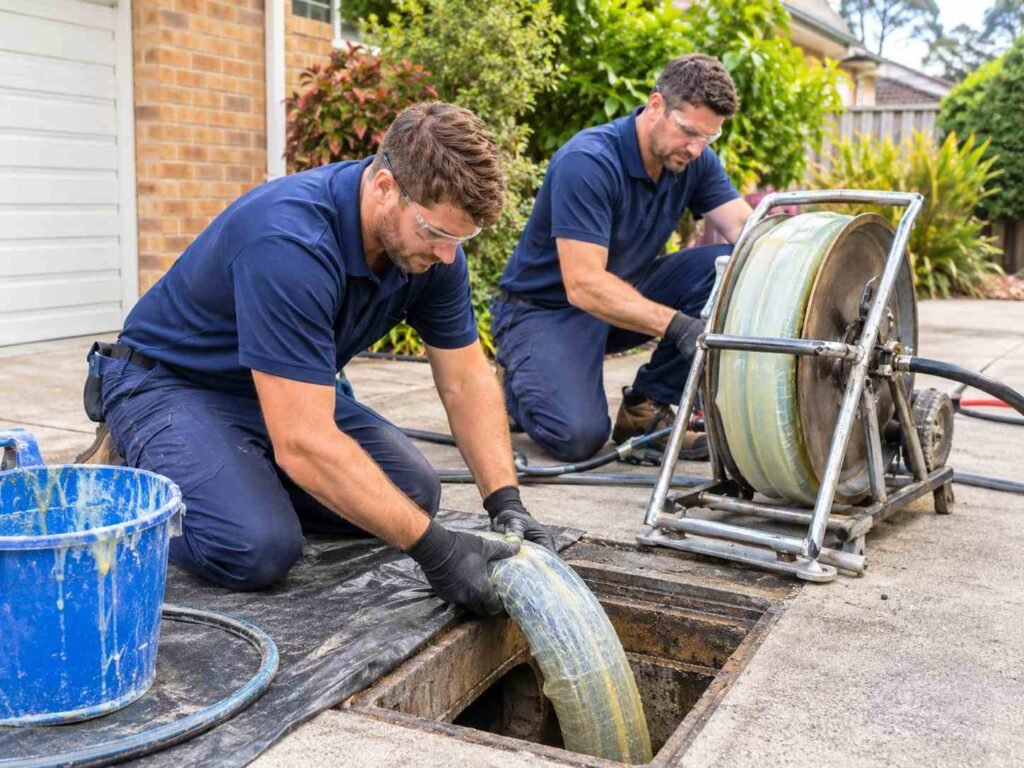
Hydro jetting is the most thorough type of stormwater drain cleaning. A powerful jet of water is fed through a hose with a special nozzle, blasting silt, sludge, grease and fine roots off the pipe walls and flushing it all out. Unlike a snake, which clears a path, jetting scours the full width of the pipe. It’s the best choice for silt build-up and for cleaning a line before relining.
Here’s a simple comparison to help you understand which method suits which job.
| Method | Best for | Limitations |
|---|---|---|
| Hose and pit clean (DIY) | Leaves and loose debris near the pit | Won’t shift roots, silt build-up or deep blockages |
| Hand drain snake (DIY) | Soft blockages close to the opening | Short reach, can get stuck, no help with roots |
| Electric drain snake | Roots and compacted debris | Clears a path rather than cleaning the whole pipe |
| High-pressure jetting | Silt, sludge and fine roots, full pipe clean | Can’t fix cracked or collapsed pipes |
| CCTV inspection | Finding the cause and checking pipe condition | Diagnoses only, doesn’t clear the blockage |
If the problem is in your sewer line rather than your stormwater, our blocked drain repairs team handles both.
Stormwater Drain Repair Options
When the camera shows the pipe itself is damaged, cleaning alone won’t solve the problem. That’s where stormwater drain repair comes in. The right option depends on how bad the damage is, where the pipe is, and what’s sitting on top of it.
Dig and Replace
The traditional fix is to excavate the damaged section and replace it with new PVC pipe. It’s still the best option for a fully collapsed pipe, a sagging section that has lost its fall, or a pipe that needs re-routing. The downside is the disruption, especially if the pipe runs under a driveway, paving, a deck or established garden. If a water supply pipe was damaged during the dig, our guide to burst and leaking pipes explains what to do next.
Stormwater Drain Reline
A stormwater drain reline repairs the pipe from the inside, without digging a trench. After the pipe is cleaned with a jetter, a flexible liner soaked in resin is pushed through it, usually from an existing pit or a small access point. The liner is inflated against the old pipe and left to cure, creating a new, seamless pipe inside the old one. Because there are no joints, roots have nowhere to get in.
Relining suits pipes with cracks, root intrusion and leaking joints, especially under driveways, concrete paths, pools and landscaped gardens where digging would be expensive. It’s not suitable when a pipe has completely collapsed or has a sag that holds water, because the liner follows the shape of the old pipe. A CCTV inspection will show whether your pipe is a good candidate.
Patch Repairs and Pit Replacement
Sometimes only one joint or a short section is damaged. In that case, a patch liner can fix just that spot. Cracked, sunken or undersized pits can also be replaced, and new pits added where water tends to pool. If you’re planning bathroom renovations or other building work, it’s a smart time to review your stormwater layout too.
Who Is Responsible for Your Stormwater Drain?
This catches a lot of Sydney homeowners out. Most people assume the council looks after everything once the water leaves the house. In fact, you’re usually responsible for the private stormwater system on your property and the pipe that connects it to the street.
City of Canada Bay explains that the pipe linking your private drainage to the council’s discharge point, such as a kerb outlet, is part of your private system even if it sits on public land. That means the pipe under the footpath and the outlet in the kerb are generally yours to maintain. The Hills Shire Council says the same, noting that in areas with kerb and gutter this includes the concrete around the outlet.
The council is usually responsible for public drainage, such as street pits, public pipes and channels. Inter-allotment drains, which run through several backyards to carry water from properties that can’t drain to the street, are generally maintained by the owners who benefit from or are burdened by the easement. Check your property’s title documents to see if you have one.
If you’re a strata owner, common property drainage is usually the owners corporation’s job, so speak with your strata manager first. If a neighbour’s stormwater is flooding your yard, start with a friendly chat. If that doesn’t work, the Community Justice Centres offer free mediation for neighbour disputes in NSW.
Stormwater Drain Repair and Maintenance Tips
The best way to deal with a blocked stormwater drain is to stop it happening in the first place. Regular stormwater drain repair and maintenance costs far less than emergency work during a storm.
Clean your gutters at least twice a year, more often if you’re surrounded by trees, and check the downpipes and rainheads at the same time. Lift the grates on your pits every few months, especially after autumn leaf fall and before Sydney’s stormy summer months, and clear out any build-up. Keep garden beds, mulch and loose soil away from pits so they don’t wash in during rain.
Think carefully about what you plant near your pipes. Large trees and thirsty shrubs like figs, jacarandas and some palms send roots a long way in search of water. If you already have big trees near old clay pipes, a camera inspection every few years can spot root growth before it causes a blockage.
If you’re doing landscaping or building work, cover pits to stop sand, cement and dirt getting in, and get the line flushed once the work is done. When buying an older home, consider adding a stormwater check to your pre-purchase inspection. And if you ever spot a leak you can’t trace around the house, our leak detection service can help find it before it causes damage.
What Affects the Cost of Stormwater Drain Cleaning and Repair?
Every stormwater job is different, so we don’t believe in quoting a number before we’ve seen the problem. What we can do is explain what affects the price, so any quote you get makes sense.
| Cost factor | Why it matters |
|---|---|
| Cause of the blockage | Leaves are quick to clear; roots and silt take longer and need specialist gear |
| Method used | Jetting and relining need more equipment than a simple snake |
| Length and depth of pipe | Longer, deeper lines take more time to clean, inspect and repair |
| Access | Pipes under driveways, slabs, decks or gardens take more work to reach |
| Pipe condition | Cracked, sagging or collapsed pipes need repair, not just cleaning |
| Repair type | Relining, patch repairs and dig-and-replace differ in labour and materials |
| Urgency | Emergency call-outs during storms or after hours can cost more |
At Radiant Plumbing Services, you’ll get an upfront, fixed quote before any work starts, with no call-out fee. That way there are no surprises when the job is done. You can read more about our team and how we work.
Need Help With a Blocked Stormwater Drain in Sydney?
If your stormwater drain is overflowing, slow, or keeps blocking up, Radiant Plumbing Services can help. Our licensed and insured plumbers work across Greater Sydney, from the Inner West to Western Sydney and the Hills. We’ll find the cause, explain your options in plain English, and get the water flowing again.
Call us on (02) 8866 1322 or book a plumber online. You can also see our full range of plumbing services or browse more tips on our plumbing blog.
Frequently Asked Questions
How do I know if my stormwater drain is blocked?
The most common signs are water pooling around pits, gutters or downpipes overflowing during rain, little water coming out of the kerb outlet, gurgling sounds, and soggy or sinking ground along the pipe. If water stays in a pit long after rain stops, the pipe is likely blocked.
Can I use a drain cleaner to unblock a stormwater drain?
No. Stormwater flows untreated into creeks, rivers and beaches, so chemicals harm the environment. They also don’t break down roots or silt. Clean the pit, flush with a hose, or call a plumber instead.
Who is responsible for a blocked kerb outlet?
In most Sydney council areas, the pipe from your property to the kerb outlet is part of your private stormwater system, so the owner is responsible for keeping it clear. Councils usually look after street pits and public pipes.
How long does a stormwater drain reline last?
A properly installed reline creates a jointless pipe inside the old one, which resists root intrusion and leaks. Lifespan depends on the product and installation, so ask your plumber for the manufacturer’s details and warranty.
How often should stormwater drains be cleaned?
Check and clear your pits and gutters every few months, and more often if you have lots of trees. A professional clean or camera inspection every few years is a good idea for older homes or properties that have had root problems.