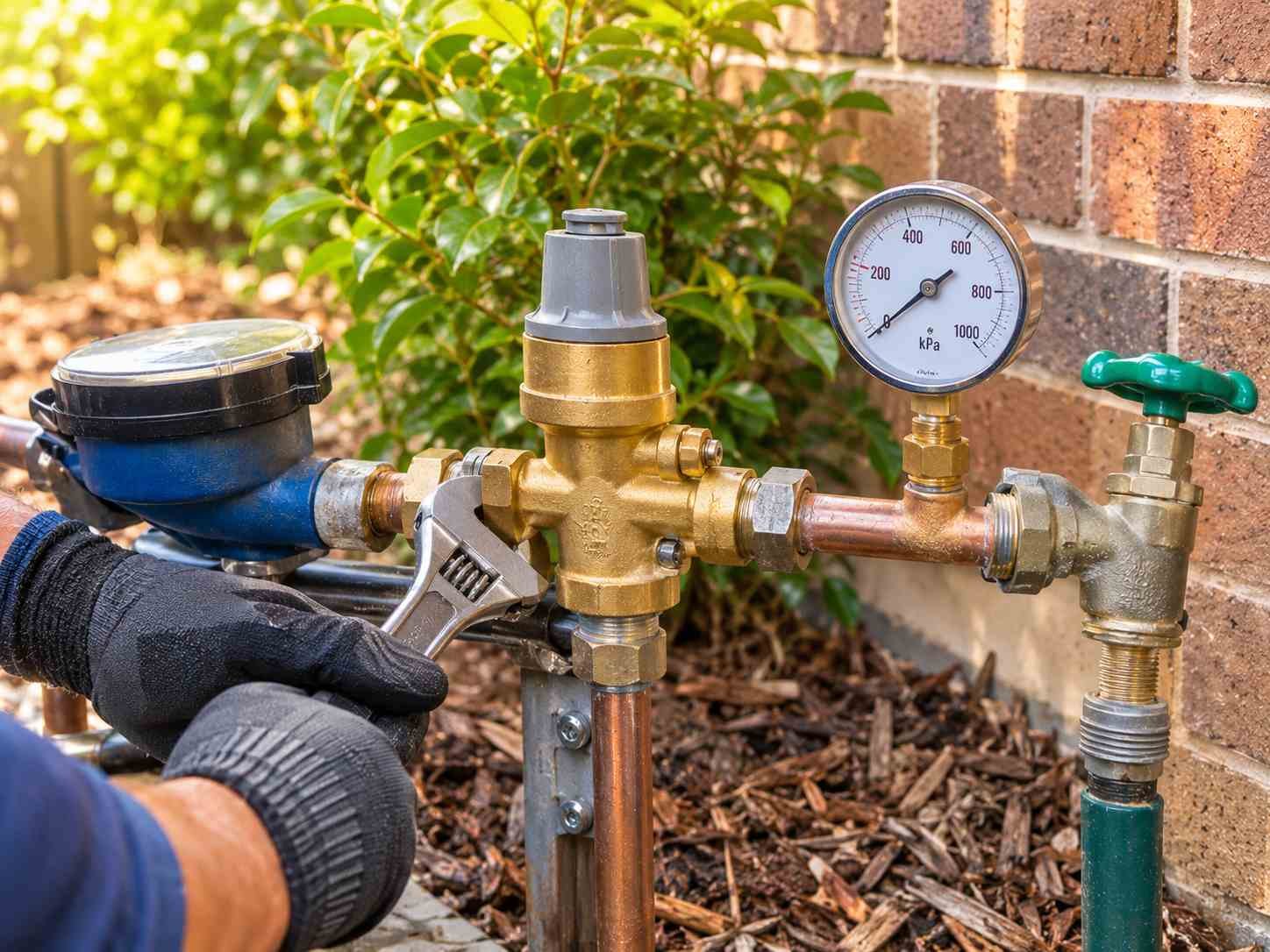
A water pressure regulator is a valve, usually fitted just after your water meter, that lowers high mains pressure to a safe level for your home. In Australia, plumbing standards cap the static pressure at any outlet inside a building at 500 kPa, so homes with higher mains pressure need one. Some regulators are adjustable with a screw on top, while many pressure limiting valves are preset and can’t be adjusted. If your pressure is dropping, jumping around, or the valve is leaking or humming, it’s usually time for a licensed plumber to test it and replace it.
Most people never think about their water pressure regulator until something goes wrong. The shower suddenly feels weak, the pipes start banging when a tap shuts off, or the hot water system’s relief valve won’t stop dripping. Very often, the small brass valve near the water meter is the cause.
This guide explains what a water pressure regulator does, why many Sydney homes need one, where to find yours, how to test and adjust it, and the signs it’s time for a replacement. We’ve kept it in plain English and based it on the jobs our team handles across Sydney every week.
What Does a Water Pressure Regulator Do?
Water reaches your home from Sydney Water’s mains under pressure. That pressure is what pushes water up through your pipes and out of your taps. The problem is that mains pressure isn’t the same everywhere. It depends on how far you are from the reservoir and how high your property sits compared to it. Homes in low-lying areas or close to a reservoir can receive far more pressure than their plumbing needs.
A house water pressure regulator sits on the incoming water line and acts like a gatekeeper. Inside is a spring and a diaphragm or piston. When the pressure coming in is higher than the valve’s set point, the spring and diaphragm partly close the valve, so the water leaving it is held at a steady, safer pressure. When you turn on a tap and the pressure on the house side drops, the valve opens a little to let more water through.
The result is pressure that feels the same whether one tap is running or three, and plumbing that isn’t under constant strain. You’ll still get plenty of flow. A regulator doesn’t make your water weak when it’s set correctly. It simply takes the excess off the top.
Pressure Limiting Valve vs Pressure Reducing Valve
In Australia, you’ll hear two names used for this part, and they’re not quite the same thing.
A pressure limiting valve (PLV) is preset at the factory to a fixed maximum, commonly 350, 500 or 600 kPa. It’s compact and affordable, and it’s the type most often fitted to Australian homes and hot water systems. Most PLVs can’t be adjusted. If you need a different pressure, the valve is replaced with one that has a different rating.
A pressure reducing valve (PRV) does a similar job but usually has an adjustment screw on top, so a plumber can fine-tune the outlet pressure. These are often called an adjustable water pressure regulator. They’re common on larger homes, units, commercial buildings, and properties where the mains pressure is very high.
Both are types of water pressure regulator valve, and both protect your plumbing. The main practical difference for homeowners is that you can only adjust one of them.
Water Pressure Rules in Australia
The rules for water pressure regulator Australia installations come from the national plumbing standard for water services, AS/NZS 3500.1. Two numbers are worth knowing.
The first is the maximum. The standard says the static pressure at any outlet inside a building, other than a fire service outlet, must not exceed 500 kPa. The Victorian Building Authority’s water supply FAQs quote this clause directly and also note the flip side: a pressure limiting valve is not required where the mains pressure does not exceed 500 kPa. The same national standard applies in NSW.
The second is the minimum. The same FAQ notes that the minimum working pressure at the furthest or most disadvantaged fixture must be not less than 50 kPa. That’s very low, and most homes sit well above it, but it shows that the standard is about keeping pressure in a safe, usable band.
Why 500 kPa? Pressure above this level puts strain on everything connected to your water supply. The VBA has noted that pressure above 500 kPa can cause damage from water hammer, shorten the life of appliances, taps and fittings, and create excessive noise in the system. That’s exactly the kind of wear we see in homes without a working regulator.
In practice, this means a licensed plumber must test the static pressure when doing new work, and fit a regulator if it’s over the limit. The Victorian Building and Plumbing Commission’s maximum pressure guidance explains that if the measured pressure exceeds 500 kPa, a pressure limiting or pressure reduction valve must be installed. Hot water systems have their own requirements too. A Building Commission NSW note on heat pump installations lists missing pressure limiting valves as a common problem it found, and reminds installers to test inlet pressure and fit a PLV when required.
Does Your House Need a Water Pressure Regulator?
Not every home needs one, but many in Sydney do. Sydney Water’s Operating Licence requires it to supply a minimum pressure of 15 metres head at the point of connection, which is roughly 150 kPa. Most properties receive more than that, and some areas receive much higher pressure because of their elevation and closeness to reservoirs. Sydney Water also runs a Water Pressure Management Program that installs pressure reducing valves in the network to lower excessively high pressure in some areas.
You probably need a water pressure regulator for house use if a pressure test shows more than 500 kPa at the meter. Other clues are taps that blast water when you open them, pipes that bang when you turn off a tap or the washing machine stops filling, toilets that keep running, dripping taps that come back soon after new washers, or a hot water relief valve that drips constantly.
On the other hand, if your pressure is already low, a regulator won’t help and could make things worse. Sydney Water notes that some instantaneous hot water systems, corroded galvanised pipes and existing pressure reducing valves may not work as effectively when mains pressure is reduced. A proper test tells you which side of the line you’re on.
Where Is My Water Pressure Regulator?
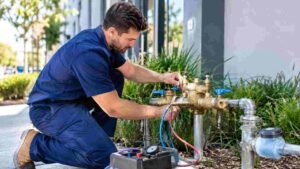
If you’re wondering “where is my water pressure regulator?”, start at the water meter. In most Sydney houses, the meter sits near the front boundary, close to the footpath, often in a garden bed or a small box. The main mains water pressure regulator is usually fitted on the house side of the meter, within a short distance of it. It looks like a brass, bell-shaped or cylindrical valve fitted into the pipe, sometimes with an adjustment screw and locknut on top.
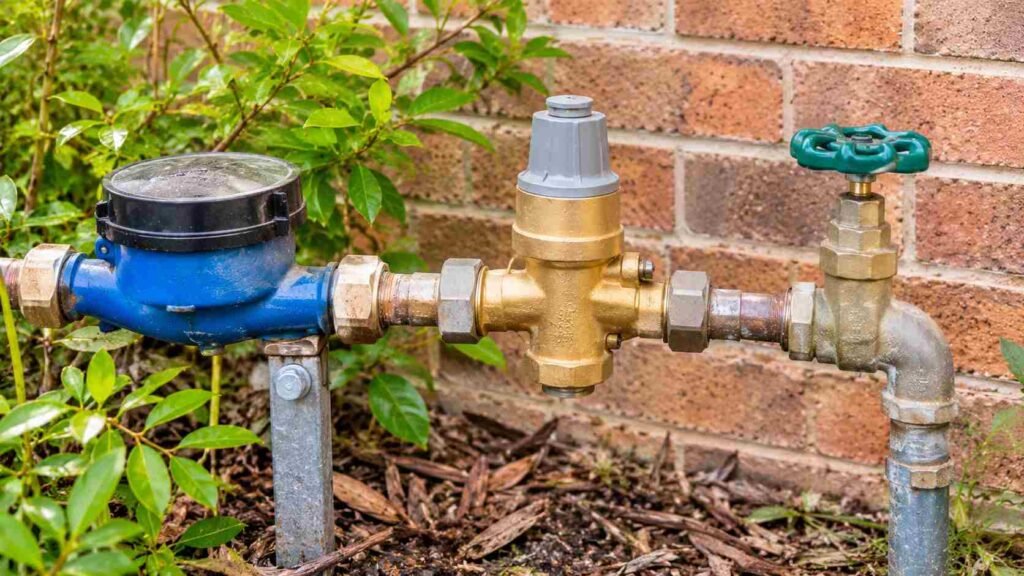
If you can’t see one there, check a few other places. Some homes have the regulator where the main pipe enters the house, under the house, or in the garage. In apartments, regulators are often in a services cupboard, plant room or behind an access panel, and they may serve the whole building or a group of units.
Your hot water system may also have its own valve. Many storage hot water systems have a pressure limiting valve on the cold water inlet, sometimes combined with an expansion control valve in a single fitting. This protects the tank, but it only controls the pressure going into the hot water system, not the whole house.
Finally, some appliances and irrigation systems use a small inline water pressure regulator fitted directly in their supply line. These are designed for one fixture, such as drip irrigation or a caravan connection, rather than the whole property. If you can’t find a regulator anywhere, your home may not have one, which is common in older houses built before pressure limits were widely enforced.
How to Test Your Water Pressure
Before you adjust anything, you need to know your pressure. Guessing from how the shower feels isn’t reliable, because shower heads, pipe size, partly closed valves and blockages can all affect flow.
The simplest test uses a water pressure gauge that screws onto a garden tap, available from most hardware stores. Pick the outdoor tap closest to the meter, and make sure no other taps, toilets, irrigation or appliances are using water. Screw on the gauge, turn the tap fully on and read the needle. That reading is your static pressure.
If the tap is before the regulator, you’ll see mains pressure. If it’s after the regulator, you’ll see the regulated pressure. Testing both, where possible, tells you whether the regulator is doing its job. A healthy setup shows high pressure on the street side and a steady, lower reading on the house side.
A reading that creeps up over a few minutes, or jumps around, is a warning sign. It can mean the regulator isn’t sealing properly. For an accurate reading, a licensed plumber will use a calibrated gauge at the meter outlet, which is also the method the VBA recommends for checking maximum static pressure.
How to Adjust a Water Pressure Regulator
If you’ve found your regulator and it has an adjustment screw, you may be wondering how to adjust a water pressure regulator yourself. Here’s how it generally works, along with an important warning.
First, check what type you have. If the valve has no screw or bolt on top, it’s most likely a fixed pressure limiting valve and can’t be adjusted. Turning or forcing it will only damage it. In that case, if the pressure is wrong, the valve needs to be replaced with one of the right rating.
If it does have an adjustment screw, here’s the usual process for water pressure regulator how to adjust jobs:
- Attach a pressure gauge to a tap on the house side of the regulator so you can watch the reading.
- Loosen the locknut on top of the regulator with a spanner. Don’t remove it completely.
- Turn the adjustment screw a small amount at a time. On most models, turning it clockwise increases the pressure and turning it anticlockwise decreases it, but always check the manufacturer’s instructions for your model.
- Open and close a tap to let the pressure settle, then check the gauge again.
- Once the reading is where it should be, and no higher than 500 kPa, hold the screw in place and tighten the locknut.
Make small changes, and never set the pressure above 500 kPa to get a “stronger” shower. That defeats the purpose of the valve and can put your plumbing and hot water system at risk.
When You Shouldn’t Adjust It Yourself
Adjusting a regulator sounds simple, but there are good reasons to leave it to a professional. If the valve is old, corroded or seized, forcing the screw can crack the body or break the spring. If adjusting it doesn’t change the reading, the internal parts have likely failed. And if your home’s pressure needs to be balanced with a hot water system’s valves, getting it wrong can cause the relief valve to drip or affect the system’s warranty.
Work on the water supply is plumbing work, so if anything needs to be cut, replaced or reconnected, it must be done by a licensed plumber. You can check any plumber’s licence using the Service NSW licence check.
Signs Your Water Pressure Regulator Is Failing
Regulators work hard every time you use water, and their internal seals, springs and diaphragms wear out eventually. Most failures give some warning signs.
The most common is a change in pressure. If your water suddenly feels much weaker, the regulator may be sticking closed or blocked with debris. If it feels much stronger, or the gauge reads above the set point, the valve may be failing open and letting full mains pressure through. Pressure that fluctuates, going from strong to weak with no change in how many taps are running, is another classic sign.
Noise is a clue too. A humming, hissing or whistling sound near the meter or in the pipes when water is running can point to a worn valve. Banging pipes, often called water hammer, may mean the pressure is too high because the regulator isn’t holding it back.
Look at the valve itself. Water leaking from the body, the adjustment screw or a small vent hole means the internal seals have failed. Outside the valve, keep an eye on your hot water system’s relief valve. If it drips constantly, high incoming pressure is one possible cause. Toilets that keep refilling, taps that start dripping soon after a repair, and leaking flexible hoses under sinks can all point to pressure that’s too high.
Finally, check your water bill. An unexplained jump can be a sign of hidden leaks caused by excess pressure. Our leak detection service can find leaks you can’t see before they cause damage.
When to Replace a Water Pressure Regulator
There’s no fixed date when a regulator must be replaced, because lifespan depends on water quality, how much water you use, and how hard the valve has to work. A home with very high mains pressure puts more strain on its regulator than one where the pressure is only slightly over the limit.
As a general rule, replace the regulator when it no longer holds a steady pressure, when it leaks, when adjusting it has no effect, or when it’s seized and corroded. It’s also smart to have it checked if it’s been in place for many years and you’ve started noticing any of the signs above. Replacing a tired regulator is far cheaper than repairing a burst flexible hose or a water-damaged kitchen.
It’s worth replacing it at the same time as other work, too. If you’re installing a new hot water system, renovating a bathroom or kitchen, or upgrading old pipes, ask your plumber to test the pressure and check the regulator while the water is already off. If you’re upgrading your hot water, our hot water systems team will check that the inlet pressure suits the new unit.
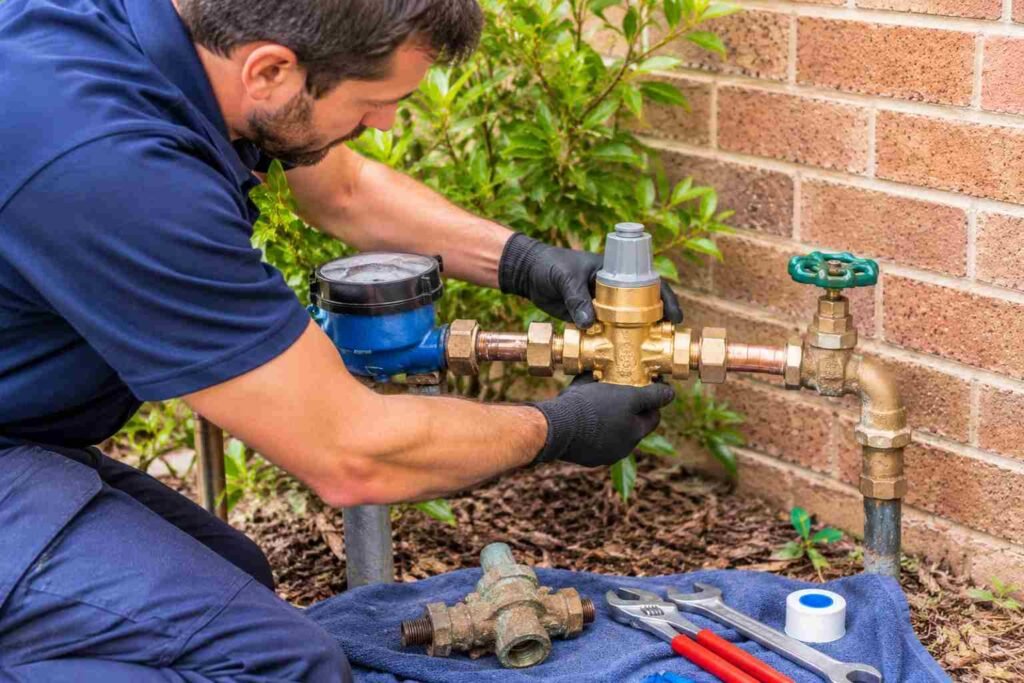
Water Pressure Regulator Installation and Replacement
A professional installation or replacement usually starts with a pressure test at the meter to confirm the mains pressure and decide which valve suits your home. The plumber will consider whether a fixed PLV or an adjustable PRV is the better fit, what pressure setting you need, and the size of your water service.
The water is then turned off at the meter, the old valve (if there is one) is cut out, and the new regulator is fitted in the correct direction of flow. Many plumbers also add a strainer before the valve to catch grit that could damage it, and make sure there’s an isolation valve so it can be serviced later. Once connected, the water is turned back on, the new pressure is tested, and any adjustments are made. The whole job is usually straightforward when the valve is easy to reach.
What Affects the Cost?
We don’t quote fixed prices before seeing the job, because every setup is different. These are the main things that affect the cost of a water pressure regulator installation or replacement.
| Cost factor | Why it matters |
|---|---|
| Type of valve | Adjustable pressure reducing valves usually cost more than fixed PLVs |
| Pipe size | Larger water services need larger, more expensive valves |
| New install or replacement | Fitting a valve where there was none can need more pipework |
| Access | Valves under houses, in tight boxes or in plant rooms take longer |
| Extra parts | A strainer, isolation valve or new fittings add to the job |
| Condition of pipes | Old or corroded pipes near the meter may need replacing |
| Related repairs | Leaks or damage caused by high pressure may need fixing at the same time |
At Radiant Plumbing Services, you’ll always get an upfront, fixed quote before any work starts, with no call-out fee. You can read more about our team and how we work.
Problems High Water Pressure Can Cause
It helps to understand why the regulator matters so much. High water pressure doesn’t usually cause one big failure overnight. It wears your plumbing down slowly, and the damage often shows up in several places at once.
Taps and mixers wear out faster, so you’ll find yourself replacing washers and cartridges more often. Our tap repairs service can fix leaks, but if the pressure is too high, they’ll keep coming back. Toilet inlet valves are also put under strain, which is a common reason for cisterns that keep running. If that sounds familiar, our toilet repairs team can help.
Flexible hoses under sinks, basins and toilets are a bigger worry. Constant high pressure can weaken them until they burst, often when nobody is home. Appliances such as dishwashers and washing machines can also fail early. In the worst cases, pipes and joints give way. Our guide to burst and leaking pipes explains what to do if that happens, and our 24/7 emergency plumbing team can help any time of day or night.
Simple Maintenance Tips
A little attention keeps your regulator working well for longer. Test your pressure with a gauge once or twice a year, and after any mains work in your street, because grit stirred up in the main can lodge in the valve. Keep the area around the meter and valve clear of soil, mulch and plants so it’s easy to see and reach. Listen for new noises in your pipes, and watch for leaks around the valve.
If your valve has a strainer in front of it, ask your plumber to clean it during any service visit. And if you notice your water pressure suddenly change, get it checked early. A simple adjustment or valve replacement now can prevent much bigger repairs later. For more home maintenance tips, visit our plumbing blog.
Need Help With Your Water Pressure Regulator in Sydney?
Whether your water pressure is too high, too low, or just not what it used to be, Radiant Plumbing Services can help. Our licensed and insured plumbers work across Greater Sydney. We’ll test your pressure properly, find out whether your regulator is working, and adjust, repair or replace it so your home is protected.
Call us on (02) 8866 1322 or book a plumber online. You can also explore our full range of plumbing services.
Frequently Asked Questions
What should my house water pressure be in Australia?
Plumbing standards cap the static pressure at any outlet inside a building at 500 kPa. Most homes are comfortable somewhere below that. If your pressure is above 500 kPa, you need a regulator. If it’s very low, a plumber can check for blockages, leaks or a faulty valve.
Can I adjust my water pressure regulator myself?
You can adjust some regulators if they have an adjustment screw, using a gauge to check the result. Many Australian homes have fixed pressure limiting valves that can’t be adjusted. If the valve is seized, leaking or doesn’t respond, call a licensed plumber.
How do I know if my pressure regulator is bad?
Common signs include pressure that’s suddenly much higher or lower, pressure that fluctuates, humming or banging pipes, water leaking from the valve, and a hot water relief valve that drips constantly.
Will a water pressure regulator reduce my water flow?
When it’s set correctly, you shouldn’t notice a big difference in everyday use. A regulator removes excess pressure rather than restricting normal flow. If your water feels weak after a regulator is fitted, it may be set too low or blocked.
Is a pressure limiting valve the same as a water pressure regulator?
A pressure limiting valve is one type of water pressure regulator. It’s preset to a fixed maximum and usually can’t be adjusted. A pressure reducing valve is another type, usually with an adjustment screw.