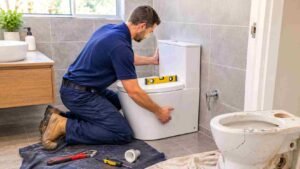
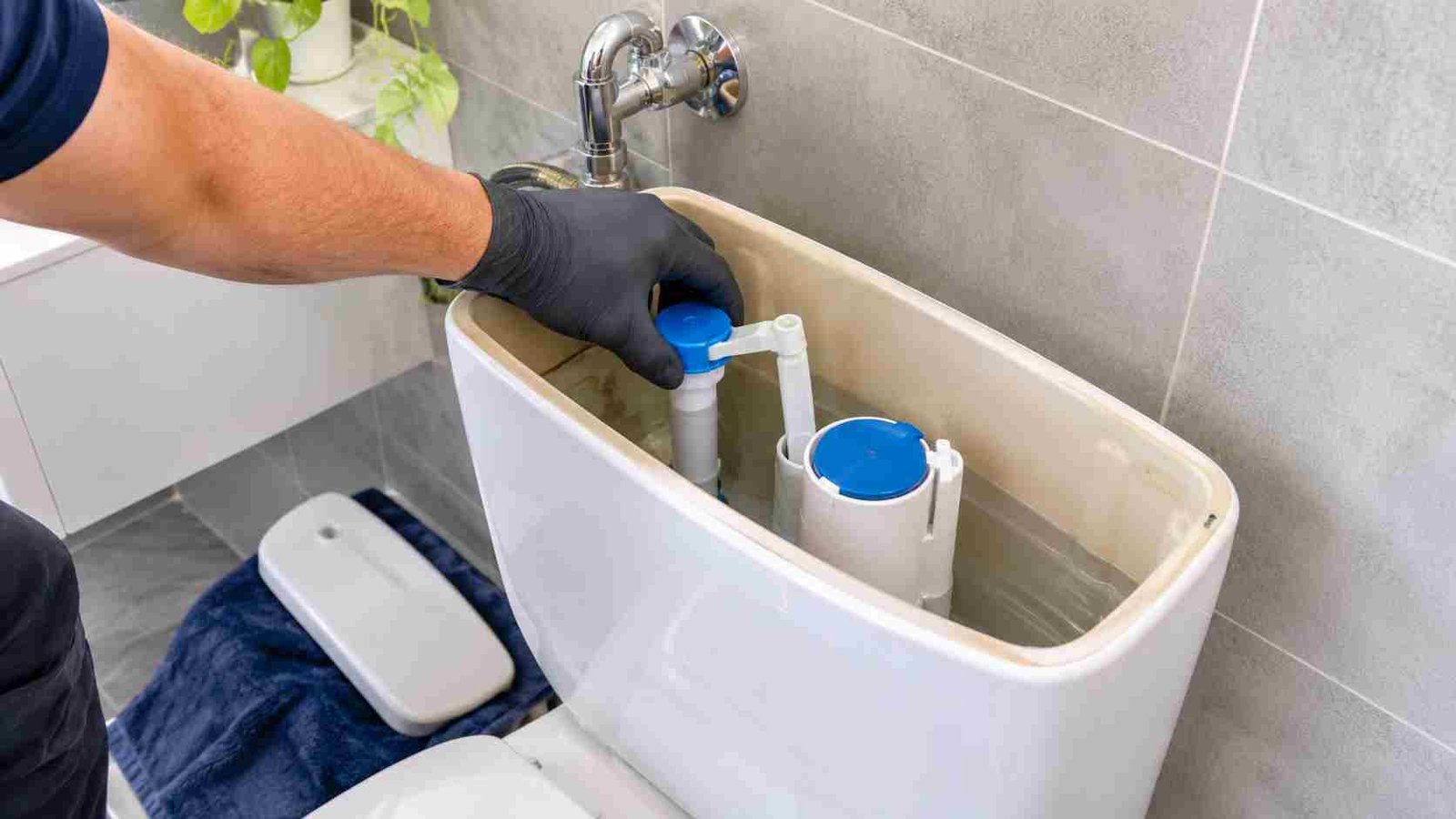
A running toilet is almost always caused by one of two parts inside the cistern. Either the inlet (fill) valve isn’t shutting off, so water overflows into the overflow tube, or the outlet (flush) valve seal is worn, so water leaks into the bowl and the cistern keeps refilling. Start by taking the lid off, checking the water level against the overflow, and doing a food colouring test. Simple fixes include freeing a sticking flush button, lowering the water level, or clearing debris. If a seal or valve is worn out, it needs replacing, and in NSW that’s a job for a licensed plumber.
That constant trickling sound coming from the bathroom isn’t just annoying. A toilet that keeps running can quietly waste a huge amount of water and push your water bill up without you realising. Sydney Water warns that a constantly running toilet can waste thousands of litres a day.
The good news is that most running toilets come down to a small number of common faults, and many are easy to diagnose. In this guide, we explain how to fix a running toilet step by step, starting with how your cistern works, then how to find the faulty part, what you can safely adjust yourself, and when to call a plumber. We’ve kept it simple and based it on the toilets our team repairs across Sydney every week.
How a Toilet Cistern Works
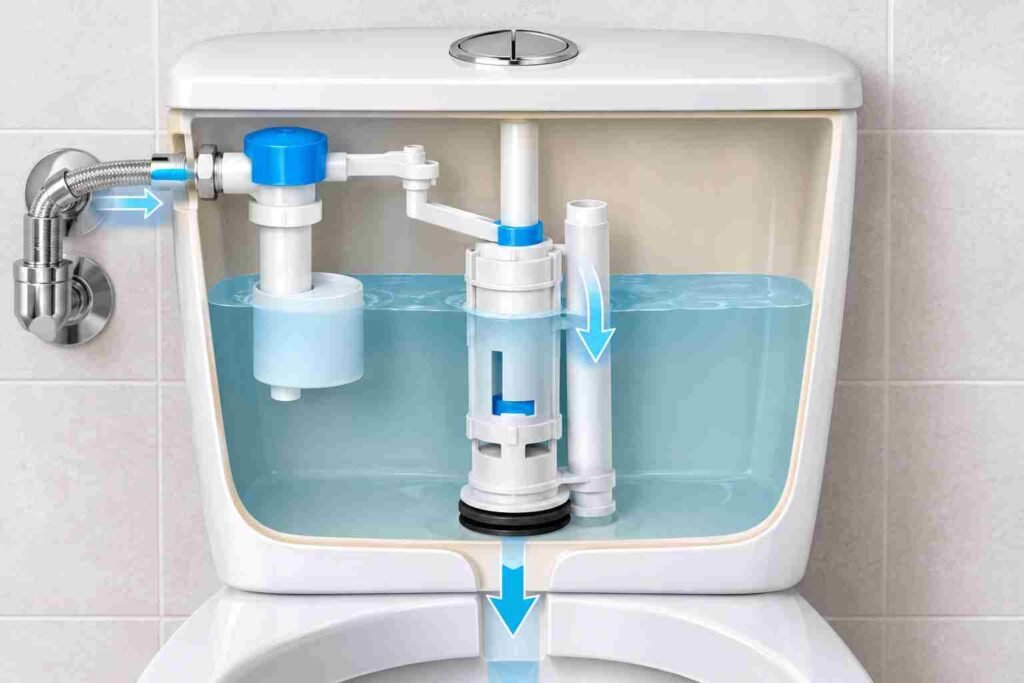
Knowing what’s inside your cistern makes it much easier to work out why your toilet keeps running. Most Australian homes have a dual-flush cistern with two buttons on top, either sitting on the back of the toilet, mounted on the wall, or hidden inside the wall behind a flush plate.
Inside, there are two main parts. The inlet valve, also called the fill valve, is connected to the water supply. It lets water into the cistern after a flush and has a float that rises with the water. When the water reaches the right level, the float tells the valve to shut off.
The outlet valve, also called the flush valve, sits at the bottom of the cistern. When you press a button, it lifts up and releases water into the bowl. A rubber seal at its base keeps water in the cistern between flushes. The outlet valve also has a built-in overflow tube, which is a safety feature. If the water ever rises too high, it spills into the overflow and down into the bowl rather than onto your floor.
The buttons on top connect to the outlet valve through rods, cables or levers. Older toilets may still have a single-flush lever with a chain, a ball float on a metal arm, or a separate flap valve, but the principle is the same.
When everything works properly, the cistern fills, the inlet valve shuts off and there’s silence until the next flush. When one part fails, water keeps moving, and that’s when you hear the toilet running.
Why Does My Toilet Keep Running?
If you’re asking “why does my toilet keep running?”, the answer usually falls into one of a few categories. Here’s a quick guide to match what you’re seeing with the likely cause.
| What you notice | Likely cause |
|---|---|
| Water flowing into the overflow tube | Inlet valve not shutting off, or water level set too high |
| Silent trickle into the bowl, cistern refills every so often | Worn or dirty outlet valve seal |
| Hissing sound but water level looks normal | Inlet valve leaking or not sealing fully |
| Toilet runs only after flushing and won’t stop | Flush button sticking or mechanism caught |
| Cistern takes a long time to refill | Blocked inlet valve filter or partly closed isolation tap |
| Water constantly running after a mains repair | Grit lodged in the inlet valve or under the outlet seal |
The two biggest culprits are the inlet valve and the outlet seal. A worn outlet seal lets water leak into the bowl, the water level drops, the inlet valve opens to top it up, and the cycle repeats. Sometimes this happens so slowly you only hear a short refill every half hour, often called a “phantom flush”. A faulty inlet valve, on the other hand, doesn’t shut off properly, so the water keeps rising until it spills into the overflow.
High water pressure is another hidden cause. If your home’s mains pressure is too high, inlet valves wear out faster and may struggle to close fully. If you’ve replaced valves before and the problem keeps coming back, it’s worth having your pressure tested.
How to Check If Your Toilet Is Leaking
Not every running toilet is obvious. Some leaks are so slow that you can’t hear them, but they still waste water around the clock. Before you start any repairs, it’s worth confirming the leak and working out where it’s coming from.
The Food Colouring Test
This is the simplest and most reliable test. Remove the cistern lid, add a few drops of food colouring to the water in the cistern, and don’t flush. Riverina Water recommends waiting 10 to 15 minutes. If coloured water appears in the bowl without a flush, the outlet valve seal is leaking. Flush afterwards to clear the colour.
The Toilet Paper Test
If you don’t have food colouring, place a sheet of dry toilet paper against the back of the bowl, above the water line. If it gets wet between flushes, water is trickling down from the cistern. Sydney Water recommends this simple check in its guide to spotting leaks.
The Water Meter Test
To check for leaks across the whole house, turn off all taps and appliances, write down your water meter reading, and avoid using water for a while, such as overnight. Tweed Shire Council explains that if the meter reads higher the next morning, you may have a leak. If your toilets pass the colour test but the meter still moves, the leak may be elsewhere, and our leak detection service can track it down.
How to Fix a Running Toilet Cistern: Step by Step
Here’s how to work through the problem in a logical order. Start with the quick checks, because many running toilets are fixed in the first few steps without needing any new parts.
Step 1: Turn Off the Water and Remove the Lid
Find the isolation tap on the wall behind or beside the toilet, and turn it clockwise to shut off the water. On a cistern with buttons on top, you usually need to unscrew the button ring or press-in buttons before the lid will lift off. Wall-hung and in-wall cisterns are accessed by removing the flush plate on the wall, which usually pops or slides off.
Place the lid on a towel on the floor, because ceramic lids crack easily. Then turn the water back on briefly so you can watch what happens as the cistern fills.
Step 2: Check the Water Level
Look at where the water stops in relation to the top of the overflow tube. The water should stop below the top of the overflow, usually with a clear gap. Many cisterns have a water level mark on the inside wall or on the valve itself.
If water is flowing into the overflow tube, the problem is on the inlet side. Either the water level is set too high, or the inlet valve isn’t shutting off. If the water level is fine but you can still hear trickling, the problem is more likely the outlet seal.
Step 3: Check the Flush Button and Mechanism
A surprisingly common reason for a toilet running after flushing is a button that doesn’t spring back up fully. Press each button and watch the outlet valve. If it stays slightly lifted, the seal can’t close, and water keeps running into the bowl.
Check that the rods or cables between the buttons and the valve aren’t too long, bent or catching on anything. On older lever-style toilets, a chain that’s too short can hold the flap open, while one that’s too long can get trapped under it. A small adjustment here often stops the toilet running instantly.
Step 4: Adjust the Water Level
If the water is running into the overflow, try lowering the water level. On most modern inlet valves, the float slides up and down a shaft, and there’s a clip, screw or adjustment wheel to change its height. Lowering the float means the valve shuts off earlier. On older ball-float valves, gently bending the float arm down can do the same thing.
Make small adjustments, then flush and let the cistern refill to check the new level. Don’t set it too low, or the toilet may not flush properly.
Step 5: Clear Debris From the Inlet Valve
If adjusting the level doesn’t stop the water, the inlet valve may have grit or sediment caught in its seal. This often happens after mains repairs in your street. Many inlet valves have a removable cap or a small filter where the water enters. With the water turned off, a plumber can open the valve, clear the debris and test it again.
When a fill valve toilet won’t stop running even after cleaning, the internal washer or diaphragm is usually worn, and the valve needs replacing.
Step 6: Check the Outlet Valve Seal
If the colour test showed water leaking into the bowl, the outlet valve seal is the problem. Over time, the rubber seal can harden, crack, warp or collect grime and mineral build-up, so it no longer seals tightly. Sometimes a small piece of debris trapped under the seal is the only issue.
With the water off and the cistern flushed empty, the outlet valve can be lifted out on most modern cisterns. The seal is checked, cleaned or replaced, and the valve is refitted. If the valve body itself is cracked or worn, the whole outlet valve is replaced.
Step 7: Turn the Water Back On and Test
Once any adjustment or repair is done, turn the water back on fully, let the cistern fill, and listen. The water should stop cleanly below the overflow and stay silent. Flush both buttons a few times, then repeat the food colouring test to make sure the leak is fixed.
What You Can Do Yourself in NSW
It’s important to know where the line sits before you start pulling parts out. In NSW, the Plumbing and Drainage Act sets out limited “exempt owner/occupier work”. The NSW plumbing legislation describes this as repairing a tap or showerhead in a dwelling, or fitting water-restricting or flow-regulating devices to tap end fittings. Toilet cistern parts aren’t listed in that exemption.
In practice, that means simple checks are fine for homeowners: removing the lid, doing a colour test, freeing a sticking button, or adjusting a float or chain. Replacing an inlet valve, outlet valve or other plumbing parts is work for a licensed plumber in NSW. A poorly fitted valve can leak behind the toilet or into the wall, and a flooded bathroom costs far more than a professional repair.
Before any tradesperson starts, you can confirm their licence using the Service NSW licence check.
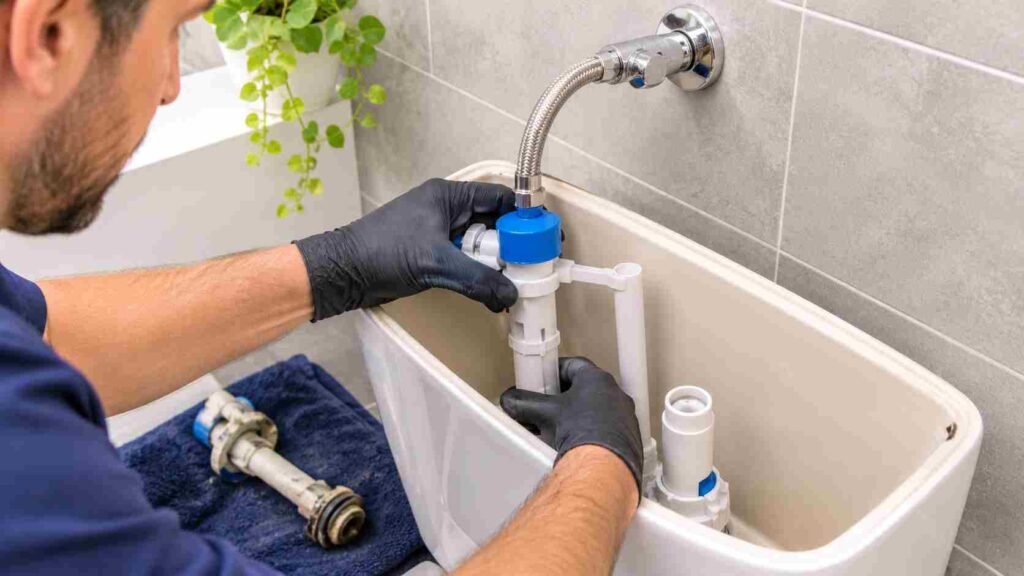
Toilet Inlet Valve Replacement
When the inlet valve is worn out, a toilet inlet valve replacement is usually the fix. Inlet valves are under constant water pressure, and their washers and diaphragms wear out over time. Signs include water running into the overflow, a constant hissing sound, slow refilling, or a valve that only stops when you jiggle it.
The process starts with turning off the water at the isolation tap and flushing the cistern to empty it. The flexible hose connecting the valve to the water supply is disconnected, and the old valve is removed from the cistern. The new valve is fitted, set to the correct height, connected, and the water is turned back on. The plumber then sets the water level, checks for leaks inside and outside the cistern, and tests the flush.
Getting the right valve matters. Inlet valves come in side-entry and bottom-entry styles, depending on where the water pipe connects to the cistern. They also vary in height and fitting size, and some cisterns need a brand-specific valve. A plumber will match the valve to your cistern, so it fits properly and the water level is right.
It’s also a good time to check the isolation tap and flexible hose. If the tap is stiff or leaking, or the hose looks rusty or bulging, replace them at the same time to prevent future leaks.
Concealed and In-Wall Cisterns
Many newer Sydney homes and renovated bathrooms have in-wall cisterns, where the cistern is hidden inside the wall and you only see the flush plate. These look great, but they can be trickier to fix.
The same parts inside, the inlet valve and outlet valve, cause the same problems. The difference is access. Everything has to be reached through the opening behind the flush plate, and parts are often specific to the brand and model. Forcing them can damage the frame or cause leaks inside the wall, which may not be noticed until there’s water damage.
If your in-wall cistern keeps running, it’s best to call a plumber who’s familiar with that system. Make a note of the brand on the flush plate, as it helps the plumber bring the right parts. If you’re planning bathroom renovations, ask about access panels and genuine parts availability before you choose a concealed cistern.
When to Call a Plumber
Some running toilet problems are a quick adjustment, but others need professional help. Call a licensed plumber if the toilet keeps running after you’ve checked the button, water level and float, if the colour test shows the outlet seal is leaking, or if the inlet valve hisses or won’t shut off.
You should also call a plumber if water is leaking onto the floor, around the base of the toilet or from the isolation tap and hose, because that can damage flooring and the subfloor. If the cistern is cracked, if parts are hard to find, or if you have a concealed cistern, professional help saves time and avoids damage. And if the toilet is overflowing onto the floor, turn off the isolation tap straight away and call our 24/7 emergency plumbing team. Our guide to a water leaking emergency explains what to do while you wait.
If your toilet is also slow to flush or the bowl water rises, the issue may be a blockage rather than the cistern. Our blocked drain repairs team can clear it. For all cistern faults, our toilet repairs service covers diagnosis, parts and replacement.
What Does It Cost to Fix a Running Toilet?
Most running toilet repairs are relatively small jobs, but the cost varies depending on what’s wrong and what parts are needed. We don’t quote a fixed figure before seeing the toilet, but these are the main things that affect the price.
| Cost factor | Why it matters |
|---|---|
| Faulty part | An adjustment costs less than replacing an inlet or outlet valve |
| Type of cistern | Concealed and wall-hung cisterns take longer to access |
| Brand-specific parts | Some cisterns need genuine parts that cost more |
| Number of parts | Replacing both valves, the hose and isolation tap adds parts and time |
| Condition of the toilet | Old or cracked cisterns may be better replaced than repaired |
| Urgency | After-hours or emergency call-outs may cost more |
If your toilet is very old, uses a lot of water per flush, or keeps needing repairs, replacing it with a modern dual-flush toilet may be better value in the long run. Sydney Water notes that older single-flush toilets use around 11 litres per flush, while modern dual-flush toilets use 4.5 litres for a full flush and 3 litres for a half flush.
At Radiant Plumbing Services, you’ll get an upfront, fixed quote before any work starts, with no call-out fee. You can learn more about our team and how we work.
How Much Water Does a Running Toilet Waste?
A toilet constantly running is one of the biggest causes of wasted water in the home, and it’s easy to miss because the water flows quietly down the back of the bowl. Sydney Water says a leaking toilet can waste as much as 260 litres of water every day. Over a year, that adds up fast. Riverina Water notes that a continuously running toilet can waste up to 96,000 litres of water a year.
That wasted water shows up on your bill, both as water usage and, for many Sydney properties, wastewater charges. If your water bill has suddenly jumped and you haven’t changed your habits, a running toilet is one of the first things to check. Fixing it quickly is one of the easiest ways to save water and money.
How to Stop a Toilet From Running Again
Once your toilet is fixed, a few simple habits help keep it that way. If you want to know how to stop a toilet from running in future, prevention is mostly about keeping the parts clean and the pressure right.
Do a food colouring test every few months, especially in toilets you don’t use often, such as a guest bathroom. Avoid using cistern tablets or drop-in cleaning blocks, because the chemicals can break down rubber seals and plastic parts over time. Clean the bowl instead.
Keep an eye on the isolation tap and flexible hose behind the toilet. If you see rust, dampness or bulging, get them replaced before they fail. If your home has high water pressure, a plumber can fit a pressure limiting valve to protect your toilet valves, taps and appliances. Our tap repairs team often finds that high pressure is behind both dripping taps and running toilets in the same home.
Finally, act quickly. A small trickle today can turn into a worn valve and a bigger repair tomorrow. For more practical tips, browse our plumbing blog.
Need Help With a Running Toilet in Sydney?
If your toilet won’t stop running, Radiant Plumbing Services can help. Our licensed and insured plumbers work across Greater Sydney. We’ll find the faulty part, explain your options in plain English, and fix it properly with quality parts, so your toilet is quiet again and your water bill comes back down.
Call us on (02) 8866 1322 or book a plumber online. You can also see our full range of plumbing services.
Frequently Asked Questions
Why does my toilet keep running after I flush?
The most common causes are a flush button that doesn’t spring back fully, a worn outlet valve seal that lets water leak into the bowl, or an inlet valve that doesn’t shut off. Check the button first, then the water level and overflow, then do a food colouring test.
Is a running toilet an emergency?
A slow trickle isn’t usually an emergency, but it wastes water and should be fixed soon. If water is overflowing onto the floor or leaking from the hose or isolation tap, turn off the isolation tap and call a plumber straight away.
Why is my toilet water running into the overflow tube?
Water running into the overflow means the water level is too high or the inlet valve isn’t shutting off. Lowering the float may help. If it doesn’t, the inlet valve may be blocked or worn and need replacing.
How often should toilet cistern parts be replaced?
There’s no set timeframe, because it depends on water quality, pressure and use. Regular colour tests help you spot worn seals early, and replacing them as soon as they leak prevents wasted water.
Can I use cistern tablets to keep my toilet clean?
It’s best to avoid them. The chemicals in many in-cistern tablets can damage rubber seals and plastic valve parts, which can lead to leaks and a running toilet.