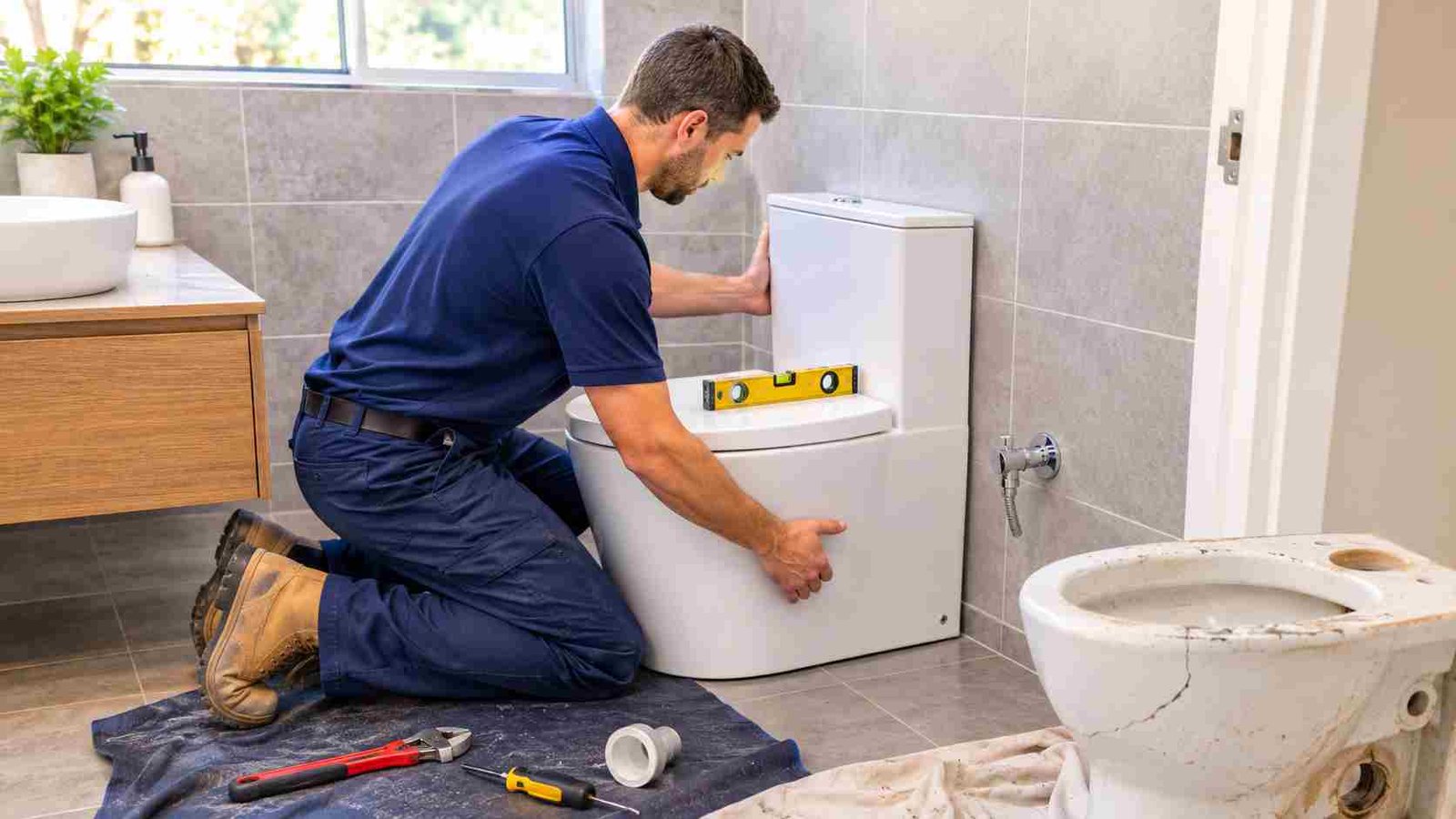
You don’t always need a whole new toilet. A broken flush button, a worn fill valve or a leaking flush valve can usually be replaced on their own. Full toilet replacement makes sense when the pan or cistern is cracked, the toilet keeps leaking or blocking, parts are no longer available, or an old single-flush toilet is wasting water. The cost depends on the type of toilet you choose, whether the new one matches your existing waste position, the style of cistern, and any floor, wall or tiling work needed. Always ask your plumber for a fixed quote that includes removal of the old toilet.
Most people don’t think about their toilet until it starts causing trouble. The flush button gets stuck, the cistern won’t stop running, there’s a hairline crack in the bowl, or the whole thing just looks tired next to a newly painted bathroom. At that point, the big question is whether to repair what you have or replace the toilet altogether.
This guide helps you make that call with confidence. We explain when a toilet replacement is worth it and when a simple part will do, how cistern and button replacements work, what to look for in a new toilet, and what affects the cost in Sydney. It’s written in plain English, based on the toilets our team repairs and replaces across Sydney every week.
Repair or Replace? How to Decide
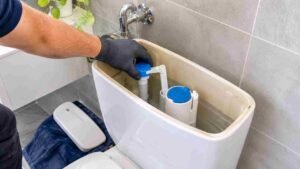
Toilets are fairly simple. Apart from the ceramic pan and cistern, almost everything else is a replaceable part: the flush button, the inlet (fill) valve, the outlet (flush) valve, the seals, the seat and the connector. That means many toilet problems can be fixed without replacing the whole suite.
A repair usually makes sense when the ceramic is in good condition and the problem is mechanical. A running cistern, a button that doesn’t spring back, a slow refill or a small leak inside the cistern are all typical repair jobs. If parts are available for your model, fixing them costs much less than a new toilet.
Replacement becomes the better option in a few situations. If the pan or cistern is cracked, it needs replacing, because cracks can’t be reliably repaired and may suddenly get worse. If water is leaking at the base of the toilet and the seal has been redone more than once, the pan may be damaged or poorly set. If parts for an older or discontinued toilet can’t be found, replacement may be the only practical fix. And if the toilet keeps blocking, it may be an older design with a weak flush or a poorly shaped trapway.
Water use is another good reason. Older single-flush toilets use far more water than modern dual-flush models. Riverina Water notes that older toilets use around 18 litres per flush, while modern four-star dual-flush toilets use just 4.5 litres for a full flush and 3 litres for a half flush. In a busy household, that difference adds up quickly on your water bill.
Finally, there’s renovation. If you’re updating your bathroom, a new toilet is often part of the plan, and it’s the best time to choose a style that suits the space and is easy to clean. Our toilet repairs team can assess your toilet and give you an honest repair-or-replace recommendation.
Know Your Toilet Before You Replace Anything
Before you buy a replacement part or a new toilet, it helps to understand what you’ve got. Getting this wrong is the most common reason people end up with a new toilet that doesn’t fit or a part that doesn’t work.
Types of Toilet Suites
A close-coupled toilet has the cistern sitting directly on the back of the pan. It’s the most common style in older Sydney homes. A back-to-wall toilet has the pan pushed against the wall, hiding the pipes, with the cistern sitting on top. A wall-faced pan is similar, with a smooth back that sits flush to the wall. A wall-hung toilet is fixed to the wall with no base touching the floor, and its cistern is hidden inside the wall. Some homes also have a connector toilet, where the cistern is mounted higher on the wall and connected to the pan by a short pipe.
Where the Waste Pipe Comes Out
This is the detail that matters most for full toilet replacement. Toilets connect to the sewer either through the floor or through the wall. Floor connections are called an S-trap, and wall connections are called a P-trap. The distance from the wall to the centre of the waste pipe is called the set-out, and it varies from home to home.
Many modern toilets come with an adjustable or “universal” outlet that fits a range of set-outs, which makes replacement much easier. If the new toilet doesn’t match your existing waste position, the plumber may need to adjust the pipework, which can mean extra work and cost. A plumber will measure your set-out before you buy, so you choose a toilet that fits.
Toilet Cistern Replacement
A cracked, leaking or broken cistern doesn’t always mean replacing the pan too. Toilet cistern replacement is a common job, but how easy it is depends on the type of toilet you have.
For a close-coupled toilet, the cistern is designed to match the pan it sits on. A replacement toilet cistern needs to be the same model, or a compatible one recommended by the manufacturer. If you put a mismatched cistern on a pan, the flush volume and shape may not suit the bowl, which can lead to a weak flush, splashing or blockages. If the matching cistern is no longer available, replacing the whole suite is often the better option.
For toilets with a separate wall-mounted cistern, such as older high-level or connector toilets, the cistern can often be replaced on its own with a modern unit. In-wall cisterns are different again. The cistern itself is built into the wall frame and rarely needs replacing, but the parts inside can be changed through the flush plate opening.
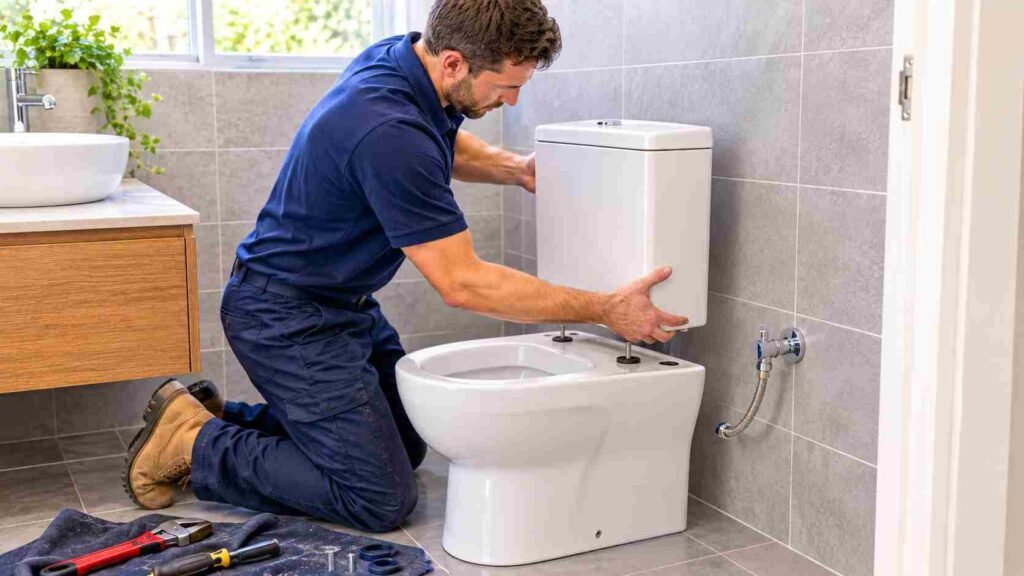
When a cistern is replaced, the water is turned off at the isolation tap, the old cistern is disconnected and removed, the new one is fitted with new seals and bolts, and the water connection is remade. The plumber then adjusts the water level, tests the flush, and checks for leaks. It’s also a good time to replace the isolation tap and flexible hose if they’re old.
Toilet Button Replacement
A broken or sticking flush button is one of the most common toilet problems, and it’s usually one of the cheapest to fix. Toilet button replacement is needed when a button is cracked, stuck down, doesn’t spring back, has lost its chrome finish, or no longer triggers the flush.
On most dual-flush toilets, the buttons sit in the cistern lid and connect to the outlet valve with rods or cables. The buttons and the rods need to match the outlet valve in your cistern. That’s why a toilet flush button replacement isn’t as simple as buying any button from the hardware store. Buttons vary in size, shape and the way they connect, and many are specific to a brand and model.
For an in-wall cistern, the buttons are part of the flush plate on the wall. Flush plates are designed for particular in-wall systems, so you’ll need one made for your brand of cistern. Replacing just the plate is a popular way to give a bathroom a quick update, as plates come in different finishes and shapes.
Sometimes the button isn’t actually broken. If the rods underneath are the wrong length, bent or misaligned, the button can stick or fail to flush. Adjusting or replacing the rods may fix the problem. If the button is fine but the flush is still weak or keeps running, the fault is more likely the outlet valve.
The best way to find the right button is to look for the brand and model on the cistern, inside the lid, or on your original paperwork. If you can’t find it, a plumber can usually identify the system and source the correct part.
Toilet Flush Valve Replacement
The flush valve, also called the outlet valve, sits at the bottom of the cistern and releases water into the bowl when you press the button. It has a rubber seal at the base that keeps water in the cistern between flushes.
Toilet flush valve replacement is needed when that seal wears out or the valve body cracks. The most common sign is water trickling into the bowl long after a flush, or the cistern refilling on its own every so often. A food colouring test confirms it: add a few drops to the cistern, don’t flush, and see if colour appears in the bowl within 10 to 15 minutes.
To replace the flush valve, the plumber turns off the water, empties the cistern, disconnects the buttons and lifts out the old valve. On close-coupled toilets, the cistern may need to come off the pan to change the valve and the seal underneath. The new valve is fitted, the buttons are reconnected and adjusted, and the toilet is tested. As with buttons, the valve needs to suit your cistern, so genuine or recommended parts are the safest choice.
Toilet Fill Valve Replacement
The fill valve, also called the inlet valve, controls how water enters the cistern after a flush. A float rises with the water and shuts the valve off at the right level.
Toilet fill valve replacement is needed when the valve won’t shut off properly, refills slowly, hisses constantly, or lets water run into the overflow tube. Grit from the mains can sometimes be cleared from the valve, but worn washers and diaphragms usually mean replacing it.
Fill valves come in side-entry and bottom-entry styles, depending on where the water pipe connects to your cistern. They also vary in height and fitting size. A plumber will match the right valve to your cistern, set the correct water level, and check the flexible hose and isolation tap at the same time.
High water pressure is a common reason fill valves wear out early. If you’ve replaced valves before and the problem keeps coming back, it’s worth having your pressure tested. If a fill valve has failed and water is spilling onto the floor, turn off the isolation tap and call our 24/7 emergency plumbing team.
Choosing a New Toilet
If you’ve decided a full toilet replacement is the way to go, choosing the right toilet makes a big difference to how happy you’ll be with the result. Here’s what we suggest checking.
WaterMark and WELS Ratings
In Australia, toilets and sanitary ware are among the plumbing products that must be certified before they’re installed. The Victorian Building and Plumbing Commission’s WaterMark safety guide lists toilets and sanitary ware as examples of products that must be approved. A licensed plumber can’t install an uncertified product that requires a WaterMark, so check before you buy, especially when shopping online.
Toilets also carry a WELS water rating label. The Your Home guide explains that the plumbing code’s minimum standard for toilets installed by a licensed plumber is equivalent to a WELS 3-star rating. Many modern toilets are rated 4 stars or more. The WELS water rating site lets you compare products, and the label shows how many litres each flush uses.
Style, Comfort and Cleaning
Think about how the toilet will be used. Back-to-wall and wall-faced toilets are easier to clean because there are fewer exposed pipes and gaps for dust and grime. Wall-hung toilets make cleaning the floor easy and suit modern bathrooms, but they need an in-wall cistern and frame, so they’re usually part of a renovation. Rimless pans have no hidden rim, which makes them more hygienic and easier to clean.
Comfort matters too. Taller pans can be easier for older people or anyone with mobility issues. Soft-close seats stop the lid slamming, and a quick-release seat makes cleaning simpler.
Fit and Compatibility
Check the set-out and connection type before you buy. If your home has a floor waste, choose a toilet that suits an S-trap at your set-out, or one with an adjustable outlet. Check the size of the new toilet’s footprint as well. A smaller base may leave an unpainted or untiled patch where the old toilet stood, and a larger one may not fit the space. A plumber can help you choose a model that fits without surprises.
How a Full Toilet Replacement Works
Knowing what happens on the day helps you prepare and plan. A typical plumber toilet replacement follows a clear process.
First, the plumber turns off the water at the isolation tap, flushes the toilet to empty it, and removes any remaining water from the cistern and bowl. The water connection is disconnected, the floor or wall screws are removed, and the old toilet is lifted out. The waste connection is sealed off temporarily to stop sewer gases coming into the room.
Next, the area is cleaned, and the waste pipe and floor are checked. If the floor around the old pan is damaged, rotten or uneven, it may need repairs before the new toilet goes in. If the waste pipe is cracked or the connection is in poor condition, it’s fixed at this stage.
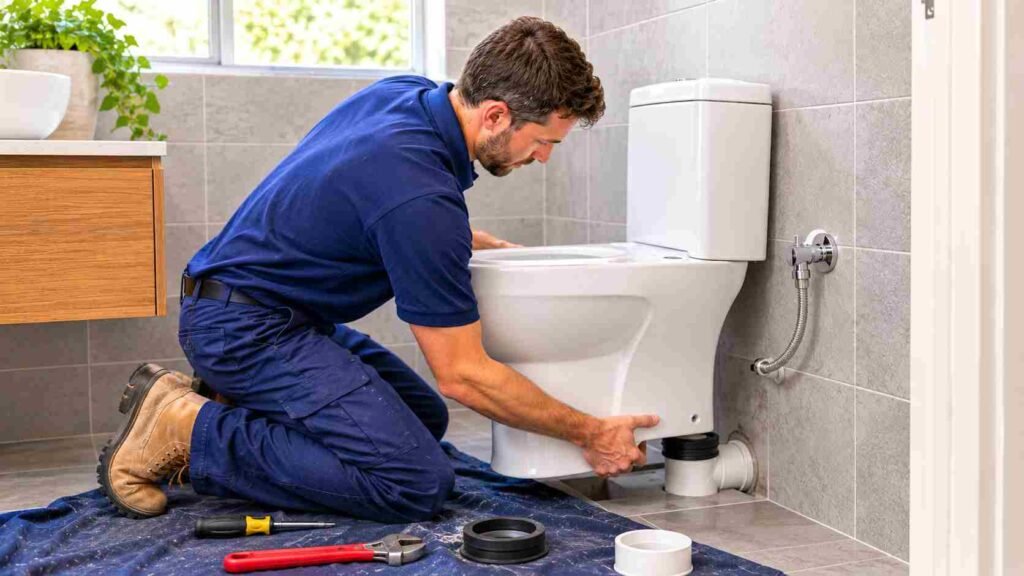
The new toilet is then positioned, connected to the waste, fixed to the floor or wall, and levelled. The cistern is fitted if it’s separate, the water connection is made with a new flexible hose, and the water is turned on. The plumber adjusts the water level, tests both flush buttons several times, and checks every joint for leaks. Finally, the base is sealed, the old toilet is removed from site, and the area is cleaned up.
A straightforward like-for-like swap is usually a reasonably quick job. Replacing a wall-hung toilet or changing the waste position takes longer and may involve tiling.
Do You Need a Licensed Plumber?
Yes. Replacing a toilet involves connecting to both the water supply and the sewer, and in NSW, plumbing and drainage work must be done by a licensed plumber. A poorly sealed waste connection can let sewer gas into your home or leak dirty water under the floor, and a bad water connection can flood a bathroom.
Before anyone starts work, you can check their licence using the Service NSW licence check. Keep the invoice and any warranty paperwork for your new toilet, as you may need them for warranty claims or when you sell your home.
How Much Does Toilet Replacement Cost?
The toilet replacement cost is made up of the toilet itself and the labour to install it. Toilets range widely in price, from basic close-coupled suites to designer wall-hung models, so your choice has a big impact. Rather than quote a single number before seeing your bathroom, we prefer to explain what affects the price.
| Cost factor | Why it matters |
|---|---|
| Type of toilet | Wall-hung and designer suites usually cost more than close-coupled toilets |
| Like-for-like or change | Changing between floor and wall waste, or a different set-out, adds plumbing work |
| Cistern type | In-wall cisterns need a frame and wall work if not already installed |
| Floor and wall condition | Damaged floors, rotten boards or uneven surfaces need repair first |
| Tiling | A smaller toilet footprint may expose untiled areas that need patching |
| Waste pipe condition | Cracked or old waste connections may need replacing |
| Removal and disposal | Taking away the old toilet adds time |
| Access | Tight bathrooms, upstairs bathrooms or awkward layouts take longer |
The cost of individual repairs works the same way. The toilet cistern replacement cost depends on whether a matching cistern is available, the type of cistern and how easy it is to access. The toilet bowl replacement cost depends on whether the pan can be replaced on its own, or whether a mismatched pan and cistern means replacing the whole suite. A button, fill valve or flush valve replacement is usually much cheaper, with the price mainly depending on the part and how hard it is to reach.
When comparing quotes, check whether the price includes the toilet, new connectors, flexible hose, isolation tap if needed, removal of the old toilet and testing. A cheap quote that leaves out disposal or minor floor repairs may cost more in the end.
At Radiant Plumbing Services, we give you an upfront, fixed quote before any work starts, with no call-out fee. You can learn more about our team and how we work.
Signs Your Toilet Needs Attention Now
Some toilet problems can wait for a convenient time, but others need prompt action. Water pooling around the base of the toilet is one of them. It may mean a failed seal or a cracked pan, and leaks here can damage flooring and the subfloor. A wobbly toilet can also break the seal at the waste connection, leading to leaks and smells.
A sewage smell that won’t go away, or a toilet that blocks often, may point to a problem in the drain rather than the toilet itself. Our blocked drain repairs team can find and clear the cause. If you notice your water bill rising for no clear reason, a slow cistern leak or hidden pipe leak may be to blame, and our leak detection service can track it down. If water is already spreading across the floor, our guide to a water leaking emergency explains what to do first.
If you’re planning a wider update, replacing your toilet alongside new tapware or a vanity can save time and labour. Our bathroom renovations team can plan the plumbing so everything fits together properly, and our tap repairs service can update basin and shower taps at the same visit.
Need a Toilet Replacement in Sydney?
Whether you need a new flush button, a cistern repair or a complete toilet replacement, Radiant Plumbing Services can help. Our licensed and insured plumbers work across Greater Sydney. We’ll tell you honestly whether a repair or replacement makes more sense, help you choose a certified, water-efficient toilet that fits your space, and install it properly with a full leak test.
Call us on (02) 8866 1322 or book a plumber online. You can also explore our full range of plumbing services or read more tips on our plumbing blog.
Frequently Asked Questions
How long does a toilet replacement take?
A like-for-like replacement of a floor-mounted toilet is usually a reasonably quick job. It takes longer if the waste position needs changing, the floor needs repairs, or you’re installing a wall-hung toilet with an in-wall cistern.
Can I replace just the toilet cistern?
Often, yes, as long as a matching or compatible cistern is available for your pan. If the matching cistern has been discontinued, replacing the whole suite usually gives a better and more reliable result.
Can I buy any flush button for my toilet?
No. Flush buttons and flush plates are usually designed for a specific brand and model of cistern. Check the brand and model before buying, or ask a plumber to source the right part.
Is it worth replacing an old single-flush toilet?
In most cases, yes. Older toilets can use far more water per flush than modern dual-flush toilets, so replacing one can cut water use and lower your bills over time.
What’s the difference between a fill valve and a flush valve?
The fill valve lets water into the cistern after a flush and shuts off when it’s full. The flush valve releases water into the bowl when you press the button and seals the cistern between flushes.