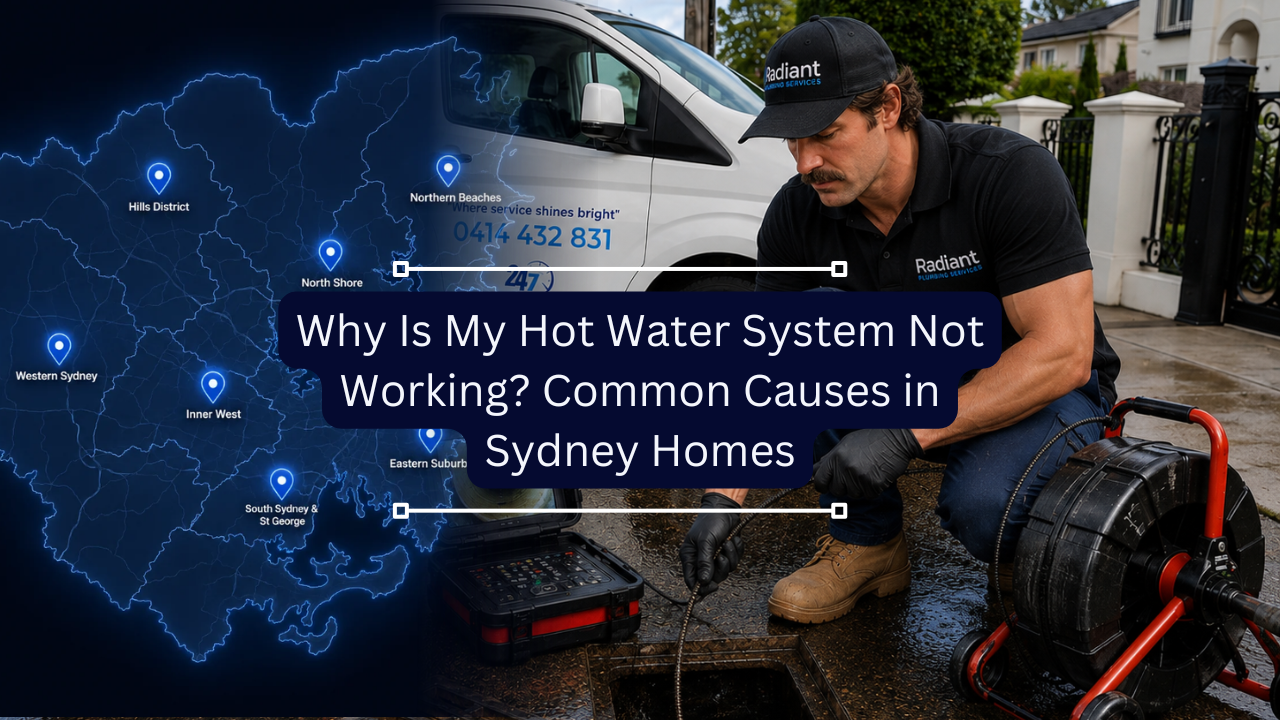
No hot water is usually caused by a lost power or gas supply, a pilot light that has gone out, a tripped circuit breaker, a failed heating element or thermostat, or a system that has simply reached the end of its life. Check the power, gas and any error codes first. If those are fine, call a licensed plumber.
Few household problems are as instantly disruptive as having no hot water in the house. Showers turn cold, dishes pile up and the day gets off to a bad start. The good news is that many hot water problems have a simple cause, and some can be checked safely in a few minutes before you call anyone.
This guide explains why your hot water is not working, how the causes differ between gas, electric, continuous-flow, heat pump and solar systems, what you can safely check yourself, and when it’s time to call a professional. It’s written by Radiant Plumbing, a team of licensed plumbers who repair and replace hot water systems across Sydney every week.
Need hot water back today? Radiant Plumbing repairs all major brands of gas and electric hot water systems across Sydney, with a $0 call-out fee and upfront pricing. Call (02) 8866 1322 or see our hot water system repairs.
Why Is My Hot Water Not Working? The Most Common Causes
Hot water stops working when the system loses its energy source, a component that controls heating fails, or water can’t flow through it properly. The fastest way to narrow it down is to match what you’re seeing with the most likely cause.
| What you notice | Most likely cause | What to do |
| No hot water at any tap, gas system | Pilot light out, gas supply off, faulty thermocouple | Check gas supply and pilot; call a plumber if it won’t stay lit |
| No hot water at any tap, electric system | Tripped breaker, failed element or thermostat | Check the switchboard; call a plumber if it trips again |
| Error code on the controller, instant gas | Ignition, flow or gas supply fault | Note the code, check the manual, call a plumber |
| Hot water runs out quickly in the evening | Off-peak tariff, undersized system, failing element | Check tariff and usage; book an inspection |
| Lukewarm water only | Thermostat set low, failing element, tempering valve fault | Check the thermostat setting; call a plumber |
| Hot water not working but cold is fine, one tap only | Faulty tap cartridge or mixer | Repair the tap, not the hot water system |
| No water at all from hot taps | Closed valve, blocked inlet, mains supply issue | Check the cold inlet valve on the system |
| Water pooling under the system | Leaking relief valve or tank | Turn off water and energy supply; call a plumber |
First Checks When There’s No Hot Water in the House
Before booking a repair, a few safe checks can save you a call-out or help your plumber diagnose the problem faster. Never remove covers, work on electrical components or attempt gas repairs yourself.
Is It Every Tap or Just One?
Run the hot tap in the kitchen, bathroom and laundry. If only one tap or shower has no hot water, the problem is almost certainly that tap’s cartridge, mixer or a local valve, not the hot water system itself. If there’s no hot water anywhere, the system is the likely culprit.
Check the Energy Supply
For an electric system, look at your switchboard for a tripped circuit breaker or safety switch labelled “hot water”. If it has tripped, you can reset it once. If it trips again, leave it off, because that usually points to a failed element or wiring fault that needs a professional. If the whole street has no power, check Ausgrid’s outage information or call 13 13 88.
For a gas system, check that other gas appliances such as the cooktop are working and that the gas meter valve is on. If nothing gas is working, there may be a supply problem.
Have You Simply Run Out?
Electric storage systems on an off-peak or controlled-load tariff only heat water at set times, usually overnight. If the household uses more hot water than usual, the tank can run out in the evening and won’t fully reheat until the next heating period. That’s not a fault, but if it happens often, the system may be too small for the household or starting to fail.
Smell gas? Don’t try to relight the system. Turn off the gas at the meter if it’s safe, avoid using switches or flames, open windows and leave the area. Call Jemena’s gas faults and emergencies line on 131 909, or 000 if there’s immediate danger. A licensed plumber can then repair the fault; see our gas leak detection and repair service.
Why Is My Gas Hot Water Not Working?
Gas hot water not working is one of the most searched hot water problems in Australia, and the cause depends on whether you have a gas storage tank or an instant (continuous-flow) system.
Gas Storage Hot Water Systems
A gas storage system heats a tank of water with a burner at the base, controlled by a gas valve and lit by a pilot flame.
The Pilot Light Has Gone Out
The most common reason a gas storage system stops working is a pilot light that has gone out, often due to wind, a draught or a supply interruption. Most systems have relighting instructions on a label on the unit. If you’re comfortable following them and there’s no smell of gas, you can try once. If the pilot won’t light or keeps going out, stop and call a plumber.
Faulty Thermocouple or Gas Control Valve
If the pilot lights but won’t stay lit, the thermocouple is often to blame. This small safety device tells the gas valve the pilot is burning; when it fails, the valve shuts off the gas. A faulty gas control valve can cause similar symptoms. Both are gas components and must be replaced by a licensed gasfitter.
Instant Gas Hot Water Not Working
Continuous-flow systems heat water only when a hot tap is turned on, using electronic ignition rather than a pilot light. When instant gas hot water is not working, check whether the unit is plugged in and switched on at the power point, because these systems need electricity to run. Then look at the temperature controller for an error code.
Error Codes on the Controller
Brands such as Rinnai, Rheem, Bosch and Thermann display error codes that point to specific faults, such as ignition failure, flame loss or overheating. Codes differ between brands and models, so check the owner’s manual or the manufacturer’s website for yours. Write the code down before calling a plumber, because it helps them bring the right parts.
Low Flow or Blocked Filters
Instant systems need a minimum flow of water to fire. Partly closed valves, a blocked inlet filter or a low-flow showerhead can stop the burner from igniting. If hot water works at the kitchen tap but not the shower, low flow may be the reason.
Why Is My Electric Hot Water System Not Working?
An electric hot water system not working usually comes down to the power supply, the heating element or the thermostat.
Tripped Breaker or Safety Switch
Electric storage systems draw a lot of power, and a faulty element can trip the circuit breaker or safety switch. If resetting it doesn’t hold, the element or wiring needs professional attention. Hot water systems are hard-wired, so electrical work on them must be done by a licensed professional.
Failed Heating Element or Thermostat
When an electric hot water system is not heating, the element (which heats the water) or the thermostat (which switches the element on and off) has often failed. Common signs are no hot water at all, lukewarm water, or water that runs out much faster than before. Both parts can be replaced, which is usually far cheaper than a new system if the tank is in good condition.
Heat Pump and Solar Hot Water Problems
Heat pump systems extract heat from the air and work like a reverse air conditioner. When they stop producing hot water, the cause may be a fault in the compressor or fan, a tripped breaker, very cold overnight temperatures, or a blocked air intake. Solar systems rely on the sun with a gas or electric booster for cloudy days. If a solar system isn’t heating, the booster may have failed or been switched off, or the panels may need cleaning or repair. Both system types are more complex than standard storage units and are best diagnosed by a plumber familiar with them.
Other Common Hot Water System Problems
Not every hot water system problem means no hot water at all. These symptoms are also worth acting on, because they often signal a failure on the way.
Hot Water Not Hot Enough
If the water is warm but never properly hot, the thermostat may be set too low, the heating element may be failing, or the tempering valve, which mixes hot and cold water to protect bathrooms from scalding, may be faulty. In Australia, storage systems must keep water at 60°C or above to control Legionella bacteria, while the tempering valve delivers it to bathrooms at a safer temperature, so turning the thermostat down is not the answer.
No Hot Water Pressure
Low pressure at hot taps only, with good cold pressure, often points to a partly closed valve on the hot water system, a blocked tempering valve or sediment build-up in older pipes. If both hot and cold pressure have dropped, the issue is more likely the mains supply or a leak elsewhere.
No Hot Water in the Shower Only
When there’s no hot water in the shower but other taps are fine, the shower mixer cartridge is the usual suspect. Mixers wear out and can stop allowing hot water through. This is a tap repair, not a hot water system fault.
Leaking Hot Water System
A small, occasional drip from the relief valve drain pipe is normal as the tank heats. Constant flow from that pipe, water pooling under the unit or water coming from the tank itself is not. A leaking tank cannot be repaired and usually means replacement. Turn off the cold water inlet and the power or gas, then call a plumber. For more on handling leaks safely, see our guide to emergency water leak repair.
H3: Noises, Rusty Water or Bad Smells
Rumbling or popping usually comes from sediment at the bottom of the tank. Rusty or discoloured hot water can mean the tank’s sacrificial anode, a rod that corrodes instead of the tank, is worn out, or the tank itself is rusting. A rotten-egg smell from hot water often comes from bacteria reacting with the anode. All of these are signs the system needs servicing soon.
Hot water playing up? Radiant Plumbing’s licensed plumbers diagnose and repair gas, electric, continuous-flow and heat pump systems across Sydney, often on the same day. Call (02) 8866 1322 or book a hot water repair online.
No Hot Water in an Apartment or Rental
In apartments, hot water may come from an individual unit inside your apartment, a unit on the balcony, or a central system shared by the whole building. If you have no hot water in an apartment and your own unit seems fine, ask your neighbours. If they’re affected too, contact the building or strata manager, because a central system is usually the owners corporation’s responsibility.
If you rent, report it to your landlord or agent straight away. In NSW, a failure of the hot water service is treated as an urgent repair, so it should be dealt with quickly.
Repair or Replace Your Hot Water System?
Whether to repair or replace comes down to the age and condition of the system and the cost of the repair. Most storage systems last around 8 to 15 years depending on type and water quality.
| Situation | Usually best option |
| Under 8 years old, one faulty part (element, thermostat, thermocouple, valve) | Repair |
| 8 to 12 years old, minor fault, tank in good condition | Repair, but start planning replacement |
| Over 12 years old, repeated faults | Replace |
| Leaking tank or rust through the tank | Replace |
| Household has grown and keeps running out | Replace with a larger or different system |
If replacement makes sense, it’s a good opportunity to rethink the type of system. Our guide on how to choose the best water heater explains the options, and our comparison of solar vs gas water heaters covers running costs and suitability. For budgeting, see the cost to replace a hot water system in Sydney.
How Much Does Hot Water Repair Cost in Sydney?
Hot water repair costs depend on the part, the type of system and the time of day. As a rough guide, replacing a heating element or thermostat typically costs around $250 to $450, a thermocouple or relief valve around $150 to $350, and a sacrificial anode around $250 to $450, including labour. These are indicative ranges only. After-hours work costs more; our emergency plumber cost guide explains how urgent pricing works, and our article on plumber cost in Sydney covers standard rates and call-out fees.
Radiant Plumbing charges a $0 call-out fee and confirms a fixed price before starting any hot water repair, so you’ll know the cost upfront.
How To Prevent Hot Water Problems
A little maintenance goes a long way in extending the life of a hot water system and avoiding cold-shower surprises.
Have the system serviced every few years. A plumber can check the relief and tempering valves, inspect the anode and flush sediment from the tank, which helps prevent the most common failures. Test the relief valve lever once or twice a year, following the manufacturer’s instructions, to keep it from seizing. Keep the area around the unit clear so it can ventilate properly, which is especially important for gas systems.
It’s also worth matching your usage to your system. Spreading showers out, fixing dripping hot taps and using efficient showerheads reduce the load on the system. Our guide on how to reduce water heater costs has more practical tips. A regular home plumbing inspection can include a hot water health check, catching worn parts before they leave you without hot water.
Hot Water System FAQs
Why do I have no hot water all of a sudden?
A sudden loss of hot water is most often caused by a tripped breaker on an electric system, a pilot light that has gone out on a gas storage system, or an ignition or power fault on an instant gas system. Check the power and gas supply first, then call a plumber if the problem continues.
Why is my gas hot water not working but the gas cooktop is?
If other gas appliances work, the gas supply is fine and the fault is in the hot water system itself. The pilot light, thermocouple, gas control valve or, for instant systems, the ignition or power supply are the most likely causes.
Can I relight my hot water pilot light myself?
Many systems include relighting instructions on the unit, and you can try once if there’s no smell of gas. If it won’t light or keeps going out, stop and call a licensed plumber or gasfitter.
How long should a hot water system last?
Most storage systems last around 8 to 15 years. Continuous-flow and heat pump systems can last longer with regular servicing. Water quality and maintenance have a big effect on lifespan.
Is no hot water an emergency?
It’s usually urgent rather than an emergency, unless there’s a gas smell, water leaking heavily from the unit, or vulnerable people in the home. In those cases, act immediately and contact an emergency plumber.
Get Your Hot Water Back On With Radiant Plumbing
When your hot water is not working, start with the simple checks: is it every tap or just one, is the power or gas on, and is there an error code? If those don’t solve it, the fault is likely a component such as a thermocouple, element or thermostat, or a sign that the system is nearing the end of its life.
Radiant Plumbing is a licensed Sydney plumbing team that repairs and replaces hot water systems from all major brands, including Rheem, Rinnai, Bosch, Dux and Thermann. We service homes across the CBD, Eastern Suburbs, Inner West, North Shore, Northern Beaches, Hills District, Western Sydney and the St George area, with a $0 call-out fee and fixed upfront pricing.
No hot water? Call Radiant Plumbing on (02) 8866 1322 for fast, licensed hot water repairs in Sydney, or request a call-back online. Learn more about our hot water system services.