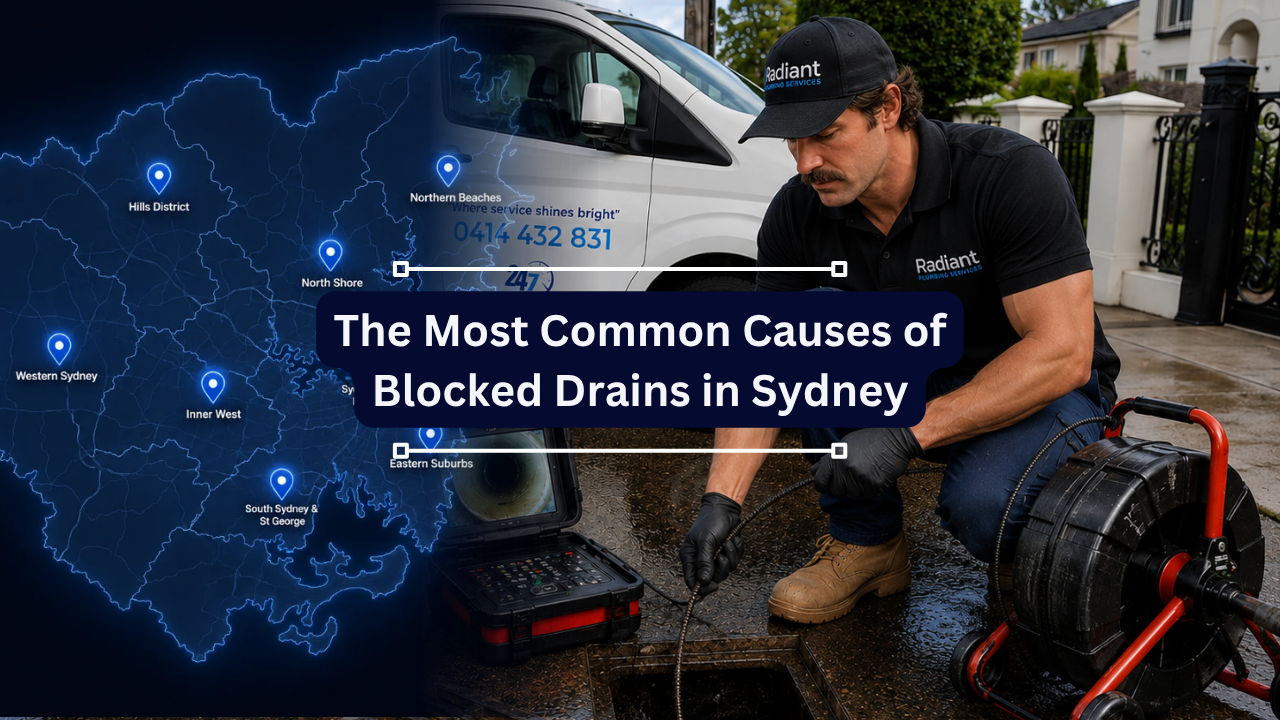
Quick answer: Most blocked drains are caused by fats and grease in kitchen sinks, hair and soap scum in showers, wet wipes in toilets, and tree roots or cracked pipes underground. Small blockages build up slowly, so slow drainage, gurgling and bad smells are early warning signs worth acting on.
A blocked drain rarely happens out of nowhere. In most Sydney homes, it’s the result of months of grease, hair, food scraps or wipes building up inside the pipes, or of older pipes underground cracking and letting tree roots in. By the time water stops draining, the blockage has usually been forming for a long time.
This guide explains the 10 most common causes of blocked drains, the warning signs to watch for, how to tell when the problem is in your sewer line rather than a single sink, and what the overflow relief gully outside your home is for. It’s written by Radiant Plumbing, a licensed Sydney plumbing team that clears blocked drains and sewers across the city every day.
Drain already blocked? Radiant Plumbing clears blocked drains, toilets and sewer lines across Sydney, 24/7, with a $0 call-out fee and upfront pricing. Call (02) 8866 1322 or see our blocked drain plumbing service.
What Causes Blocked Drains?
Drains block when material builds up inside a pipe faster than water can flush it away, or when the pipe itself is damaged, misaligned or invaded by roots. Where the blockage happens usually depends on what goes down that drain.
| Where the blockage is | Most likely cause |
| Kitchen sink | Fats, oils, grease, food scraps, coffee grounds |
| Shower or bath | Hair, soap scum, shampoo residue |
| Bathroom basin | Hair, toothpaste, soap, small objects |
| Toilet | Wet wipes, sanitary products, too much paper, objects |
| Laundry tub | Lint, fabric fibres, soil, detergent build-up |
| Several drains at once | Blockage in the main sewer line: roots, broken pipe, wipes |
| Outdoor stormwater pits | Leaves, soil, gravel, roof debris |
If only one fixture is draining slowly, the blockage is usually close to that fixture. If several drains are affected, or the toilet gurgles when the shower runs, the problem is more likely further down in the main sewer line.
10 Common Causes of Blocked Drains
1. Fats, Oils and Grease
Fats, oils and grease are the number one cause of a blocked kitchen sink. They pour down the drain as warm liquid, then cool and harden on the inside of the pipe, catching food particles and building up layer by layer. In sewers, this same process creates the large masses known as fatbergs. Pouring hot water or detergent after grease only moves the problem further down the pipe.
2. Hair and Soap Scum
Hair is the main cause of a blocked shower drain or basin. On its own, hair tangles around the drain grate and the bend below it. Combined with soap scum, which is the sticky residue left by bar soap and hard water, it forms a dense mat that traps more hair with every shower. Long hair and pets washed in the shower speed this up considerably.
Wet Wipes and Sanitary Products
Wet wipes, including those labelled flushable, don’t break down the way toilet paper does. They snag on joints and rough spots in the pipe, collect other waste and cause a blocked toilet drain or sewer line. Sanitary pads, tampons, nappies, cotton buds and dental floss cause the same problem. Only the three Ps (pee, poo and toilet paper) should go down a toilet.
Food Scraps and Coffee Grounds
Even with a sink strainer, small food scraps slip through. Rice and pasta swell with water, while coffee grounds and eggshells form a gritty sludge that settles in the pipe. Over time this combines with grease to form stubborn blockages.
Tree Roots
Tree roots are one of the most common causes of blocked sewer pipes in established Sydney suburbs. Roots are drawn to the moisture and nutrients inside sewer pipes and can enter through tiny cracks or loose joints. Once inside, they grow into a dense mesh that catches waste and eventually blocks the pipe completely. Our guide to tree roots in drains explains how root intrusion is diagnosed and fixed.
Old, Cracked or Collapsed Pipes
Ageing pipework is behind many repeat blockages, especially in older homes.
Clay (Terracotta) Pipes
Many Sydney homes built before the 1970s and 1980s still have clay sewer pipes. These were laid in short sections with many joints, which shift and crack over time. Cracks let roots in, and offset joints create ledges where waste catches.
Ground Movement and Sagging Pipes
Sydney’s reactive clay soils expand when wet and shrink in dry spells. That movement can crack pipes or cause a section to sag, creating a low point where water and waste sit instead of flowing away. Poorly laid pipes with too little fall cause similar problems. For damaged sewer lines, see our guide to sewer repairs and damage, and for PVC lines, our article on PVC sewer pipe maintenance.
7. Foreign Objects
Children’s toys, bottle caps, jewellery, toothbrushes and similar items regularly end up in toilets and drains. Even small objects can lodge in a bend and start catching other waste.
8. Mineral Build-Up and Soap Residue
Over years, minerals in water and residue from soaps and detergents coat the inside of pipes, narrowing them gradually. Laundry drains are particularly affected because of lint and powder detergent. Narrower pipes block more easily, even with normal use.
9. Leaves, Soil and Debris in Stormwater Drains
A blocked stormwater drain is usually caused by leaves, soil, gravel, mulch and roof debris washed in during rain. When stormwater can’t drain, it can pond around the house, overflow gutters or seep into subfloors. Stormwater is a separate system from sewer pipes in Sydney. For more on rain-related problems, see our guide to drainage problems in Sydney.
10. Building and Renovation Debris
Grout, plaster, cement, paint and sand washed down drains during renovations set hard inside pipes. Builders occasionally damage pipes during excavation too. If drains start blocking soon after building work, this is a likely cause.
Blockage keeps coming back? A repeat blockage usually means a damaged pipe or root intrusion that a plunger can’t fix. Radiant Plumbing uses CCTV drain cameras to find the cause and fix it properly. Call (02) 8866 1322.
Warning Signs of a Blocked Drain
Most blocked drains give warning before they stop completely. Spotting the signs early usually means a quicker, cheaper fix.
A slow draining sink, shower or bath is the most common early sign; water that pools around your feet in the shower or takes minutes to empty from a basin means something is narrowing the pipe. A gurgling drain, where you hear bubbling or gurgling as water drains, means air is being forced through a partial blockage. Bad smells from sinks, floor wastes or the yard are another clue, as rotting food, grease and waste trapped in the pipe release odours.
Watch for water backing up, too. If water rises in the shower when you flush the toilet, or appears in a floor waste when the washing machine drains, the blockage is likely in a shared pipe further down. In the yard, soggy patches, sewage smells or water around the overflow relief gully point to a blocked sewer. If your toilet gurgles specifically, our guide on why a blocked toilet gurgles explains what’s happening, and our blocked toilet guide covers what to do next.
Blocked Sewer: Signs and What To Do
A blocked sewer is more serious than a single blocked sink, because every drain in the house flows into it. When the sewer pipe is blocked, wastewater has nowhere to go and can back up into the lowest fixtures in the home.
Signs Your Sewer Pipe Is Blocked
The clearest sign of a blocked sewer pipe is more than one fixture draining slowly or backing up at the same time, especially toilets, showers and floor wastes. Gurgling from several drains, sewage smells inside or outside, and water or waste overflowing from the overflow relief gully in the yard are also strong indicators. If you see these signs, stop using water in the house as much as possible to avoid an overflow inside, and call a plumber.
Who Is Responsible: You or Sydney Water?
In Sydney, property owners are responsible for the private sewer pipes on their property, up to the point where they connect to Sydney Water’s sewer main. If a licensed plumber finds the blockage is in Sydney Water’s pipe, Sydney Water is responsible and can be contacted on 13 20 90, 24/7. Most blockages, however, are in the private section of the line. Source: Sydney Water, general plumbing information
What Is an Overflow Relief Gully?
An overflow relief gully, often called an ORG or gully trap, is a fitting outside your home, usually near the bathroom or laundry, with a loose grate on top. It’s connected to your sewer line and designed to act as a safety valve. If the sewer blocks, wastewater overflows out of the gully in the yard instead of backing up through toilets, showers and floor wastes inside the house.
How the Overflow Relief Gully Works
For the overflow relief gully to work, its grate must sit lower than the lowest drain inside the house but higher than the surrounding ground, so rainwater can’t flow in. Australian Standard AS/NZS 3500.2 sets out these height requirements. The grate is loose on purpose: it’s meant to lift off when sewage pushes up from below.
Common Overflow Relief Gully Problems
Problems arise when the gully is buried under paving, garden beds or decking, has its grate glued or screwed down, or sits too low so that stormwater and soil wash in. Any of these can stop it working, meaning a sewer blockage overflows inside the home. If water or waste is coming out of your gully, that’s a sign of a blocked sewer, not a fault with the gully itself.
Why Do Drains Keep Blocking?
If the same drain keeps blocking even after it’s been cleared, the underlying cause hasn’t been fixed. Plunging or a chemical cleaner may punch a hole through the blockage, but grease, roots or debris remain on the pipe walls and the blockage soon returns.
Repeat blockages are most often caused by tree roots growing back into a cracked pipe, a sagging section of pipe where waste settles, a broken or offset joint, or heavy grease build-up along the pipe. Finding which one requires a camera inspection. Until the cause is fixed, the drain will keep blocking.
How Plumbers Find and Fix Blocked Drains
A licensed plumber starts by finding where the blockage is and what’s causing it. For simple blockages close to a fixture, a plumbing snake or drain auger may be enough. For deeper or repeat blockages, a CCTV drain camera is fed into the pipe to show the exact location and cause, whether that’s roots, grease, a broken section or a foreign object. Our CCTV drain inspection cost guide explains what that involves.
Once the cause is known, the plumber can choose the right fix. High-pressure water jetting, or hydro jetting, blasts away grease, sludge and roots and cleans the pipe walls rather than just clearing a channel. Where pipes are cracked or root-damaged, pipe relining can seal the pipe from the inside without digging up the yard; see our pipe relining cost guide. Badly collapsed sections may need to be dug up and replaced.
For typical prices, our drain cleaning costs guide breaks down what Sydney homeowners usually pay. If you’d rather try a safe DIY fix first for a simple sink or shower blockage, see our guide on how to clean a drain.
How To Prevent Blocked Drains
Preventing blocked drains mostly comes down to what goes into them. In the kitchen, wipe grease and oil from pans with a paper towel before washing them, and put food scraps and coffee grounds in the bin or compost. Use a sink strainer and empty it regularly. In bathrooms, fit hair catchers in showers and basins, and clean them weekly. Never flush wet wipes, sanitary products, cotton buds or nappies, whatever the packaging says.
Outside, keep gutters and stormwater pits clear of leaves, keep your overflow relief gully uncovered and above ground level, and avoid planting large trees near sewer lines. If your home has old clay pipes or large trees nearby, a periodic camera inspection can catch root intrusion before it causes a blockage. A home plumbing inspection is a good opportunity to check the condition of your drains and gully.
Blocked Drain FAQs
What is the most common cause of blocked drains?
In kitchens, fats, oils and grease are the most common cause. In bathrooms it’s hair and soap scum. For sewer lines in established Sydney suburbs, tree roots and wet wipes are the leading causes.
How do I know if my sewer is blocked or just one drain?
If only one fixture is slow, the blockage is probably near that fixture. If several drains are slow or backing up at once, or water is coming out of the overflow relief gully, the main sewer line is likely blocked.
Are chemical drain cleaners safe to use?
Harsh chemical cleaners can damage older pipes and rarely remove the full blockage. They’re also dangerous if a plumber later has to work on the pipe. Mechanical clearing or hydro jetting is safer and more effective.
Who pays to fix a blocked sewer in Sydney?
Property owners pay for blockages in their private sewer pipes. If a licensed plumber finds the blockage is in Sydney Water’s sewer main, Sydney Water is responsible.
Can a blocked drain be an emergency?
Yes. If sewage is backing up inside the home, overflowing from the gully, or you have no working toilet, treat it as urgent and call an emergency plumber.
Get Blocked Drains Cleared With Radiant Plumbing
Understanding the cause of a blocked drain is the key to fixing it for good. Grease, hair and wipes cause most household blockages, while tree roots and damaged pipes cause most sewer problems and repeat blockages. Acting on early signs like slow drainage, gurgling and bad smells keeps a small problem from turning into a sewage overflow.
Radiant Plumbing is a licensed Sydney plumbing team that clears blocked drains, toilets and sewer lines, using CCTV cameras to find the cause and hydro jetting or relining to fix it properly. We service homes across the CBD, Eastern Suburbs, Inner West, North Shore, Northern Beaches, Hills District, Western Sydney and the St George area, with a $0 call-out fee and fixed upfront pricing. If a blocked toilet is the issue, our team also handles toilet repairs.
Blocked drain or sewer? Call Radiant Plumbing on (02) 8866 1322, 24/7, or request a call-back online. Learn more about our blocked drain services in Sydney.