An instant gas hot water system (also called continuous flow) heats water only when you turn on a hot tap, so there’s no tank to keep hot and you won’t run out halfway through a shower. It’s compact, efficient and usually cheaper to run than a gas storage tank. The trade-offs are a higher upfront price than a basic tank, the need for a strong enough gas supply, and a short wait for hot water to arrive. Installation cost depends on the unit size, whether you’re replacing an existing system, gas pipe upgrades and the mounting location, so always ask for a fixed quote.
There’s nothing worse than a cold shower on a winter morning because someone else used up all the hot water. That’s one of the main reasons so many Sydney households are swapping their old storage tank for an instant gas hot water system. These compact units sit on an outside wall, heat water as you need it, and keep going for as long as the tap is running.
But continuous flow isn’t the perfect fit for every home. Your gas supply, number of bathrooms and where the unit can be mounted all matter. This guide explains how these systems work, the honest pros and cons, how to size one, and what affects installation cost in Sydney.
What Is an Instant Gas Hot Water System?
An instant gas hot water system is a water heater that warms water on demand rather than storing it in a tank. You’ll hear it called continuous flow, instantaneous, tankless or on-demand. They all mean the same thing. Most people simply call it instant gas hot water.
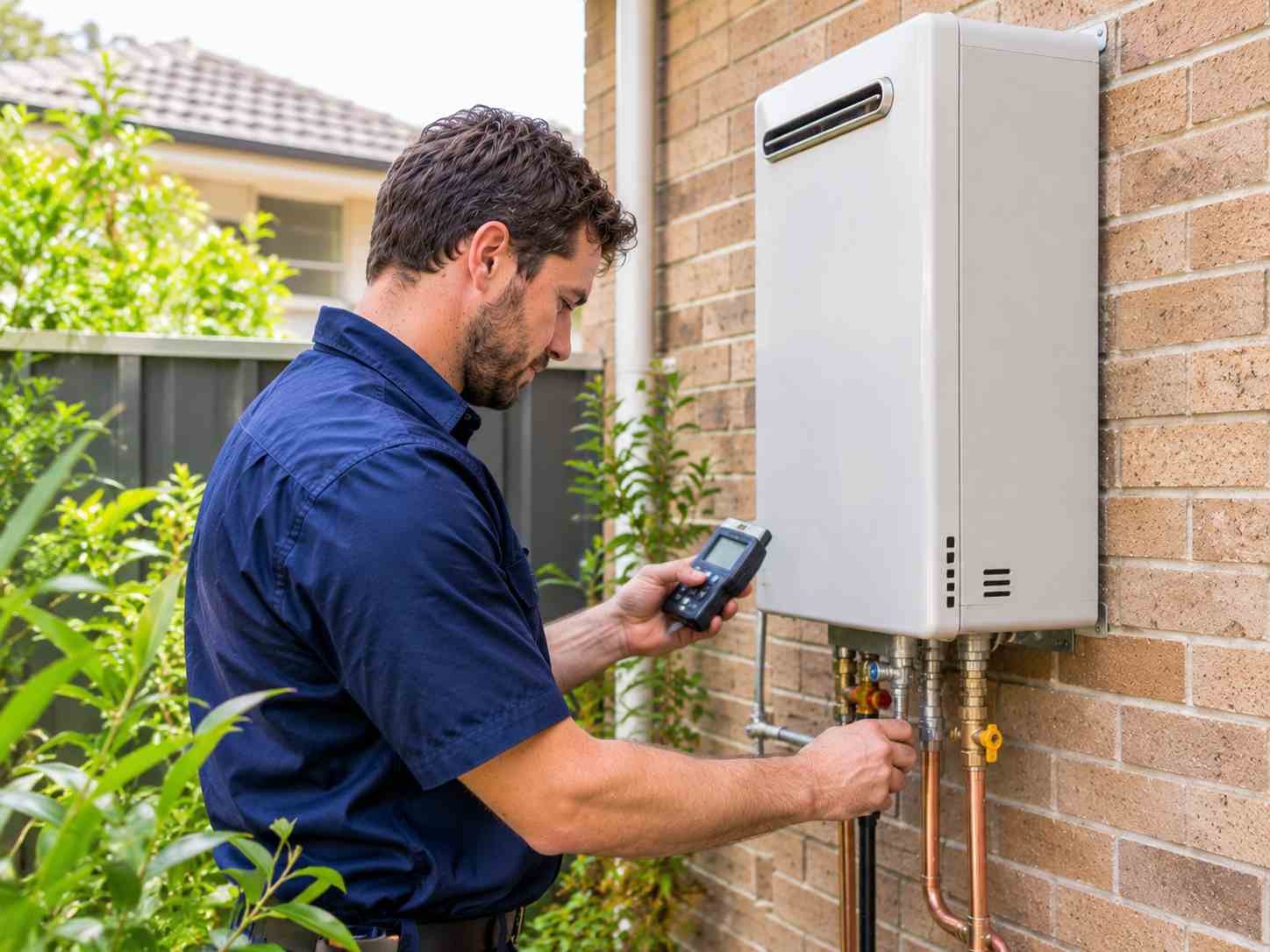
Instead of a big cylinder sitting beside the house, you get a box about the size of a small suitcase mounted on an external wall, or in a recess box built into the wall. Some models are designed for internal installation with a flue that vents to the outside, which suits apartments and townhouses.
These systems have been around in Australia for decades. Rinnai launched the first electronically controlled gas continuous flow system in the Australian market in the early 1990s, and today most major brands offer a range of models. Whether you choose Rinnai instant gas hot water, Rheem, Bosch, Dux or another reputable brand, the basic way they work is the same.
How Does Continuous Flow Gas Hot Water Work?
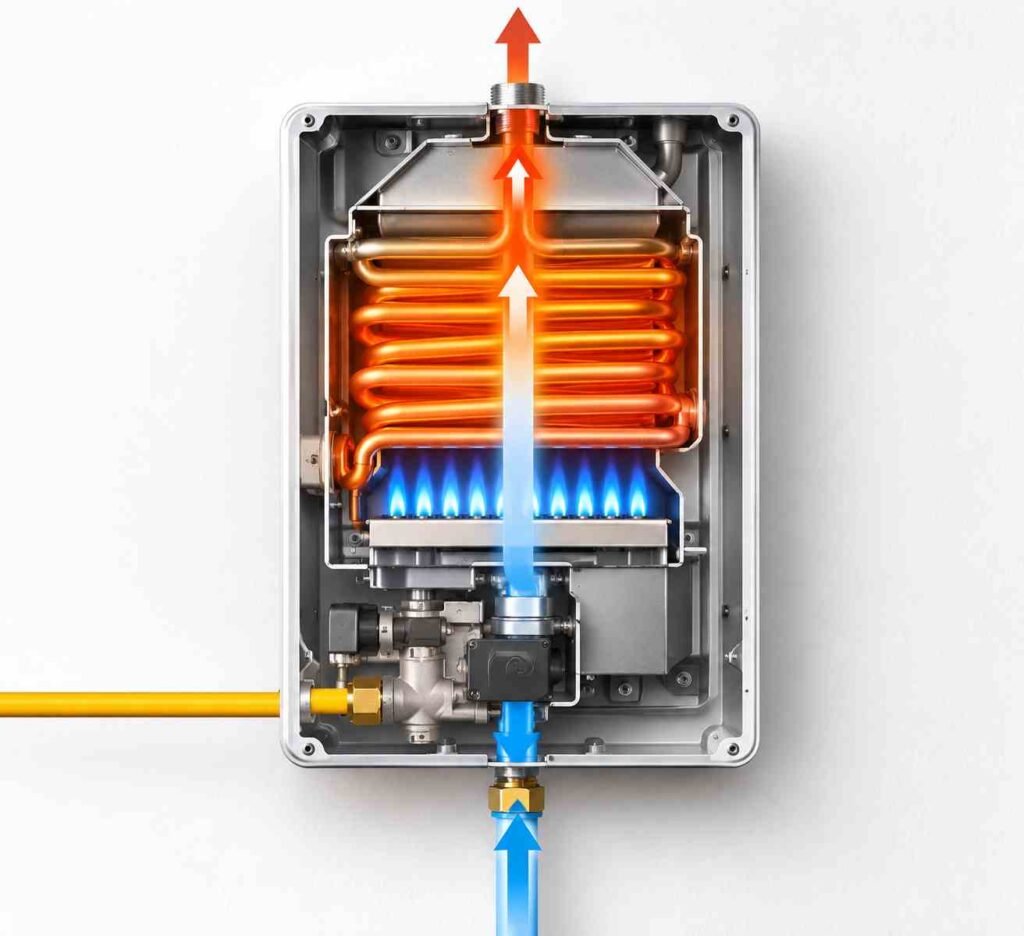
The idea is simple. When you turn on a hot tap, cold water starts flowing into the unit. A flow sensor detects the movement and tells the control board to light the gas burner. The water then passes through a heat exchanger, which is a coil of pipes sitting above the flame, and comes out the other side at the set temperature.
When you turn the tap off, the flow stops, the sensor tells the burner to shut down, and the unit goes back to standby. There’s no tank full of water slowly losing heat overnight, which is why continuous flow tends to use less gas than a storage system.
Modern units are electronically controlled. They constantly adjust the size of the flame to match how much water is flowing and how cold it is coming in. So if someone turns on the kitchen tap while you’re in the shower, the unit ramps up to keep your water at a steady temperature, as long as it’s big enough for both outlets at once.
That last point is important. A continuous flow unit is sized by how many litres per minute it can heat, not by how many litres it holds. If you ask it to supply more hot water than it can heat at one time, the temperature drops. We’ll cover sizing properly further down.
Does It Need Electricity?
Yes. Even though gas does the heating, the electronic ignition, fan and control board need power. Most units plug into a standard outdoor power point. This means that during a blackout you generally won’t have hot water, which surprises a lot of people who are used to old gas storage tanks with pilot lights.
Why Is There a Short Wait for Hot Water?
When you first turn on the tap, the water already sitting in the pipes between the unit and the tap is cold, so it has to run out before the hot water reaches you. That’s the same with any system. On top of that, a continuous flow unit takes a moment to detect the flow and fire up. The further the tap is from the unit, the longer the wait.
Pros and Cons of Instant Gas Hot Water Systems
Every hot water system has strengths and weaknesses. Here’s an honest look at both sides, so you can decide if gas instant hot water systems suit your home.
The Advantages
The biggest win is that you won’t run out of hot water. As long as the unit is sized correctly and the gas supply is adequate, the hot water keeps flowing for back-to-back showers, a full bath, and the dishwasher, all on the same evening. For busy families and households with teenagers, that alone is often the deciding factor.
They’re also efficient. Because there’s no tank losing heat around the clock, you only pay to heat the water you actually use. Sustainability Victoria notes that most instantaneous systems carry a gas energy rating of between 5 and 6 stars, and that an instant system will generally use less energy than a gas storage system with the same rating, because storage tanks have standing heat losses.
Space is another plus. A wall-mounted unit frees up the side passage or laundry corner where a bulky tank used to sit. For terraces, townhouses and narrow Inner West blocks, that can make a real difference.
Many models also let you set the temperature precisely, at the unit or with water controllers, so bathroom water stays at a safe level. And with no large tank to corrode, a well-maintained unit can last a long time.
The Disadvantages
The first downside is the upfront price. An instant gas hot water system price is usually higher than a basic gas or electric storage tank, especially for larger units. You’ll generally make some of that back through lower running costs, but it takes time.
Gas supply can also be a hurdle. Continuous flow units need a lot of gas in a short burst. If your gas pipe is too small, your meter isn’t big enough, or the unit is a long way from the meter, a gasfitter may need to upgrade the pipework. That adds to the installation cost.
There’s also the electricity dependence, so no hot water during a power cut. Some units won’t fire if the water flow is very low, so certain low-flow fittings may not trigger the burner. You’ll also notice the short wait for hot water, and occasionally a brief burst of cooler water if you turn the tap off and on quickly.
Finally, it’s worth thinking about the bigger picture. Some homeowners are moving away from gas altogether and choosing electric heat pumps, especially if they have solar panels. If you’re unsure which way to go, our guide to the best water heater for your home walks through the options.
Here’s a quick summary of the main points.
| Advantages | Disadvantages |
|---|---|
| Never runs out of hot water when sized correctly | Higher upfront price than a basic storage tank |
| Only heats water when you need it | May need gas pipe or meter upgrades |
| Compact, wall-mounted design saves space | Needs electricity, so no hot water in a blackout |
| Precise temperature control | Short wait for hot water to arrive |
| No tank to corrode | Very low flows may not trigger the burner |
Continuous Flow vs Gas Storage: Which Is Better?
Both systems use gas, but they work very differently. A storage tank heats a large volume of water and keeps it hot all day and night. A continuous flow unit heats only what you use.
| Feature | Instant (continuous flow) | Gas storage tank |
|---|---|---|
| Hot water supply | Endless, limited by flow rate | Limited by tank size |
| Energy use | No standing heat loss | Loses heat keeping the tank hot |
| Size | Compact, wall-mounted | Large tank needs floor space |
| Electricity needed | Yes | Many models no |
| Upfront cost | Usually higher | Usually lower |
| Best for | Families, homes with limited space | Homes with weak gas supply or frequent blackouts |
If your family regularly runs out of hot water, or you want to free up space, continuous flow is usually the better choice. If you have a low-capacity gas supply that would be expensive to upgrade, or you need hot water during power outages, a storage tank may still make sense. If you’re also weighing up solar, our comparison of solar vs gas hot water is worth a read.
How to Size an Instant Gas Hot Water System
Sizing is where many people go wrong. Continuous flow units are rated by litres per minute (L/min). That’s the amount of water the unit can heat by a set temperature rise in one minute. The number in the model name, such as 16, 20, 26 or 32, usually refers to this flow rating.
To choose the right size, think about how many hot water outlets your household might use at the same time. A single shower uses a certain amount of hot water per minute, and if someone turns on a second shower, the demand roughly doubles. Add a kitchen tap or washing machine and it climbs again.
As a general guide, a smaller unit around 16 L/min suits a one-bathroom home with one or two people. A unit around 20 L/min suits a one-to-two-bathroom home. A 26 L/min unit is a popular choice for a two-bathroom family home, and larger units around 32 L/min suit bigger homes with three or more bathrooms. Manufacturers note that sizing also depends on your shower heads and climate, so these numbers are a starting point only.
Sydney’s climate helps here. Because incoming water is warmer than in colder parts of Australia, a unit can handle a slightly higher flow before the temperature drops. Water-efficient shower heads also stretch a unit further. A licensed plumber will look at your bathrooms, outlets and gas supply to recommend the right size, rather than guessing from the number of bedrooms.
How to Choose the Best Instant Gas Hot Water System
People often ask us for the best instant gas hot water system. The honest answer is that the best unit is the one sized and installed correctly for your home. That said, a few things are worth comparing.
Energy rating is a good starting point. Gas water heaters carry a star rating, and more stars mean better efficiency. In NSW, the gas star rating of your hot water system is also used in BASIX assessments for new homes and some renovations, so check what your plans require.
Gas type matters too. Make sure you buy a natural gas model if you’re connected to the mains, or an LPG model if you use bottled gas. They aren’t interchangeable without a conversion.
Temperature setting is the next thing to check. Many units come preset at 50°C, which suits bathrooms, while others are preset at 60°C and are often chosen for kitchens or when a tempering device is fitted. More on this in the next section.
Then consider installation type (external wall, recess box or internal with a flue), water controllers for setting temperatures at different outlets, warranty length on the heat exchanger and parts, and local service support. Well-known brands such as Rinnai, Rheem, Bosch and Dux all have service networks in Sydney, which makes repairs and spare parts easier to find. Our hot water systems team can help you compare models without the sales pitch.
Installation Rules in NSW: What You Need to Know
Installing an instant hot water system gas unit involves both plumbing and gasfitting, and both are regulated in NSW. Here’s what that means for you as a homeowner.
A Licensed Gasfitter Must Connect It
Only a licensed gasfitter can connect a gas appliance. The NSW Government’s gasfitter guide explains that only licensed gasfitters can do repairs or renovations involving gas, and that after the work is finished, they must give you a compliance certificate showing their name and licence number. Keep that certificate with your home records.
Before work starts, you can check any tradesperson’s licence using the Service NSW licence check. If you smell gas at any time before or after an installation, turn off the gas at the meter and call our gas leak repair team straight away.
The 50°C Bathroom Rule
To protect people from scalding, the Plumbing Code of Australia limits how hot water can be when it reaches bathroom outlets used for personal hygiene. For most homes, that’s a maximum of 50°C. The NSW version of the Plumbing Code of Australia allows this to be achieved using a temperature-limited water heater with a maximum delivery temperature of 50°C, among other approved devices.
In practice, that means many households choose a 50°C model so no extra valve is needed for the bathrooms. If you choose a 60°C model, your plumber will usually fit a tempering valve or set up approved controls on the bathroom supply. Kitchens and laundries don’t have the same limit, which is why some people prefer hotter water at the sink.
Flue and Location Clearances
Instant gas units release combustion gases through a flue. Gas installation standards set minimum clearances from windows, doors, vents and boundaries, so the unit can’t just go anywhere. Your gasfitter will check that the chosen spot is safe and compliant, and suggest a recess box or alternative location if needed.
The Installation Process Step by Step
Most installations follow a similar process, whether you’re upgrading from a storage tank or replacing an old continuous flow unit.
First, the plumber assesses your home. They’ll check your gas meter and pipe size, the number of outlets, the existing water pressure, the power supply near the unit, and the best mounting spot. This is also when they’ll confirm the unit size and temperature setting.
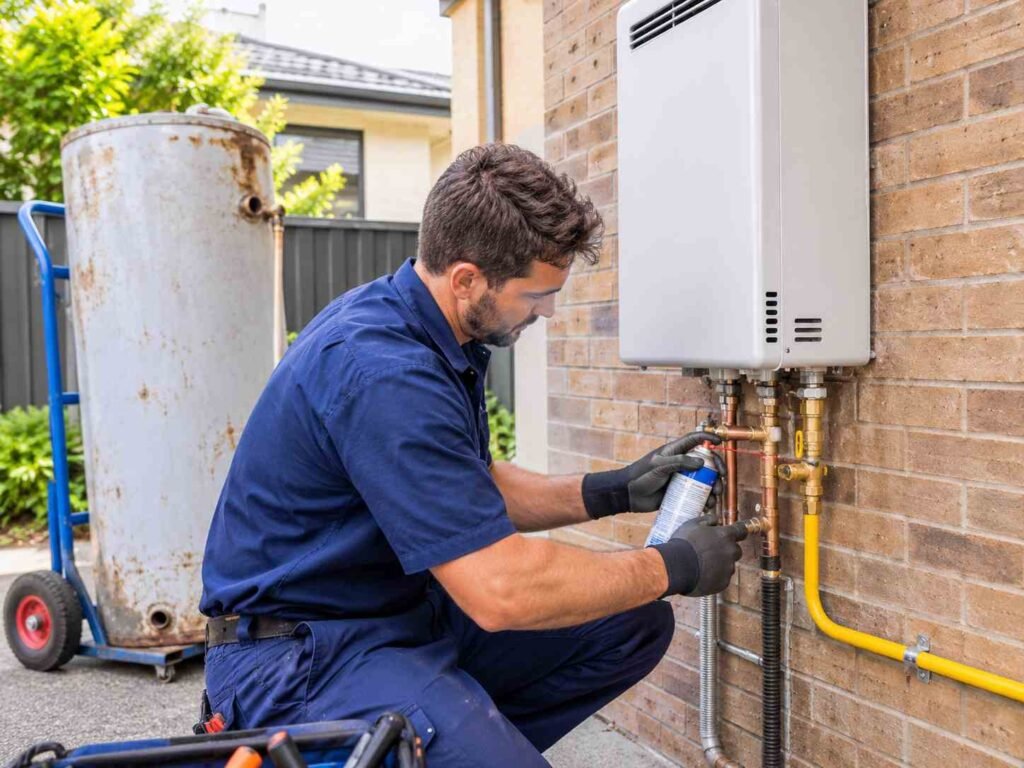
On installation day, the old system is drained and disconnected. If you’re replacing a storage tank, it’s removed from site. The new unit is mounted, then connected to the cold water, hot water and gas lines. Any gas pipe upgrades or new pipework are done at this stage, along with an isolation valve and any required tempering valve.
Once everything is connected, the gasfitter tests for leaks, checks gas pressure, fires up the unit and sets the temperature. Controllers are installed if you’ve chosen them. Finally, you’ll be shown how the unit works and handed your compliance certificate. A simple like-for-like swap is often done in one visit.
Instant Gas Hot Water System Installation Cost
The instant gas hot water system installation cost depends on two things: the price of the unit itself and the work needed to install it. Because every home is different, we don’t think it’s fair to quote a single figure before we’ve seen your setup. What we can do is explain what pushes the cost up or down.
| Cost factor | Why it matters |
|---|---|
| Unit size (L/min) | Larger units for more bathrooms cost more to buy |
| Brand and model | Higher star ratings and premium features usually cost more |
| Temperature setting and controllers | Extra controllers or a tempering valve add parts and labour |
| Like-for-like or changeover | Replacing an existing continuous flow unit is simpler than replacing a storage tank |
| Gas pipe or meter upgrade | Undersized gas pipes may need upgrading to supply enough gas |
| Location and mounting | Recess boxes, internal units with flues, or relocations take more work |
| Power point | A new outdoor power point needs a licensed electrician |
| Old system removal | Draining and disposing of an old tank adds time |
| Urgency | Same-day or after-hours replacements may cost more |
When comparing quotes, check whether the instant gas hot water system cost you’ve been given includes the unit, all fittings, removal of the old system, any tempering valve, testing and the compliance certificate. A cheaper quote that leaves out the gas upgrade or tempering valve can end up costing more.
At Radiant Plumbing Services, we give you an upfront, fixed quote before any work starts, with no call-out fee. You’ll know exactly what’s included before we begin. You can learn more about our team and how we work.
Running Costs and How to Save
Running costs depend on your gas tariff, how much hot water your household uses, the unit’s star rating and the temperature setting. Because there’s no tank to keep hot, you’re only paying for the water you heat, which is the main reason continuous flow is usually cheaper to run than gas storage.
You can bring the bills down further with a few simple habits. Set the temperature no higher than you need. Fit water-efficient shower heads, which reduce how much hot water you use without making showers feel weak. Shorter showers make a big difference too, especially in a busy household. And fix dripping hot taps quickly, because every drip is water you’ve paid to heat. Our article on how to reduce water heater costs has more practical tips.
Maintenance and Common Problems
Continuous flow units are fairly low maintenance, but they’re not set-and-forget. Most manufacturers recommend a regular service by a licensed technician, typically every few years. Check your warranty booklet, because skipping services can affect your cover.
During a service, the technician cleans the inlet water strainer, checks the burner and fan, inspects the flue, tests gas pressure and makes sure the unit is igniting cleanly. Over time, minerals in the water can build up inside the heat exchanger, so that’s checked too.
Some of the common problems we see include no hot water after a power surge or blackout, error codes on the controller, water that fluctuates between hot and cold, and units that won’t fire because the inlet filter is blocked. Many of these have a simple fix, but anything involving gas should always be handled by a licensed professional. If your unit has stopped working, our guide to no hot water problems explains the likely causes, and our list of common water heater problems covers other faults. If you’re left without hot water, our 24/7 emergency plumbing service can help.
Thinking About an Instant Gas Hot Water System in Sydney?
If you’re ready to upgrade, or you just want honest advice on whether continuous flow suits your home, Radiant Plumbing Services can help. Our licensed and insured plumbers work across Greater Sydney. We’ll check your gas supply, size the unit properly, and install it to code, with an upfront fixed quote and no call-out fee.
Call us on (02) 8866 1322 or book a plumber online. You can also browse our full range of plumbing services.
Frequently Asked Questions
How long does an instant gas hot water system last?
Lifespan depends on the brand, water quality, how much the unit is used and how well it’s maintained. With regular servicing, a quality continuous flow unit can last many years. Check the manufacturer’s warranty for a guide to the expected life of the heat exchanger and parts.
Is instant gas hot water cheaper to run than a storage tank?
Usually, yes. Because there’s no tank losing heat, a continuous flow unit with the same star rating will generally use less gas than a gas storage system. Your actual savings depend on your household’s hot water use and your gas tariff.
Can I replace my gas storage tank with a continuous flow unit?
In most homes, yes. The plumber will check that your gas pipe and meter can supply enough gas for the new unit, and that there’s a suitable place to mount it with the right clearances and a power point nearby.
What size instant gas hot water system do I need?
It depends on how many hot water outlets you use at the same time. As a rough guide, around 16 L/min suits one bathroom, around 20 L/min suits one to two bathrooms, around 26 L/min suits two bathrooms, and larger units suit three or more. A plumber can size it properly for your home.