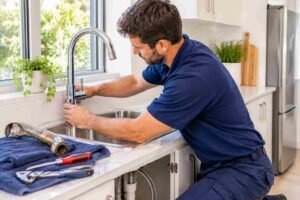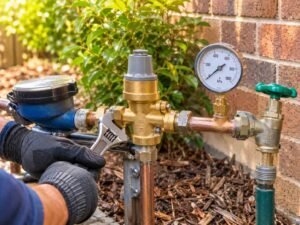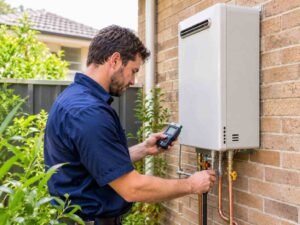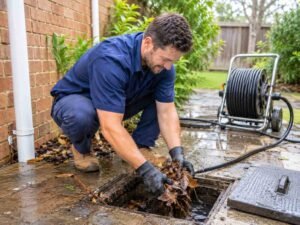
Shower leak repair starts with finding where the water is escaping. The most common causes are cracked grout and failed silicone, a worn or damaged waterproofing membrane under the tiles, leaking taps or pipes inside the wall, and a leaking shower waste. Small grout and silicone leaks can often be resealed. A leaking pipe needs a plumber, and a failed membrane usually means lifting tiles and re-waterproofing. The cost depends on which of these is causing the leak.
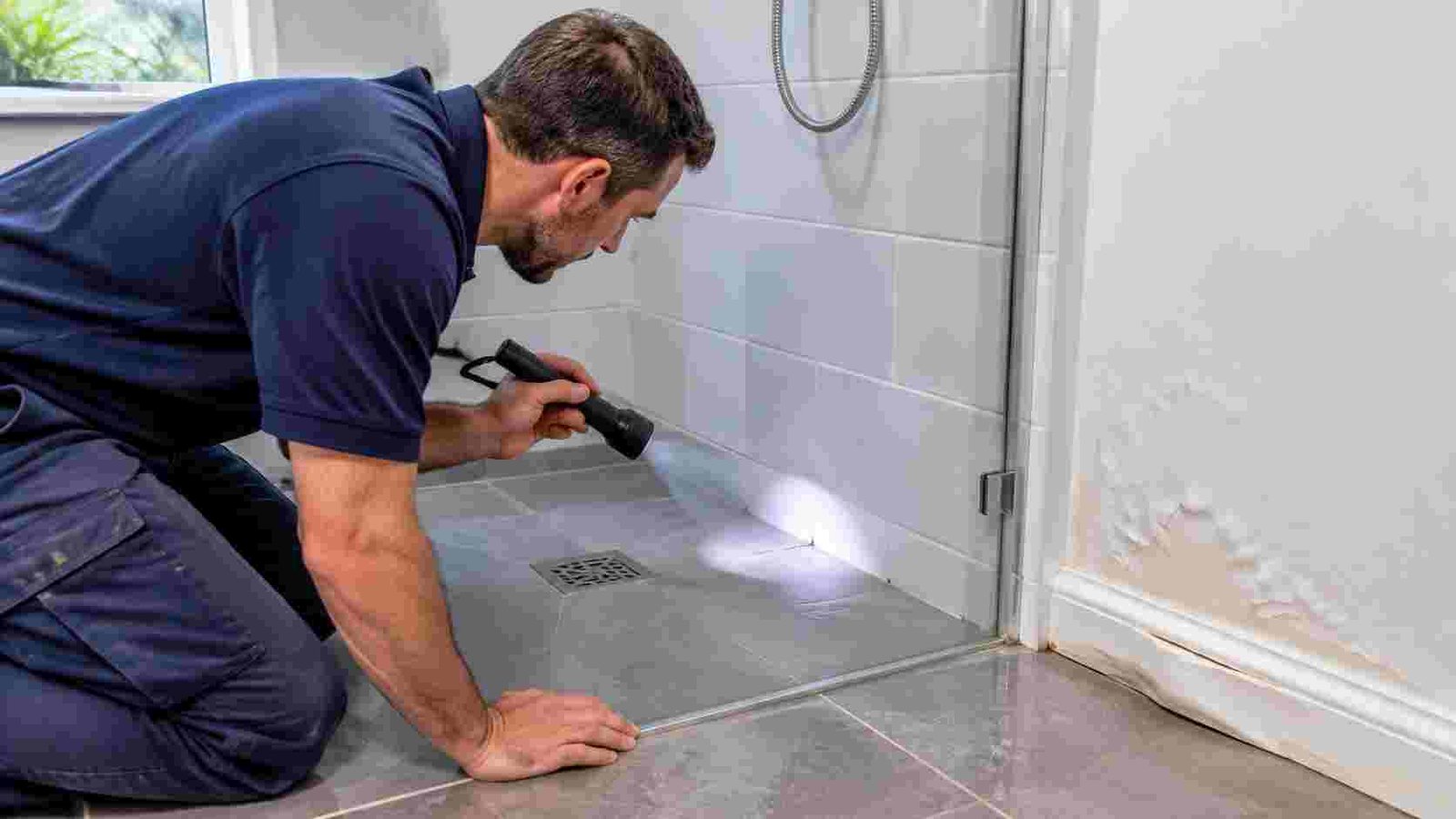
A leaking shower rarely announces itself. There’s no burst pipe or gushing water. Instead, you notice a musty smell in the hallway, a swollen skirting board, paint bubbling on the other side of the wall, or a brown stain on the ceiling below an upstairs bathroom. By the time the signs appear, water has often been escaping for months.
The good news is that most shower leaks can be traced to a specific cause, and not every leaking shower needs a full bathroom renovation. This guide explains how showers leak, the signs to look for, how a shower leak behind tile is found, which fixes work, and what affects the cost.
How a Shower Keeps Water In
To understand a shower leak, it helps to know what’s supposed to stop the water. A tiled shower has several layers:
- Tiles and grout. These are the surface you see. Tiles are mostly waterproof, but grout is porous and lets some water through.
- The waterproofing membrane. Under the tiles is a membrane that’s meant to stop any water that gets past the grout. It runs across the shower floor and up the walls, and directs water to the floor waste.
- The floor waste (drain). A drain fitting with a flange (puddle flange) that the membrane seals into, so water that gets under the tiles still finds its way out.
- Silicone joints. Flexible sealant in corners, along the hob or floor junction, and around the screen, where grout would crack as the building moves.
- The plumbing. Taps or a mixer, pipes and the shower arm, mostly hidden inside the wall.
A shower leak happens when one or more of these layers fails. Often it’s more than one: cracked grout lets water in, and a failed membrane underneath lets it escape.
Signs of a Shower Leak
Look for these signs inside the bathroom and in the rooms around it:
- Musty or damp smell that doesn’t go away
- Mould or black spots on grout or silicone that keep coming back after cleaning
- Cracked, missing or crumbling grout, especially near the floor waste
- Loose, drummy or cracked tiles, or tiles that sound hollow when tapped
- Swollen, soft or stained skirting boards or door frames near the shower
- Bubbling, peeling or flaking paint on the wall behind or beside the shower
- Damp carpet or lifting floorboards in the next room
- Water stains or sagging plaster on the ceiling below an upstairs bathroom
- Water pooling outside the shower screen
- A higher water bill with no change in how you use water
Where the damage shows up and what it usually means
| Where you see damage | Most likely source |
|---|---|
| Wall on the other side of the taps or shower head | Leaking tap body, mixer or pipe inside the wall |
| Skirting or floor just outside the shower | Failed membrane at the shower floor edge, or a leaking hob or screen seal |
| Ceiling below the shower (upstairs bathrooms or units) | Leaking floor waste or failed floor membrane |
| Damage only after someone showers | Water getting through grout, silicone or the membrane |
| Damage or a moving water meter even when nobody showers | Pressurised pipe leak in the wall or floor |
| Water on the bathroom floor outside the screen | Screen seals, silicone, or poor floor falls |
What Causes a Shower Leak?
1. Cracked grout and failed silicone
This is the most common starting point. Grout cracks as the house moves and dries out over the years, and silicone peels, shrinks or goes mouldy. Once there’s a gap, water gets behind the tiles every time someone showers. If the membrane underneath is sound, it may stay contained. If not, the water spreads into walls and floors.
2. A failed or missing waterproofing membrane
The membrane is the real waterproof layer, and when it fails, water escapes into the wall frame, floor and neighbouring rooms. Membranes fail from age, building movement, poor installation, or damage during earlier work. Some older Sydney bathrooms were built with waterproofing methods that don’t meet today’s standards, and some have very little protection at all.
3. Leaking taps, mixers and pipes inside the wall
Shower taps and mixers sit inside the wall, with pipes running to them. A worn tap washer or cartridge, a cracked tap body, or a leaking pipe joint can leak straight into the wall cavity without any water showing in the shower. If the leak is on the pressurised supply side, it leaks all the time, even when the shower isn’t being used. A dripping shower head is a sign of worn washers or cartridges, which our tap repairs cover.
4. A leaking shower waste
The floor waste is where the membrane, the drain pipe and the tiles all meet, so it’s a common leak point. A cracked or poorly sealed waste lets water escape under the floor. A partly blocked waste can also make water sit and back up into the grout. If your shower drains slowly, our team can also clear blocked drains.
5. Loose tiles and poor floor falls
A shower floor should fall towards the waste so water drains away. If the floor is flat or falls the wrong way, water pools in the corners and soaks into the grout. Loose or drummy tiles flex underfoot, which cracks grout and can damage the membrane below.
6. Shower screen and hob seals
Worn seals at the bottom of the screen door, gaps where the screen meets the wall, or failed silicone along the hob let water run onto the bathroom floor. This doesn’t always mean a hidden leak, but water sitting outside the shower can find its way under the floor tiles.
Shower Leak Behind Tile: How the Source Is Found
Finding a shower leak behind tile is mostly detective work. The aim is to separate the possible sources and test them one at a time, instead of ripping out tiles and hoping.
- Meter test for pipe leaks. With every tap and appliance in the house turned off, the water meter is read and checked again after a set time. If it moves while nothing is running, there’s a leak in pressurised pipework, which could be in the shower wall.
- Isolated pipe pressure test. The plumber isolates the shower’s hot and cold pipes and pressure-tests them to confirm or rule out a pipe or tap body leak.
- Waste flood test. The waste is plugged and the shower floor filled with a little water, then watched for drops in level or signs of leaking below. This tests the floor membrane and the waste seal.
- Wall spray test. Each wall is sprayed separately with the shower head while the plumber watches for moisture on the other side.
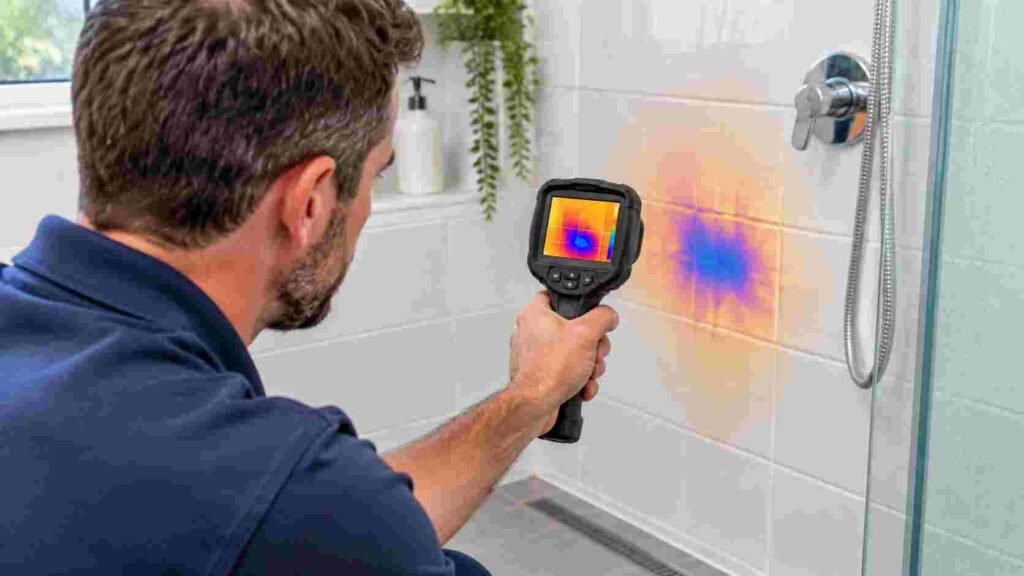
- Moisture meter and thermal imaging. A moisture meter reads dampness in walls and skirtings without damaging them, and a thermal imaging camera shows cooler, damp areas behind tiles and plasterboard.
Our leak detection service uses these methods to find the source before recommending a repair, so you only pay to fix what’s actually leaking.
How to Fix a Shower Leak
The right shower leak fix depends entirely on the cause. Here’s how each one is repaired.
| Cause | Repair | Who does it |
|---|---|---|
| Cracked grout or failed silicone, membrane sound | Remove and replace grout and silicone, then seal | Plumber, tiler or handy homeowner |
| Leaking tap body, mixer or cartridge | Replace washers, cartridge or tap body, often through an access point with minimal tile removal | Licensed plumber |
| Leaking pipe in the wall | Open the wall at the leak, repair the pipe, then make good | Licensed plumber |
| Leaking floor waste | Replace or reseal the waste and the membrane around it | Licensed plumber and licensed waterproofer |
| Failed membrane on part of the shower | Lift tiles in the affected area, re-waterproof and retile | Licensed waterproofer and tiler |
| Failed membrane across the whole shower | Strip the shower back, re-waterproof, retile and reseal | Licensed waterproofer, tiler and plumber |
| Screen or hob leaks | Replace screen seals and silicone, adjust the screen | Plumber, glazier or handy homeowner |
Does a shower leak sealer work?
Shower leak sealers are products that are brushed or injected into grout to make it water-resistant without removing tiles. Some systems also inject sealant behind tiles. They can work well when the leak is coming through porous or hairline-cracked grout and the membrane and plumbing underneath are sound.
They won’t fix:
- A leaking pipe or tap body inside the wall
- A failed or missing membrane
- A cracked or leaking floor waste
- Loose, drummy tiles or a floor that falls the wrong way
That’s why the source should be confirmed before choosing a sealer. Sealing over a pipe leak only hides it while the damage continues inside the wall.
Can I fix a shower leak myself?
You can safely regrout, replace mouldy silicone and clean or adjust shower screen seals. These are good maintenance jobs, and they fix many minor leaks.
Anything beyond that is licensed work in NSW. Plumbing work, including taps, mixers, pipes and the shower waste, must be done by a licensed plumber. The NSW Government also requires a waterproofing licence or certificate for waterproofing work. A shower re-waterproofed without one can cause problems with insurance and when you sell the home.
Why You Shouldn’t Ignore a Leaking Shower
A slow shower leak can do far more damage than its size suggests:
- Rotting timber. Wall studs, bottom plates and floor joists soak up water and slowly rot, and damp timber can attract termites.
- Mould. Damp wall cavities and subfloors are ideal for mould. NSW Health’s mould advice explains how mould can affect health, particularly for people with asthma, allergies or other breathing conditions.
- Damage to other rooms. Flooring, skirting, cabinetry and plaster in neighbouring rooms, and ceilings below upstairs bathrooms.
- Strata disputes. In units, a leaking shower often affects the apartment below, and responsibility can depend on whether the leak is in your fixtures or in common property.
- Insurance. Many home insurance policies treat damage from slow, long-term leaks differently from sudden events. Check your policy and act early.
If a pipe has burst behind the shower or water is coming through a ceiling, turn the water off at the meter. Our guide to leaking pipe repairs explains what to do next.
Shower Leak Repair Cost: What Affects the Price
There’s no single price for shower leak repair, because the work ranges from an hour of regrouting to a full strip-out. These are the main factors:
| Factor | Lower cost | Higher cost |
|---|---|---|
| Cause of the leak | Grout, silicone or screen seals | Failed membrane or leaking floor waste |
| How the leak is found | Obvious source | Testing, moisture mapping or thermal imaging needed |
| Access | Tap or pipe reachable from behind or through an access panel | Tiles must be removed to reach the leak |
| Extent of tile removal | A few tiles around a tap | Whole shower floor and walls |
| Tile matching | Spare tiles available | Tiles discontinued, so more must be replaced |
| Hidden damage | Dry framing and subfloor | Rotted timber, mould or damaged ceilings to repair |
| Trades involved | Plumber only | Plumber, waterproofer and tiler |
The most cost-effective approach is to diagnose the leak properly first. A plumber who confirms the source before quoting can often fix a pipe or tap leak with minimal tile removal, instead of quoting a full rebuild. Ask for a written, itemised quote that explains what’s leaking and why the proposed fix will stop it.
Shower Leak Repairs in Sydney and Penrith
Shower leaks look a little different depending on the type of home:
- Older homes in established suburbs across Western and Southern Sydney often have original bathrooms with ageing grout, old-style taps and waterproofing that doesn’t meet today’s standards. Leaks here are often a mix of worn tap washers and tired membranes.
- Newer homes and estates, including around Penrith, Jordan Springs and Oran Park, can still leak where a membrane was damaged or poorly finished during construction, often around the floor waste or the shower hob.
- Units and townhouses across Sydney add strata to the picture. A leak from your shower can show up as a ceiling stain in the unit below, so it’s worth acting quickly and keeping your strata manager informed.
Whether you need shower leak repairs in Penrith, Parramatta, Liverpool or the Sutherland Shire, the process is the same: find the source, fix the cause, and only remove tiles where you have to.
Choosing a Shower Leak Repair Service Near You
When you search for shower leak repair near me, look for a business that will:
- Diagnose before quoting. A good plumber tests to find the source, rather than quoting a full rebuild after a quick look.
- Explain the cause in plain English, and show you what they found.
- Give a written, itemised quote before starting.
- Use licensed trades. Ask for the plumber’s licence number, and the waterproofer’s if membrane work is needed, and check them on the Service NSW licence check.
- Provide paperwork. Waterproofing work should come with a certificate, and plumbing work with the right compliance documents.
If the shower is also showing its age and you’re tired of patching it, a bathroom renovation can be the better long-term investment.
Shower Leak FAQs
How do I know if my shower is leaking?
Common signs are a musty smell, mould that keeps coming back, cracked grout, loose tiles, swollen skirting boards, bubbling paint on nearby walls and stains on the ceiling below. A water meter that moves when nothing is running points to a pipe leak.
What causes a shower to leak?
The main causes are cracked grout and failed silicone, a failed waterproofing membrane, leaking taps or pipes inside the wall, a leaking floor waste, poor floor falls and worn screen seals.
Can a shower leak be fixed without removing tiles?
Sometimes. Grout and silicone leaks can be fixed by regrouting and resealing, and some tap leaks can be fixed through an access point. A failed membrane or leaking floor waste usually means lifting tiles.
Do shower leak sealers work?
They can work when water is getting through porous or finely cracked grout and the membrane and plumbing are sound. They won’t fix a leaking pipe, a failed membrane or a cracked floor waste.
How is a shower leak behind tile found?
Plumbers use a water meter test, pressure testing of the shower pipes, a flood test of the floor and waste, wall spray tests, moisture meters and thermal imaging to find the source without unnecessary demolition.
How much does shower leak repair cost?
It depends on the cause. Regrouting and resealing costs far less than repairing an in-wall pipe, and re-waterproofing a shower is the biggest job. A plumber should diagnose the leak and give you a fixed, itemised quote first.
Is a leaking shower an emergency?
Most shower leaks are slow and can be booked in. Treat it as urgent if water is coming through a ceiling, the meter is spinning, or you can hear water running in the wall when nothing is on.
Who fixes a leaking shower, a plumber or a waterproofer?
A plumber finds the leak and fixes taps, pipes and wastes. If the membrane has failed, a licensed waterproofer re-waterproofs the shower and a tiler retiles it. Many jobs need both.
Will home insurance cover a leaking shower?
It depends on your policy. Many policies treat damage from slow, long-term leaks differently from sudden events. Check your policy and get the leak fixed as soon as you notice it.
Who is responsible for a leaking shower in a strata unit?
It depends on where the leak is and your strata by-laws. Fixtures inside your unit are often the owner’s responsibility, while some waterproofing and common pipework can be common property. Talk to your strata manager early.
Book Shower Leak Repairs with Radiant Plumbing
A leaking shower only gets more expensive the longer it’s left. The sooner the source is found, the more likely it’s a targeted repair rather than a full rebuild.
Radiant Plumbing Services provides shower leak repairs across Sydney, including Penrith and Western Sydney. We’ll find where the water is coming from, fix leaking taps, mixers, pipes and wastes, and tell you straight if the waterproofing has failed and what’s involved in fixing it. Our shower repair service and leak detection work together, so you only pay to fix what’s actually leaking.
- $0 call-out fee
- Upfront, fixed quotes with no hidden fees
- Licensed and insured plumbers
- Available 24/7 for urgent leaks through our emergency plumbers
If water is coming through a ceiling right now, our water leak emergency guide and urgent leak repairs page explain what to do first.
Call (02) 8866 1322 or book a plumber online. You can also browse our plumbing services.