Quick answer: A tempering valve is a small brass valve, usually fitted near your hot water system, that mixes cold water into hot water so the water reaching your bathroom is no hotter than 50°C. It lets the tank store water at 60°C or more to control bacteria, while protecting your family from scalds. Tempering valves are set and adjusted by a licensed plumber, and many manufacturers recommend checking or replacing them about every five years.
Maybe a plumber mentioned it on a hot water quote. Maybe your shower has started running lukewarm, or swings from hot to cold mid-wash. Either way, the tempering valve is a part most Sydney homeowners have never heard of, until it stops working properly.
This guide explains what a hot water tempering valve does, how it works, where to find it, what goes wrong, how adjustment works, and when it’s time for a replacement.
What Is a Tempering Valve?
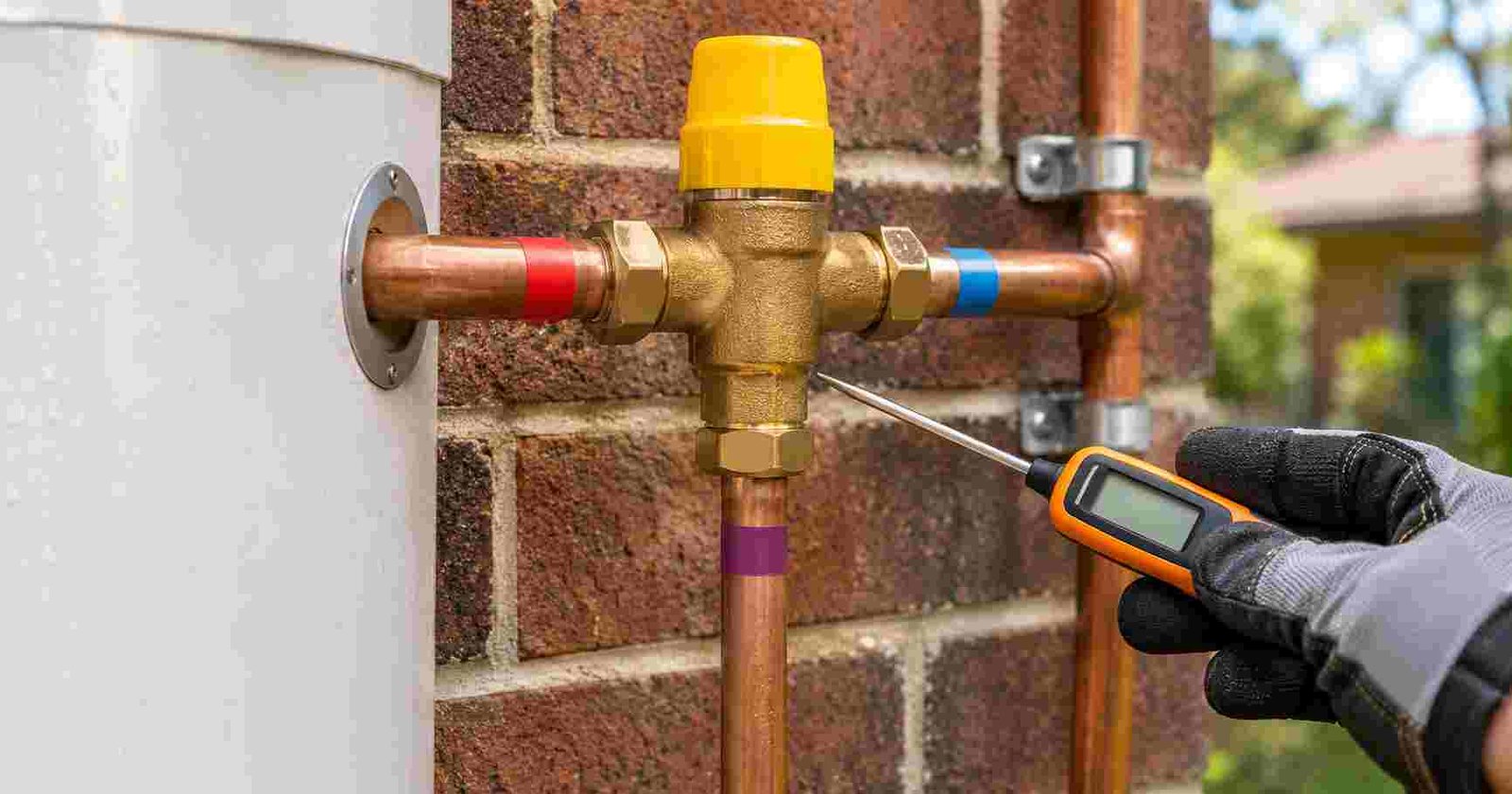
A tempering valve is a temperature control valve fitted to your hot water pipework. It has three connections:
- Hot inlet from your hot water system
- Cold inlet from the mains water supply
- Mixed outlet that sends tempered water to your bathroom taps, shower and bath
Most residential tempering valves have a coloured plastic cap, often yellow or blue depending on the brand and type. Under it is the adjustment spindle that sets the outlet temperature.
Why Hot Water Needs a Tempering Valve: The 60/50 Rule
Your hot water system has two jobs that pull in opposite directions:
- Store hot water at 60°C or more. This controls Legionella and other bacteria that can grow in warm stored water.
- Deliver water to bathrooms at no more than 50°C. This prevents serious scalds.
The tempering valve solves this by keeping the tank hot and the bathroom safe. The difference matters more than most people realise. According to the SA Government’s scald data, hot water at 60°C can cause third-degree burns in five seconds for an adult and one second for a child. At 50°C, it takes about five minutes.
| Water temperature | Time to cause a serious burn |
|---|---|
| 60°C | About 1 second for a child, about 5 seconds for an adult |
| 50°C | About 5 minutes |
The Plumbing Code of Australia’s NSW heated water requirements set a maximum delivery temperature for bathroom outlets. This can be met with a tempering valve, a thermostatic mixing valve, or a water heater built and marked to deliver no more than 50°C. Facilities such as childcare centres, schools, hospitals and aged care have a lower limit of 45°C.
Kitchen sinks and laundry tubs don’t have to be tempered. That’s why many homes have a tempering valve on the bathroom line only, so the kitchen still gets hotter water for washing up.
How Does a Tempering Valve Work?
Inside the valve is a thermostatic element, a small capsule filled with a wax-like material that expands as it heats and shrinks as it cools. The element is connected to a piston that controls how much hot and how much cold water can pass through.
- Hot water from the tank and cold water from the mains enter through separate inlets.
- The water mixes in a chamber around the thermostatic element.
- If the mixed water is too hot, the element expands and moves the piston to let in more cold and less hot.
- If it’s too cool, the element contracts and lets in more hot water.
- The valve keeps adjusting automatically, so the temperature stays close to the set point even when someone else turns on a tap.
Most tempering valves also have small strainers (mesh filters) and non-return valves on the inlets. The strainers catch grit before it reaches the mechanism, and the non-return valves stop hot water flowing back into cold pipes, or cold into hot.
Tempering valves need a reasonable flow and a big enough temperature difference to work well. If the hot water coming from the tank isn’t much hotter than the set temperature, or the flow is very low, the valve can’t mix accurately.
Where Is My Tempering Valve? (Tempering Valve Location)
In most Sydney homes, the tempering valve is in one of these spots:
- At the hot water system, on the hot outlet pipe within a short distance of the tank. This is the most common location for outdoor storage tanks and heat pumps.
- On the bathroom branch line, away from the heater, so only the bathrooms are tempered and the kitchen and laundry get hotter water.
- In a cupboard or meter box near an internal hot water system, or in the roof space on some older or renovated homes.
- Near a solar or heat pump tank, where it’s often a specific high-temperature model.
Look for a brass valve with three pipe connections and a coloured cap, usually labelled H (hot), C (cold) and M or OUT (mixed). If you can’t find one and your bathroom water feels very hot, it’s worth having a plumber check. Some older homes were built before tempering was required.
Do continuous flow systems need a tempering valve?
Not always. Some continuous flow (instantaneous) water heaters can be set to deliver no more than 50°C, and units built and marked as temperature-limited to 50°C can meet the rules without a separate valve. Your plumber will check how your unit is set up and labelled.
Hot Water Tempering Valve Problems and What They Mean
Tempering valves work hard. The thermostatic element moves constantly and the valve sees hot and cold water, grit and mineral scale every day. Here are the most common hot water tempering valve problems:
| What you notice | Likely cause | Fix |
|---|---|---|
| Shower is lukewarm, even with the hot tap fully on | Worn thermostatic element, valve set too low, or tank not heating hot enough | Test the tank and valve; adjust or replace the valve |
| Water temperature swings hot and cold | Sticking element, partly blocked strainer, or unbalanced hot and cold pressure | Clean strainers, check pressure, replace valve if worn |
| Bathroom water is too hot | Valve has failed, been set too high, or bypassed | Urgent check, as this is a scald risk |
| Low hot water pressure in the bathroom only | Blocked strainers inside the tempering valve | Clean or replace strainers or the valve |
| Hot water coming out of cold taps, or cold taps run warm | Failed non-return valve letting water cross over | Replace the non-return valves or the tempering valve |
| Dripping, crusty white buildup or green staining on the valve | Worn seals or failing body | Replace the valve |
| No hot water at all in the bathroom, but hot in the kitchen | Valve has failed closed on the hot side | Replace the valve |
If you have no hot water anywhere in the house, the problem is more likely the hot water system itself. Our guide to no hot water problems walks through those causes, and our list of common water heater problems covers other warning signs.
Why is my shower lukewarm with a tempering valve?
This is one of the most common calls we get. A tempering valve can only blend down to 50°C if the water coming in is hotter than that. If your tank thermostat is set low, a solar tank has had a run of cloudy days, or a heat pump is struggling in cold weather, the hot water coming into the valve may not be hot enough, and the shower ends up lukewarm. Worn thermostatic elements cause the same symptom, so a plumber tests both the tank temperature and the valve before replacing anything.
Can a faulty shower mixer look like a tempering valve problem?
Yes. If only one shower is affected and the bathroom basin is fine, the shower mixer cartridge is the more likely cause. Our shower repair team can check both on the same visit.
How to Adjust a Tempering Valve
Tempering valve adjustment is plumbing work, and in NSW plumbing work must be done by a licensed plumber regardless of how small the job is. There’s also a safety reason: get it wrong and the bathroom water can be hot enough to scald. Here’s how a plumber adjusts and checks a tempering valve, so you know what to expect.
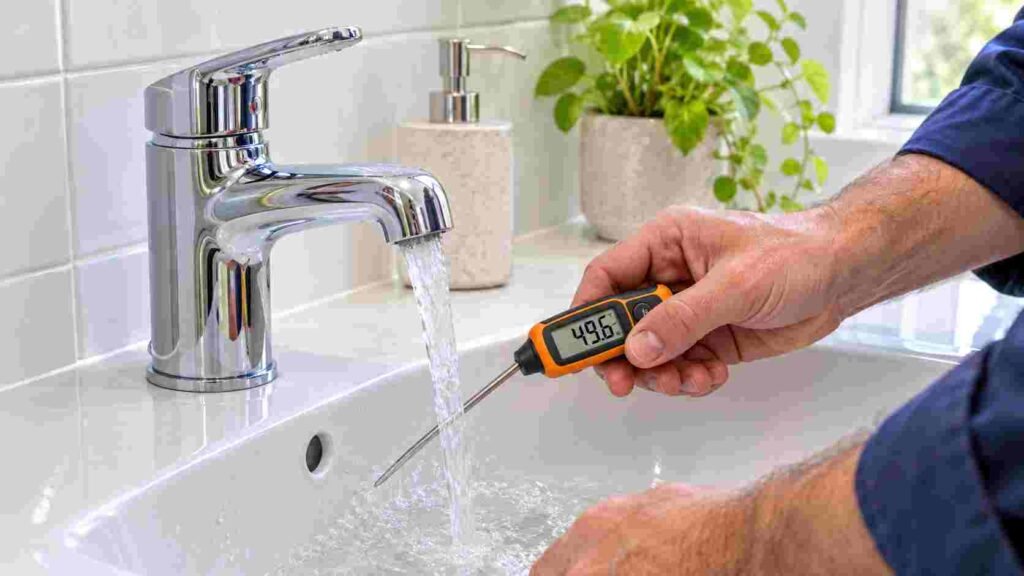
- Measure the starting temperature. The plumber runs the hot water at the bathroom outlet nearest the valve until it’s stable, then measures it with a calibrated thermometer.
- Check the supply. They confirm the tank is storing water at 60°C or more and the hot and cold supply pressures are reasonably balanced. A valve can’t hold a steady temperature if either supply is wrong.
- Remove the cap and unlock the spindle. The protective cap comes off, and the lock nut on the adjustment spindle is loosened.
- Make small adjustments. The spindle is turned a small amount at a time in the direction marked on the valve, with the water running and settling between each change.
- Re-test at the outlet. The temperature is measured again until it’s at or just below the required maximum. In a home, that’s 50°C.
- Lock and cap it. The lock nut is tightened and the cap refitted so it can’t be bumped or tampered with.
- Test the other outlets. Bathroom basins, shower and bath are checked to confirm they’re all within the limit.
If the temperature won’t settle, drifts back after adjustment, or the spindle is seized, the valve needs replacing, not adjusting.
Tempering Valve Installation: When Do You Need One?
You’ll usually need a tempering valve installed when:
- You replace your hot water system. A new or replacement installation needs to meet today’s delivery temperature rules, even if your old system never had a valve.
- You renovate a bathroom and the hot water pipework to it is changed.
- You switch to solar or a heat pump. These systems can store water at high temperatures and need a tempering valve rated for them.
- Your bathroom water is dangerously hot and there’s no working temperature control in place.
Victoria’s plumbing regulator explains why in its hot water safety guide: hot water must be stored above 60°C to prevent bacteria growth, and a tempering valve brings it down to a safer temperature at the tap. It’s a safety device worth having even in older homes that aren’t strictly required to add one, especially with young children or elderly family members in the house.
If you’re replacing your system, our hot water system installation service includes the right tempering valve in the job. Our guide to choosing hot water systems and our solar vs gas comparison can help you pick the system first. Planning a new bathroom? Tempering is part of the plumbing behind the walls in our bathroom renovations.
Solar and heat pump tempering valves
Solar hot water tanks can reach much higher temperatures than electric or gas storage tanks on a hot Sydney summer day. Standard tempering valves are designed for a set range of incoming hot water temperatures, so solar systems need a valve specifically rated for higher inlet temperatures. If a standard valve has been fitted to a solar system, it can wear out early or struggle to control the temperature.
Tempering Valve vs Thermostatic Mixing Valve
| Tempering valve | Thermostatic mixing valve (TMV) | |
|---|---|---|
| Australian Standard | AS 4032.2 | AS 4032.1 |
| Typical use | Homes, one valve serving the bathrooms | Hospitals, aged care, childcare and other high-risk settings |
| Temperature control | Good everyday control, usually set to 50°C in homes | Tighter, more precise control, usually set to 45°C or lower |
| Safety shut-off | Limits temperature | Designed to shut off hot water quickly if the cold supply fails |
| Testing | Periodic checks recommended | Regular testing and maintenance, often required by the facility |
| Cost | Lower | Higher |
For most Sydney homes, a tempering valve is the right choice. A TMV may make sense if someone in the household is at higher risk of scalds, such as a person with reduced sensation or mobility.
When to Replace a Tempering Valve
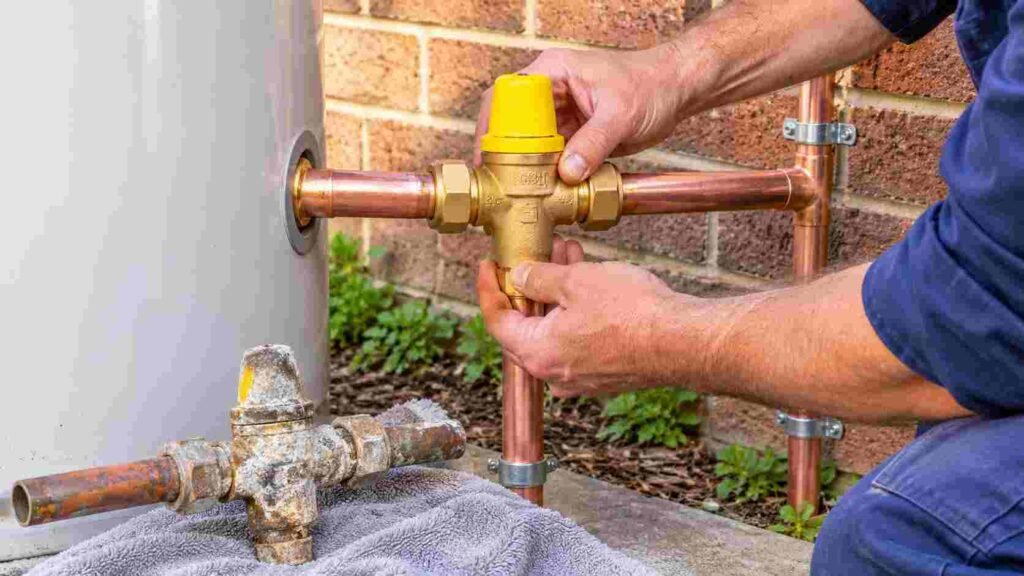
Tempering valves don’t last as long as the hot water system they protect. Many manufacturers recommend having them checked, serviced or replaced about every five years. Check your valve’s instructions, or ask your plumber what’s recommended for your model. Replace sooner if:
- The temperature fluctuates or won’t stay at the set point
- The bathroom water is too hot or noticeably cooler than it used to be
- Adjustment no longer works, or the spindle has seized
- The valve is leaking, corroded or crusted with scale
- Hot water is crossing into the cold taps
- You’re replacing the hot water system anyway, as it makes sense to fit a new valve at the same time
Tempering Valve Replacement Cost: What Affects the Price
We don’t publish a single price because every job is different, but these are the factors that decide what a tempering valve replacement costs:
- The valve itself. Standard valves for electric and gas storage tanks cost less than high-temperature valves for solar and heat pump systems.
- Access. A valve next to an outdoor tank is quicker to replace than one in a ceiling space, cupboard or wall.
- Pipework condition. Corroded fittings, old isolation valves or pipework that doesn’t meet current requirements may need updating at the same time.
- Whether it’s part of a bigger job. Replacing the valve during a hot water system replacement or bathroom renovation is usually the most cost-effective approach.
- Commissioning. A proper replacement includes setting and testing the temperature at the outlets, not just swapping the part.
A licensed plumber should give you a fixed quote before starting. While we’re there, it’s worth checking that your tank thermostat is set correctly. Running a storage tank hotter than it needs to be wastes energy, and our tips to cut hot water bills cover what else you can do.
Tempering Valve FAQs
What is a tempering valve?
A tempering valve is a temperature control valve that mixes cold water into hot water so water delivered to bathrooms is no hotter than 50°C, while the hot water system keeps storing water at 60°C or more.
How does a tempering valve work?
A thermostatic element inside the valve expands and contracts with temperature. It moves a piston that changes the mix of hot and cold water, keeping the outlet temperature close to the set point.
Where is the tempering valve located?
Usually on the hot water pipe near your hot water system, or on the pipe that feeds the bathrooms. Look for a brass valve with three connections and a coloured cap.
Can I adjust my tempering valve myself?
In NSW, plumbing work must be done by a licensed plumber regardless of size. Adjusting a tempering valve also carries a scald risk if it’s set too high, so it’s a job for a plumber with a calibrated thermometer.
Why is my hot water lukewarm after a tempering valve was fitted?
The valve may be set too low or worn, or the hot water coming from the tank isn’t hot enough. This is common with low tank thermostat settings, solar tanks in cloudy weather or heat pumps in cold weather.
How often should a tempering valve be replaced?
Many manufacturers recommend checking or replacing it about every five years. Replace it sooner if the temperature fluctuates, the valve leaks or adjustment no longer works.
Does a tempering valve reduce hot water pressure?
A working valve causes only a small pressure drop. If bathroom hot water pressure drops noticeably, the valve’s strainers may be blocked with grit and need cleaning or replacing.
Do I need a tempering valve on my kitchen tap?
No. The 50°C limit applies to bathroom outlets such as showers, baths and basins. Kitchen and laundry taps can receive hotter water, which is better for washing up and cleaning.
Do continuous flow hot water systems need a tempering valve?
Not always. Some continuous flow units can be set or built to deliver no more than 50°C, which meets the rules without a separate valve. A plumber can check your unit.
What’s the difference between a tempering valve and a thermostatic mixing valve?
Both limit hot water temperature. Thermostatic mixing valves give tighter control and shut off faster if the cold supply fails, so they’re used in hospitals, aged care and childcare. Tempering valves are standard in homes.
Book a Tempering Valve Check with Radiant Plumbing
If your shower is lukewarm, the temperature keeps jumping, or you’re not sure your bathroom water is safe for the kids, a quick check can tell you whether the valve needs adjusting, servicing or replacing.
Radiant Plumbing Services installs, adjusts and replaces tempering valves across Greater Sydney, for electric, gas, solar and heat pump systems. Our licensed plumbers test the temperature at your outlets, set it correctly and give you a fixed, upfront quote before any work starts.
- $0 call-out fee
- Upfront, fixed quotes with no hidden fees
- Licensed and insured plumbers
- Available 24/7 for urgent hot water problems through our emergency plumbing service
Call (02) 8866 1322 or book a plumber online. You can also see our full range of plumbing services across Sydney, including tap repairs and installs.