Sydney homes feature gorgeous, leafy landscapes that unfortunately hide a subterranean crisis. Mature trees send out thirsty root systems searching for moisture, and your underground sewer pipe acts as an absolute magnet for these invasive fibers. The joints of a standard sewage pipe naturally leak microscopic amounts of nutrient rich condensation and vapor, drawing roots directly toward the structural vulnerability. Once a tiny root hair breaches a tiny crack in the sewerage pipe, it rapidly multiplies inside the confined space, trapping debris and causing catastrophic blockages. Property owners frequently ignore early warning signs until raw waste water pipe backups flood their backyards or bathrooms, leading to extensive property damage and costly excavation work. Understanding how these roots infiltrate your infrastructure is the first step toward safeguarding your home from disruptive plumbing emergencies.
Beyond the immediate mess of a blocked line, root intrusion creates severe structural consequences for your entire plumbing network. As roots expand inside a PVC sewer pipe or older earthenware system, they exert immense pressure that can crack, crush, or completely rupture the pipe walls. This structural failure allows soil to wash into the line, creating underground voids and potential sinkholes beneath your lawn or driveway. Local plumbers often find that untreated root damage escalates from a simple slow drain into a total collapse requiring emergency replacement. By investing in proactive sewer inspections, homeowners can catch these hidden invasions early, saving thousands of dollars in emergency repairs and protecting the long term value of their Sydney property.
Tree Roots and Sewer Pipe Damage in Sydney
Sydney suburban soils provide an ideal environment for aggressive tree species like figs and gum trees to thrive. These trees produce massive root networks that travel vast distances beneath the surface in search of stable hydration sources. When a sewer pipe develops tiny micro cracks from ground shifting or age, escaping moisture creates a localized oasis underground. Roots home in on this moisture gradient, wrapping around the exterior of the sewage pipe and exerting mechanical pressure until they force their way inside.
Once inside the wastewater pipe, roots feed on the abundant nutrients and moisture, growing at an exponential rate. A single hair thin root can transform into a dense, fibrous mat that fills the entire diameter of a sewerage pipe within months. This mass acts like a net, catching toilet paper, grease, and solid waste until the flow is completely choked off. Sydney homeowners face recurring blockages and messy overflows unless they address the root cause with specialized cutting tools and structural relining.
How Tree Roots Enter a Sewage Pipe
Many people assume tree roots break through solid pipe walls like a drill, but they actually exploit existing structural flaws. Every joint, seal, and minor hairline crack in a sewer piping system leaks a tiny trace of water vapor into the surrounding soil. Roots possess an incredible biological sensitivity to moisture and nutrients, directing their growth tips straight toward these vulnerable connection points.
When a root tip reaches a joint, it flattens itself and pushes through gaps as narrow as a strand of hair. Once inside the sewage pipes, the root encounters an endless supply of water and fertilizer, causing it to branch out aggressively. The constant pressure from this internal growth widens the original crack, allowing more roots to enter and creating a compounding cycle of destruction for the sewerage pipes.
Common Signs of Root Damage in Sewer Piping
Recognizing the early indicators of root intrusion can save you from a catastrophic plumbing failure on your property. One of the most common red flags is persistent gurgling sounds coming from your toilet bowls or floor drains when other fixtures empty. You might also notice that multiple drains throughout your home are sluggish at the same time, rather than a single blocked sink or shower.
Unpleasant sewage odors lingering around your yard or near the foundation often point to a compromised waste water pipe leaking gas and liquid underground. In severe cases, you will spot patches of unusually lush, green grass growing over the path of the sewer line, fed by the escaping wastewater. Catching these warning signs early gives you time to book a professional inspection before the pipe collapses completely.
Why Tree Roots Affect Waste Water Pipe Flow
The primary function of a waste water pipe is to transport domestic effluent smoothly away from your home using gravity. When tree roots invade this pathway, they disrupt the hydraulic flow by creating a physical obstruction right in the middle of the conduit. Water hitting this dense root ball slows down drastically, failing to carry solid waste past the blockage point.
As effluent backs up behind the root mass, suspended solids drop out of the liquid and accumulate against the fibers. This creates a dense sludge that hardens over time, turning a minor root intrusion into a solid plug. The resulting backpressure can force raw sewage back up through your floor wastes and inspection chambers, creating a hazardous health risk inside your living space.
Sewer Pipe Inspections for Tree Root Problems
How Sewer Inspections Find Tree Root Damage
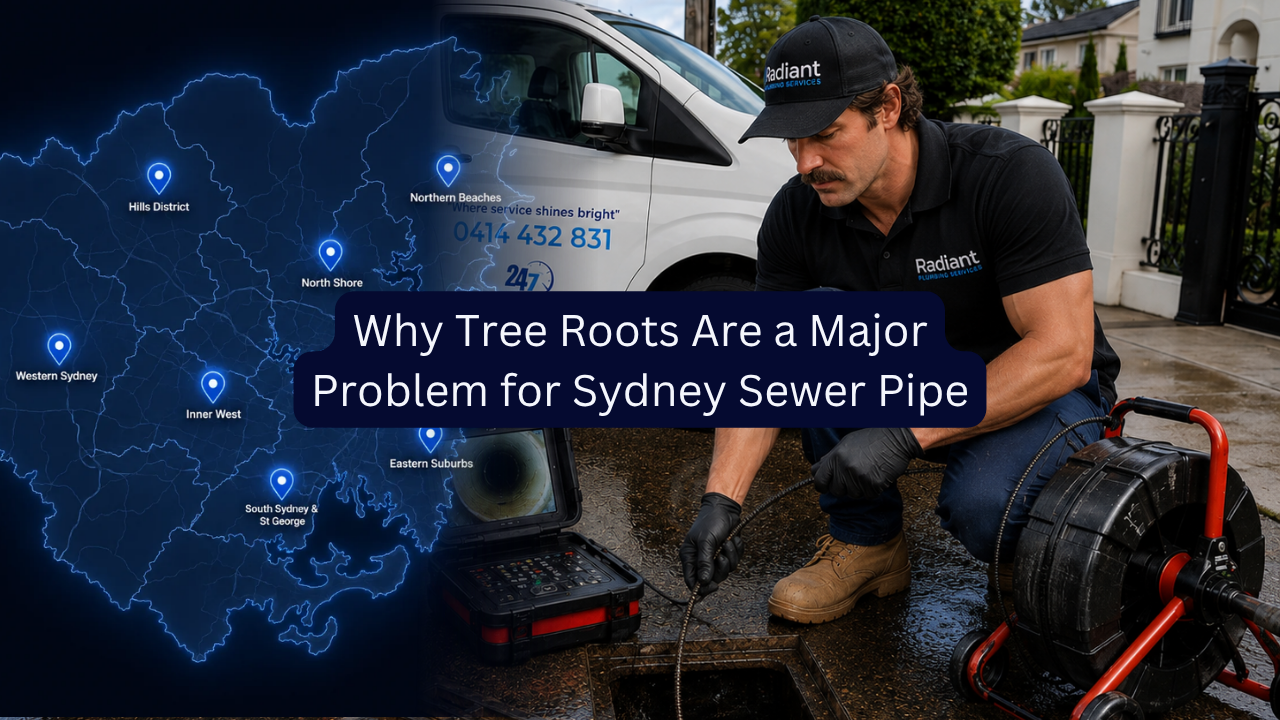
Modern plumbing technology allows technicians to pinpoint tree root damage without tearing up your pristine lawn or expensive driveway. A comprehensive sewer inspection utilizes specialized high resolution cameras mounted on flexible push rods to navigate the entire length of your underground network. As the camera travels through the line, it transmits a live feed to a monitor, revealing exact locations where roots have breached the pipe walls.
Plumbers can identify the precise depth and surface location of the damage using built-in sonde transmitters inside the camera head. This eliminates guesswork, ensuring that any targeted repairs or root-cutting procedures happen exactly where the problem originates. Homeowners receive a clear, undeniable visual record of their pipe interior, showing the exact extent of the root infestation.
What Happens During a Sewer Inspection
The sewer inspection process is straightforward, non-invasive, and designed to minimize disruption to your daily routine. A licensed technician begins by locating an accessible entry point, such as an external inspection chamber or overflow relief gully. They feed the waterproof camera reel into the conduit, carefully pushing it through bends and junctions while recording the internal condition.
Throughout the journey, the technician checks for root intrusion, offset joints, grease buildup, and structural cracks along the run. They can measure the distance traveled by the camera, giving them exact measurements of where repairs are needed underneath your property. Once the survey is complete, they review the footage with you and outline the most effective remediation strategy.
Benefits of a Sewer Video Inspection
Investing in a professional sewer video inspection provides absolute clarity that traditional diagnostic methods simply cannot match. Instead of relying on guesswork or recurring trial and error plunging, you get a definitive diagnosis of your plumbing health. This visual proof prevents unnecessary excavations, ensuring that contractors only dig or reline the precise section of pipe that is damaged.
Furthermore, a video inspection catches secondary issues like pipe sagging, bellies, or structural degradation before they cause major property damage. It acts as a vital health check for older Sydney homes, giving buyers and sellers complete peace of mind during real estate transactions. Ultimately, this proactive approach saves you significant time, stress, and financial burden.
When to Book a Sewer Drain Inspection
Knowing when to schedule a professional sewer drain inspection can protect your home from sudden, messy plumbing disasters. You should book an inspection immediately if you experience chronic, unexplained slow drains that do not improve with standard plunging or DIY chemical cleaners. Recurring blockages that return weeks after being cleared are a classic symptom of persistent tree root intrusion.
It is also wise to arrange a survey before purchasing an older established property in Sydney’s leafy suburbs to uncover hidden pipe defects. If you notice strange odors, sinkholes forming in your yard, or large mature trees planted close to your sewer lines, an inspection is essential. Regular checks every few years act as cheap insurance against unexpected structural failures.
Sewer Access Point and Inspection Chamber Guide
How to Find My Sewer Access Point in the Yard
Locating your property sewer access point is essential for routine maintenance, clearing blockages, and conducting thorough camera surveys. In many Sydney properties, this access point sits near the boundary line, close to the kitchen or bathroom plumbing fixtures. Look around your garden beds, pathways, or lawn for a small circular or square plastic or concrete lid flush with the ground.
If the cap is buried under mulch, soil, or landscaping, plumbers use electronic pipe locators to trace the line from the main Sydney Water connection back toward your home. Once uncovered, this access point allows technicians to insert cleaning equipment and inspection cameras directly into your system without entering your house. Knowing where this access point is located saves valuable time during an urgent plumbing emergency.
What Are Inspection Chambers for a Sewerage Pipe
Inspection chambers are heavy-duty access pits installed along your drainage network to facilitate easy maintenance and monitoring. These vertical shafts connect the underground piping system to the surface, allowing plumbers to drop equipment straight down into the main runs. They are typically constructed from durable PVC or concrete and feature a secure, gas-tight cover to prevent odors from escaping into your yard.
For a large sewerage pipe network, these chambers provide crucial junction points where multiple lines converge before leaving the property. They make high-pressure water jetting and mechanical root cutting much more efficient by giving technicians straight-line access to trouble spots. Modern building codes require proper inspection infrastructure so that maintenance crews can service your system safely and effectively.
Sewer Inspection Point and Sewer Rodding Point Explained
A sewer inspection point is a dedicated opening designed specifically for inserting diagnostic cameras and cleaning tools into your drainage system. Similarly, a sewer rodding point provides direct access for flexible rods and cutting attachments to clear stubborn blockages and root mats. These access fixtures are critical components that keep your plumbing serviceable over decades of use.
Without these dedicated points, plumbers would have to dismantle household fixtures or dig up floors just to access the blocked lines. They ensure that routine maintenance like root removal can be performed quickly and cleanly from the outside of your home. Ensuring your rodding and inspection points remain visible and unblocked is a key responsibility for every homeowner.
Sewer Inspection Chamber Size and Sewerage Pipe Size
Sewer inspection chambers and pipes come in standardized sizes to handle varying volumes of domestic wastewater efficiently. Residential properties typically feature a standard PVC sewer pipe measuring 100mm in diameter, which connects to larger municipal mains. Inspection chambers must be appropriately sized, often ranging from 450mm to 600mm in diameter, to allow safe working space for tools and cameras.
Using the correct sewerage pipe size ensures optimal flow velocities, preventing solid waste from settling and accumulating inside the conduit. If a pipe is too large for the volume of water, flow slows down; if it is too small, it clogs easily. Professional plumbers understand these engineering standards and ensure that any replacement sections match your property layout perfectly.
Sewer Inspection Methods for Sydney Sewerage Pipes
Sewer Scope Inspection for Underground Sewer Inspection
A sewer scope inspection is the industry standard diagnostic procedure used to evaluate the internal condition of underground drainage networks. Technicians insert a specialized fiber-optic camera into the line to examine every millimeter of the pipe wall from the inside. This method reveals hidden root intrusion, structural cracks, root masses, and displaced joints that are completely invisible from the surface.
Performing an underground sewer inspection via scope saves homeowners from speculative digging across their entire property. The high-definition footage identifies the exact coordinates and depth of any structural flaws, allowing for pinpoint accuracy during repairs. It is an indispensable tool for maintaining the health of older plumbing systems across Sydney.
Sewer Main Inspection for Root Intrusion
A sewer main inspection focuses on the primary drainage arteries that carry wastewater away from your property toward the street connection. Because these main lines run deep underground and often sit beneath mature street trees or large garden beds, they are prime targets for aggressive root intrusion. Left unchecked, tree roots can fill the entire diameter of a main line, causing widespread backups for your household.
Plumbers use specialized crawler cameras or high-reach push systems to inspect these heavy-duty lines over long distances. Detecting root intrusion early in the main line prevents catastrophic blockages that can affect multiple household fixtures simultaneously. Regular surveillance ensures that minor root breaches are treated before they escalate into major structural failures.
Sewer Scope Inspections for PVC Sewer Pipe
Even though modern PVC sewer pipe material is smoother and more resilient than older earthenware, it is still vulnerable to root intrusion at the joints. Tree roots cannot pierce solid PVC walls, but they readily exploit the rubber ring seals at connection points if the joints shift or settle over time. Sewer scope inspections are vital for checking these connection hubs for tiny root intrusions.
During the inspection, technicians carefully navigate the smooth PVC runs to check for alignment issues, ground movement stress, or minor seal gaps. Catching these early vulnerabilities in plastic piping prevents roots from establishing a permanent foothold inside your system. It ensures that your modern plumbing infrastructure continues to perform at peak efficiency for decades.
Sewer Survey and Sewer Check Before Repairs
A thorough sewer survey and preliminary sewer check must always precede any major plumbing repair or pipe relining project. This diagnostic step ensures that contractors understand the complete layout of your system, including the exact location of all branches, bends, and root masses. Skipping this survey can lead to misdiagnosed problems and wasted money on ineffective repairs.
During the check, technicians map out the pipe gradient and identify any secondary damage that might complicate the primary repair job. This comprehensive overview allows the plumbing team to formulate an accurate, cost-effective action plan tailored to your specific situation. You get a transparent breakdown of what needs fixing before a single tool touches your yard.
Sewer Inspection Cost and Repair Planning
Sewer Inspection Cost for Tree Root Problems
Investing in a professional sewer inspection is a cost-effective measure that typically ranges from a few hundred dollars depending on the complexity of the job. While some homeowners hesitate at the initial inspection fee, compare it to the thousands of dollars required for emergency excavations and unverified guesswork. Knowing the exact condition of your lines prevents you from paying for unnecessary repairs or missing hidden structural damage.
Transparent pricing from licensed Sydney plumbers ensures you understand what the survey includes, such as video footage, digital mapping, and written reports. This small upfront investment provides complete clarity, allowing you to budget accurately for any required root removal or pipe relining work. It is a minor expense relative to the massive cost of repairing a collapsed sewer main.
What to Expect in a Sewer Inspection Report
A professional sewer inspection report provides a comprehensive, documented evaluation of your underground plumbing network. It includes detailed written observations, high-resolution photographs of problem areas, and digital video recordings of the entire pipe run. You will see clear evidence of tree root intrusion, offset joints, cracks, or blockages highlighted by the technician.
The report also outlines precise measurements, depths, and surface locations for any structural defects found during the survey. This documentation is invaluable when dealing with insurance claims, property sales, or obtaining accurate quotes from plumbing contractors. It gives you a legally sound, factual record of your drainage system’s exact condition.
How Sewer Inspections Help Plan Sewerage Pipe Repairs
Detailed sewer inspections take the guesswork out of repair planning, allowing contractors to target damaged sections with surgical precision. Instead of excavating your entire yard to find a root intrusion, plumbers use inspection data to pinpoint the exact metre requiring attention. This targeted approach significantly reduces labor hours, restoration costs, and damage to your landscaping.
Whether the recommended fix involves mechanical root cutting, chemical root foaming, or modern trenchless pipe relining, the inspection report dictates the method. Plumbers can map out the most efficient repair pathway, ensuring minimal disruption to your daily life. Careful planning based on visual evidence guarantees a long-lasting, reliable plumbing fix.
When Sewage Pipes Need Cleaning or Replacement
Determining whether your sewage pipes require routine cleaning or a complete structural replacement depends on the severity of the root damage. If roots have only recently entered the joints and the pipe structure remains sound, high-pressure water jetting and root cutting will restore full flow. Regular maintenance cleans can keep these lines clear for extended periods.
However, if tree roots have severely cracked, crushed, or offset the pipe walls to the point of structural failure, replacement or relining is mandatory. A damaged pipe will continue to invite roots back into the system no matter how many times you clear them. Professional inspections provide the definitive data needed to make this critical maintenance decision.
Preventing Tree Root Damage to Your Sewer Pipe
How to Protect a Sewer Pipe From Tree Roots
Protecting your underground plumbing from aggressive root intrusion requires a combination of smart landscaping choices and physical barriers. Avoid planting large, thirsty trees like figs, poplars, or eucalyptus within close proximity to your underground sewer lines. Opt for smaller, non-invasive plant species with compact root systems if you are landscaping near your drainage easements.
For existing trees near your pipes, consider installing root-barrier membranes vertically in the soil to divert root growth away from the plumbing lines. You can also apply approved chemical root deterrents around your pipe trenches during installation to discourage roots from approaching the joints. Proactive landscaping habits drastically reduce the likelihood of future root blockages.
Maintaining a Sewer Access Point for Regular Sewer Inspections
Keeping your sewer access points clear and easily reachable is vital for ongoing property maintenance and preventative health checks. Never build permanent structures, pour concrete slabs, or plant large shrubs directly over your inspection chambers or rodding points. Ensure that lids are clearly visible, securely sealed, and easy to open when a plumber needs to conduct a routine survey.
Routine access allows technicians to flush lines, remove minor root hairs, and inspect pipe integrity before small issues escalate into emergencies. Landlords and homeowners who maintain clear access points enjoy faster response times and lower labor costs during routine service visits. Simple upkeep of these access areas protects your entire drainage network.
How Sewer Inspection Companies Prevent Future Root Blockages
Professional sewer inspection companies employ advanced preventative strategies to stop tree roots from returning after a clearance. Following a high-pressure water jet clean, technicians often apply EPA-approved chemical root foaming treatments that coat the interior pipe walls. This foam kills remaining root tips inside the joints and creates a long-lasting barrier that inhibits future root growth.
In cases of chronic intrusion, companies recommend trenchless structural pipe relining, which creates a seamless, root-proof epoxy sleeve inside the old pipe. This modern lining seals off all joints and cracks permanently, denying roots any access to moisture or entry points. Professional prevention transforms a recurring plumbing headache into a permanent, maintenance-free solution.
Why Regular Sewer Pipe Inspection Matters in Sydney
Sydney’s unpredictable weather patterns, aging suburban infrastructure, and mature urban canopy make regular sewer pipe inspections an absolute necessity for property owners. Proactive checks catch minor root intrusions and ground settlement issues before they trigger catastrophic blockages or sewage overflows. Staying ahead of potential problems protects your family’s health, your property value, and your hard-earned savings.
Waiting for a total plumbing failure leads to emergency callout fees, property destruction, and stressful cleanup operations. By scheduling routine camera surveys every few years, you ensure your drainage network remains clear, robust, and fully operational. Regular inspections are the ultimate safeguard for your home’s hidden plumbing network.
Frequently Asked Questions:
Why do tree roots damage Sydney sewer pipes?
Tree roots actively seek out moisture and nutrients escaping from microscopic cracks in sewer pipe joints, infiltrating the line and causing severe blockages.
How do plumbers find tree root damage underground?
Plumbers use specialized high-resolution cameras on push rods to perform a sewer scope inspection, revealing exact root locations without digging up your yard.
What are the common signs of root intrusion in drains?
Common warning signs include persistent gurgling noises in toilets, sluggish household drains, unpleasant sewage odors, and unusually lush patches of grass outdoors.
How can homeowners prevent tree roots from entering sewer lines?
Homeowners can prevent root damage by avoiding large trees near pipes, maintaining clear access points, and utilizing professional root foaming or pipe relining.
Are sewer pipe inspections expensive in Sydney?
Sewer inspections are a cost-effective diagnostic tool that costs a few hundred dollars, saving thousands by preventing major excavations and unneeded repairs.
Conclusion
Tree root intrusion is a formidable threat to any Sydney sewer pipe, capable of turning a minor joint crack into a catastrophic plumbing emergency. Ignoring the early warning signs of slow drains, gurgling toilets, and unpleasant odors only invites structural collapse and expensive property damage. By investing in professional sewer inspections, utilizing modern access points, and implementing preventative maintenance, homeowners can protect their infrastructure from aggressive root growth. Taking a proactive approach ensures your drainage system remains clear, functional, and reliable for decades to come.
Key Takeaway: Regular sewer video inspections catch tree root damage before it causes catastrophic pipe failures, saving Sydney homeowners thousands of dollars in emergency repairs.
Built on Trust. Powered by Quality. Radiant Plumbing